Wool jumpers
Page n°1




































Previously checked
What are the different types of wool and their characteristics?
Have you decided to buy a wool jumper but are hesitating between angora, sheep’s wool, mohair, alpaca, or even lamb’s wool? Here is a brief overview of the different types of wool and their respective properties.
Sheep’s wool
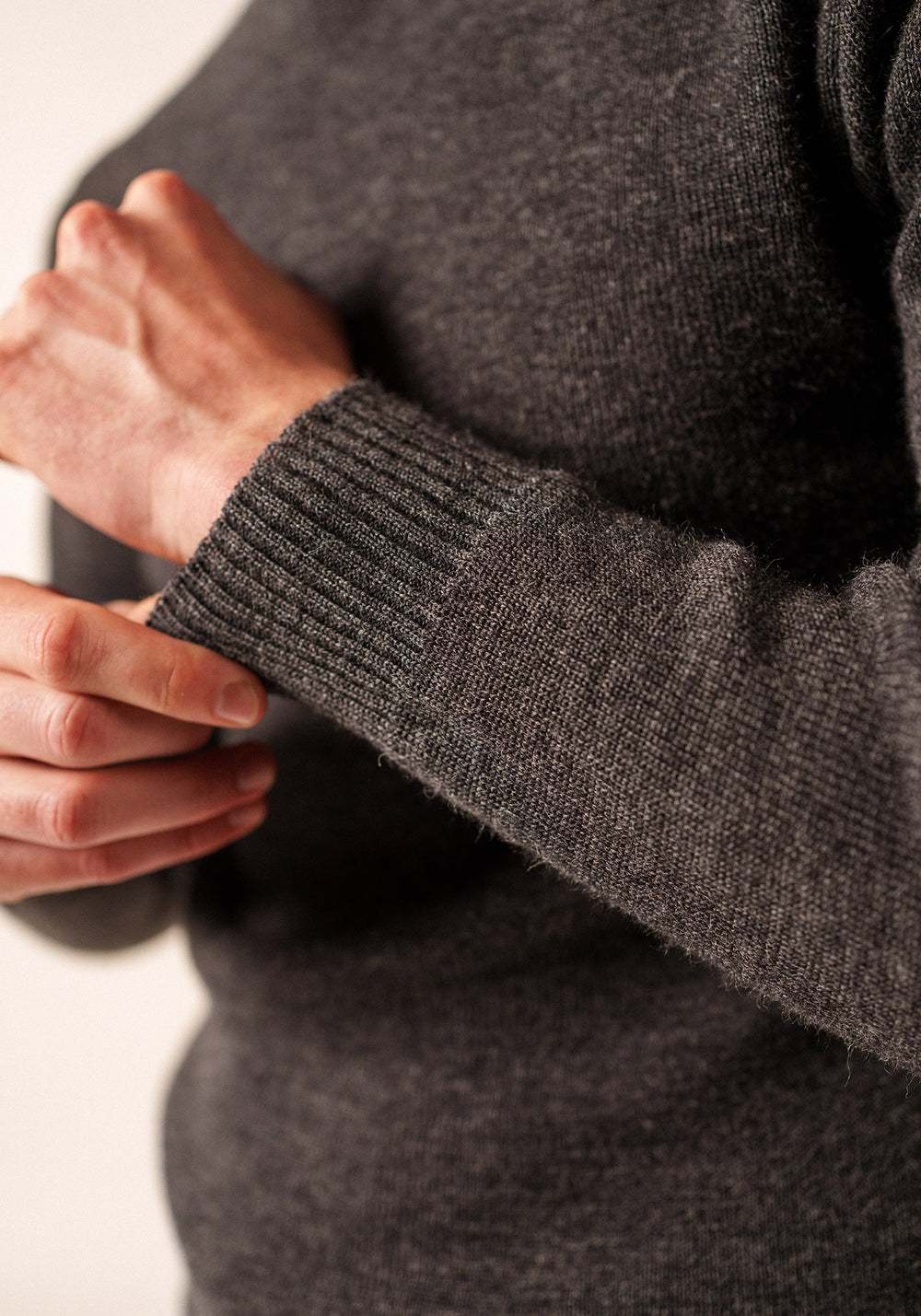
The most common wool in the textile industry, sheep’s wool is particularly durable, especially against moisture. Being thick, it has the capacity to absorb a significant amount of water before feeling truly wet. Sheep’s wool is exceptionally warm.
There are various types of sheep’s wool. Some are considered "rustic," such as Shetland wool, which comes from the sheep breed of the same name originating from the Shetland Islands in Scotland, or Icelandic wool. These wools are very hard-wearing and produce thick jumpers, which can gain flexibility when their fibres are blended with synthetic or other natural fibres.
Softer and more elastic, Merino wool comes from the sheep of the same name, largely reared in New Zealand and Australia. This is the sheep’s wool with the finest fibres. Merino wool also has antibacterial properties, which help reduce the formation of unpleasant odours.
Lamb’s wool
You can also opt for a lamb’s wool jumper. This wool is even finer than Merino. There are two types: virgin lamb’s wool, which is very warm and fluffy, and lambswool, which has shorter fibres, resulting in softer but also finer and more delicate garments.
Alpaca wool
This wool comes from alpacas, animals belonging to the camelid family native to the Andes Mountains. Alpaca wool is very soft, but its price is much higher than sheep’s wool due to its rarity. Indeed, an alpaca only produces an average of 2.5 kg of wool per year.
Angora wool
Looking for a fine, soft, and warm wool jumper? You might choose an angora wool jumper, produced by angora rabbits. Angora wool is particularly silky, and its rarity explains why it is frequently found blended with other fibres.
Mohair wool
Mohair wool, which also creates jumpers that are as light as they are warm, comes from the angora goat. Contrary to what the name suggests, this goat does not produce angora wool (which comes from rabbits). When the goat is young, the wool is known as "kid mohair."
While these types are the most common, jumpers can also be crafted from yak, camel, or vicuña wool.
How to choose a wool jumper: cut and colour
The Cut
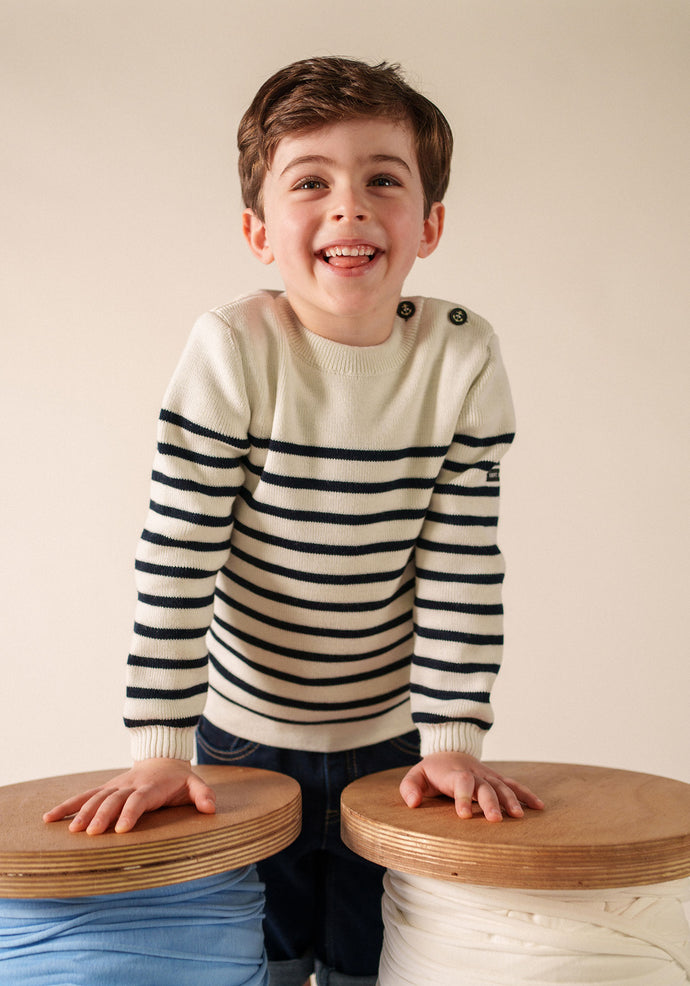
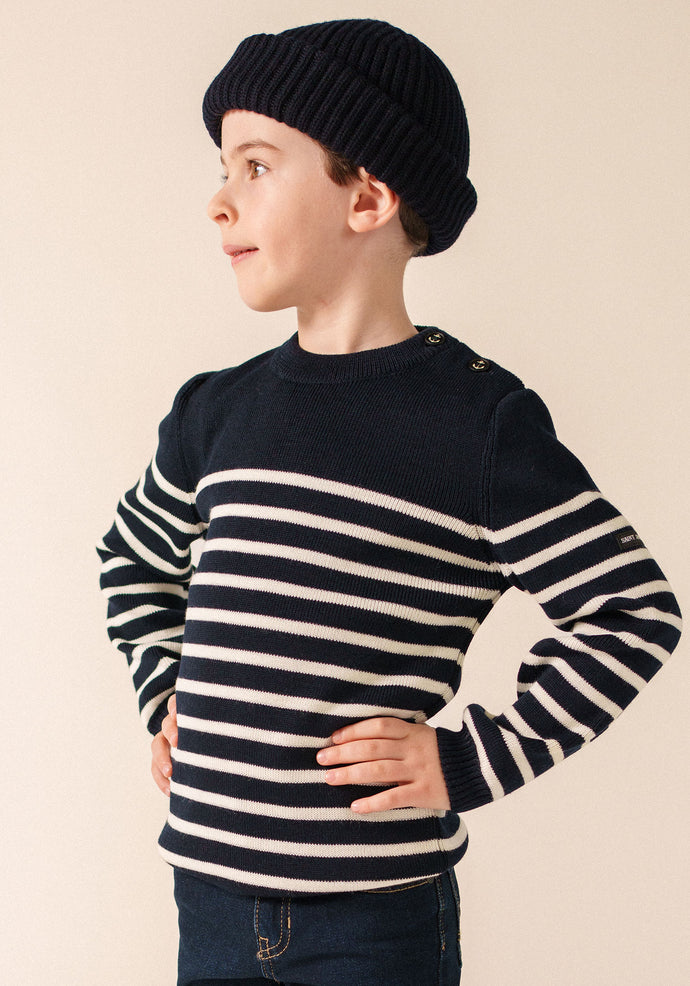
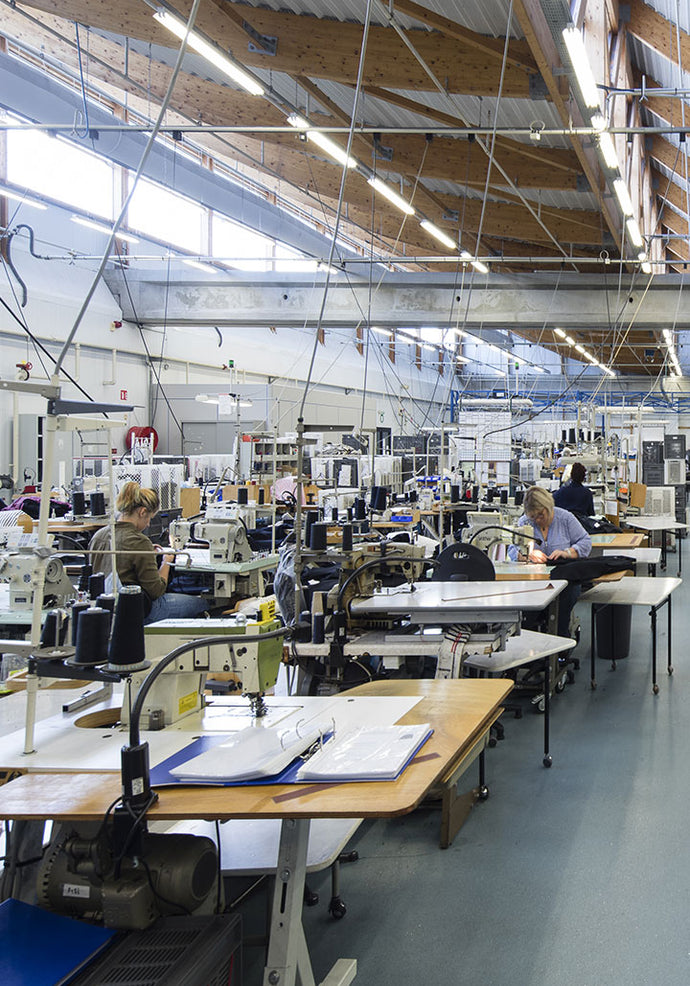
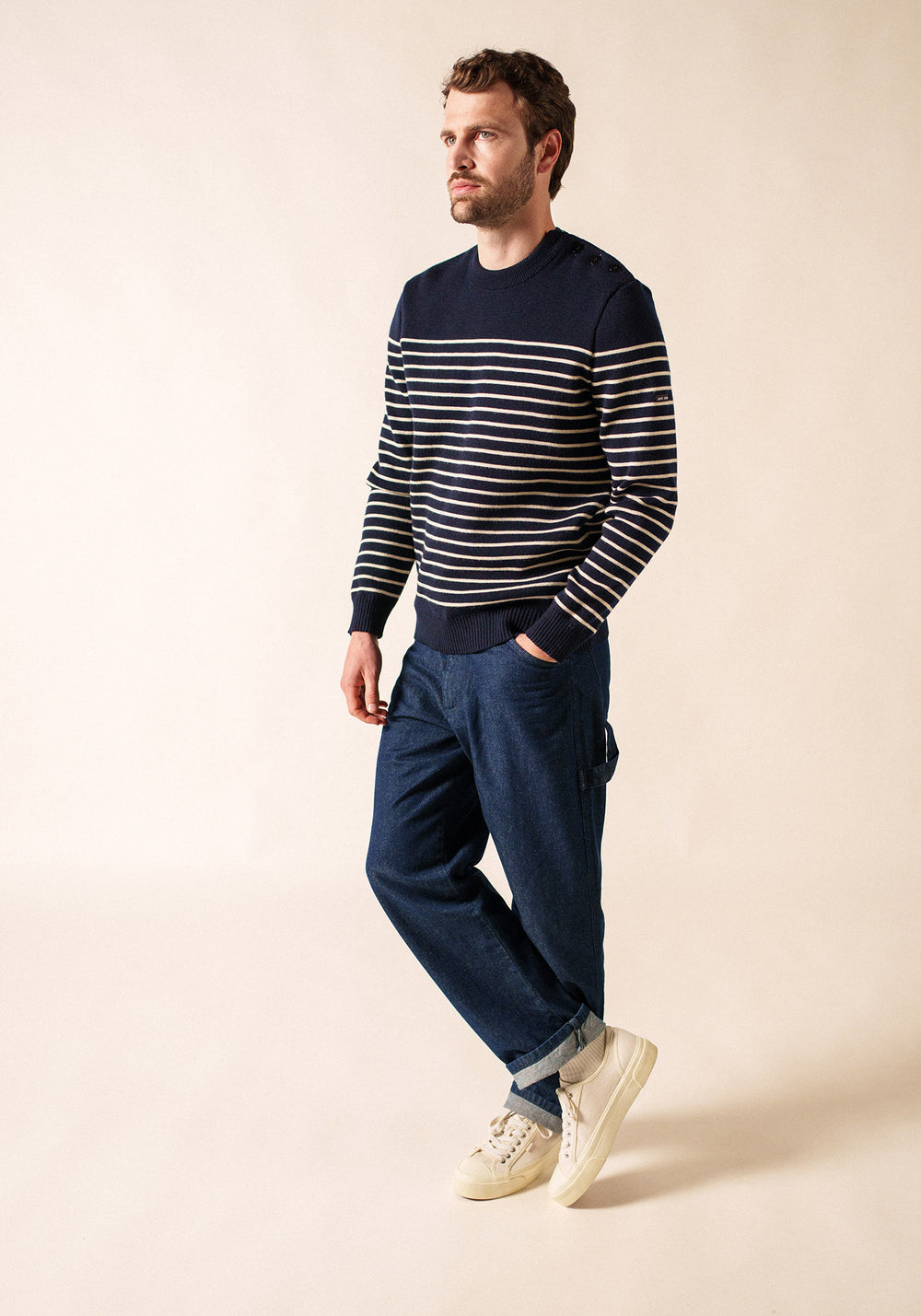
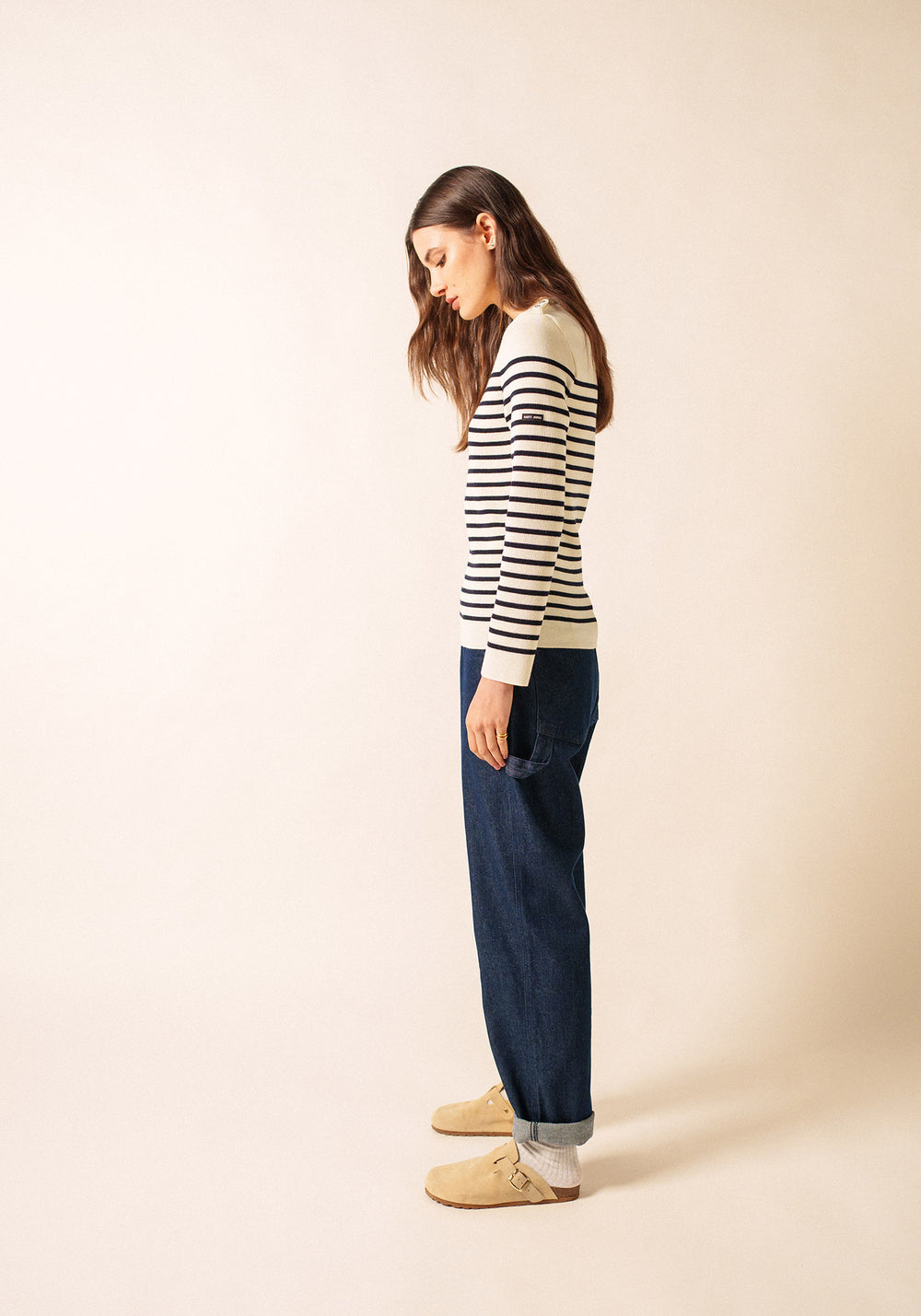
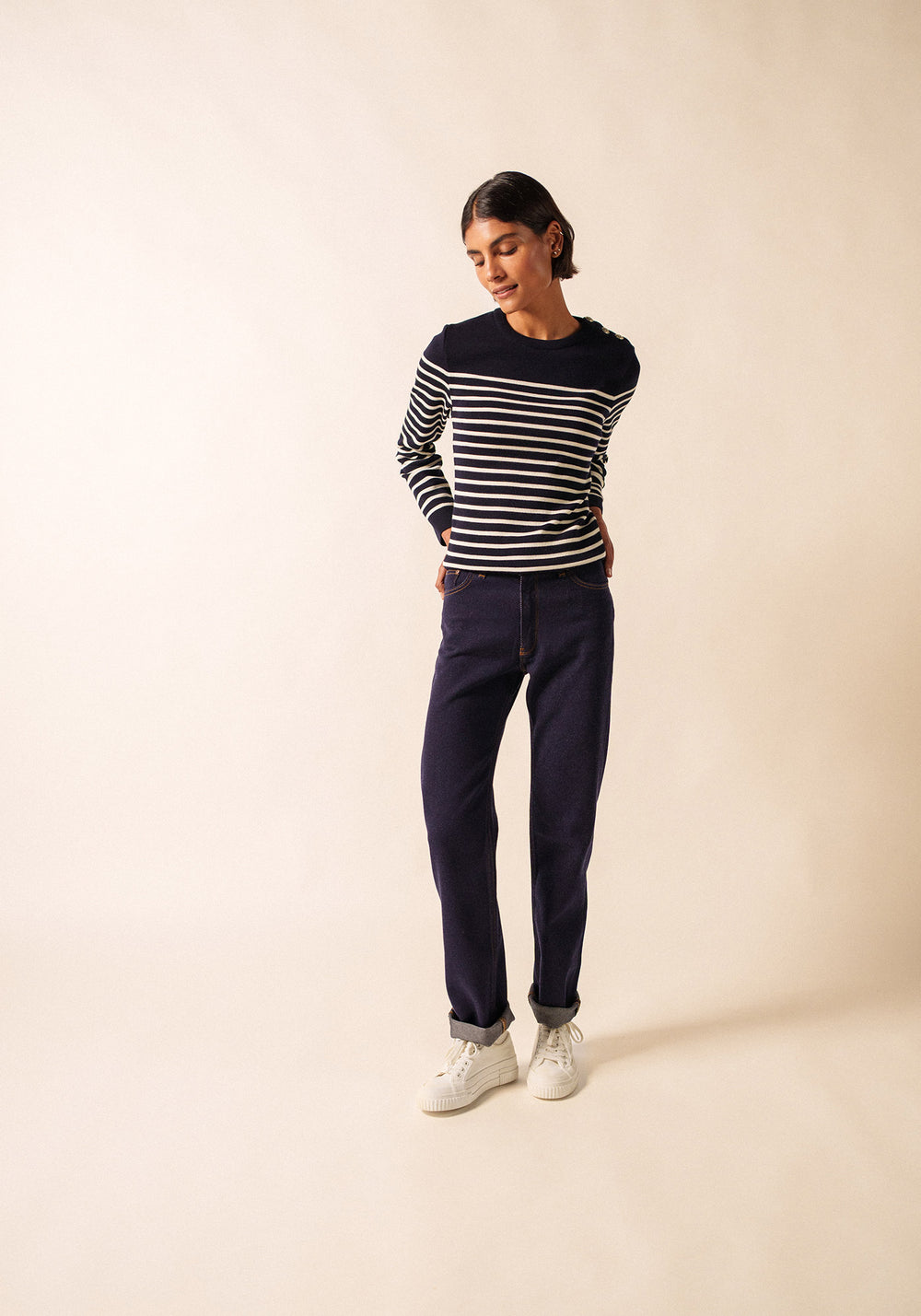
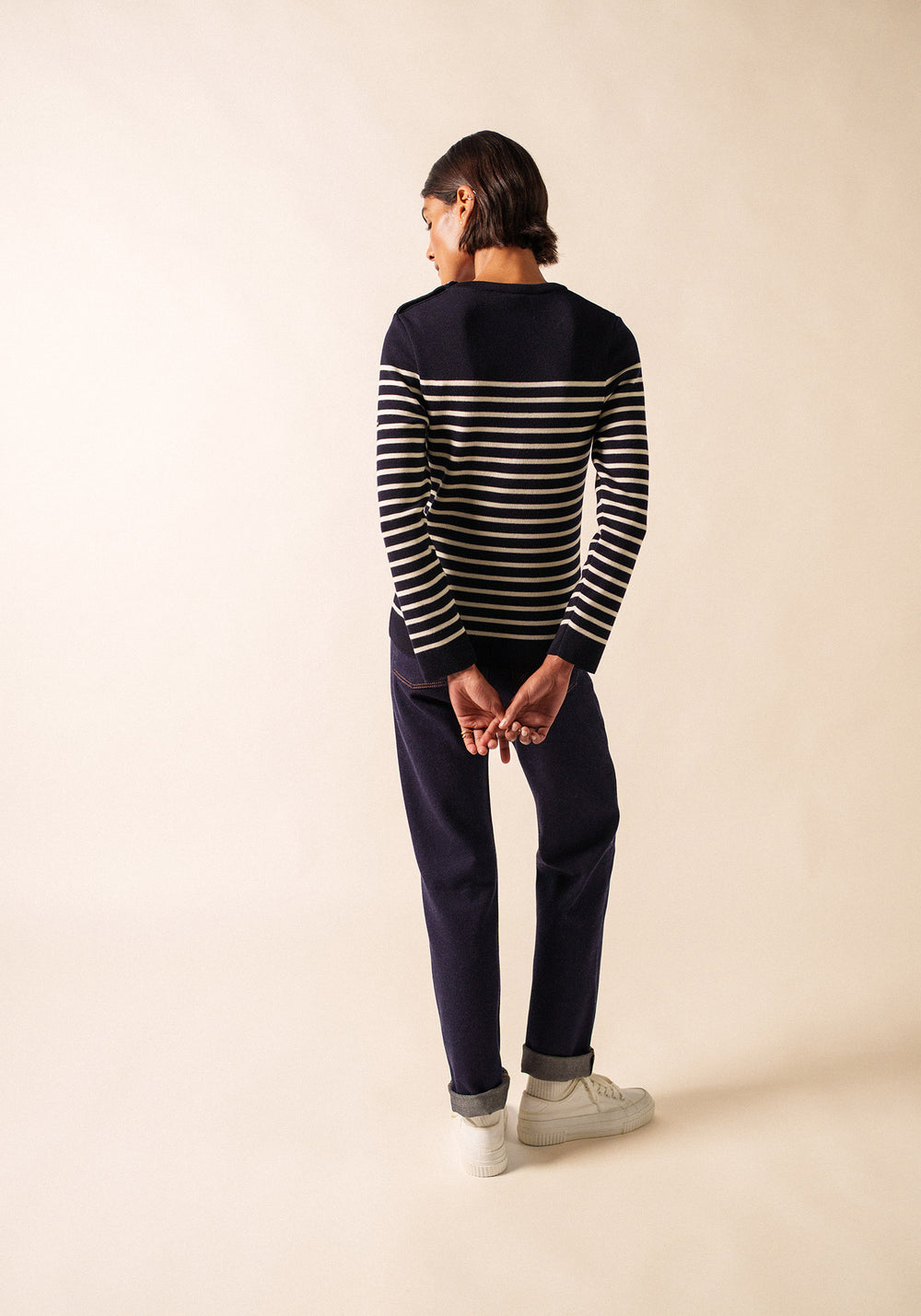
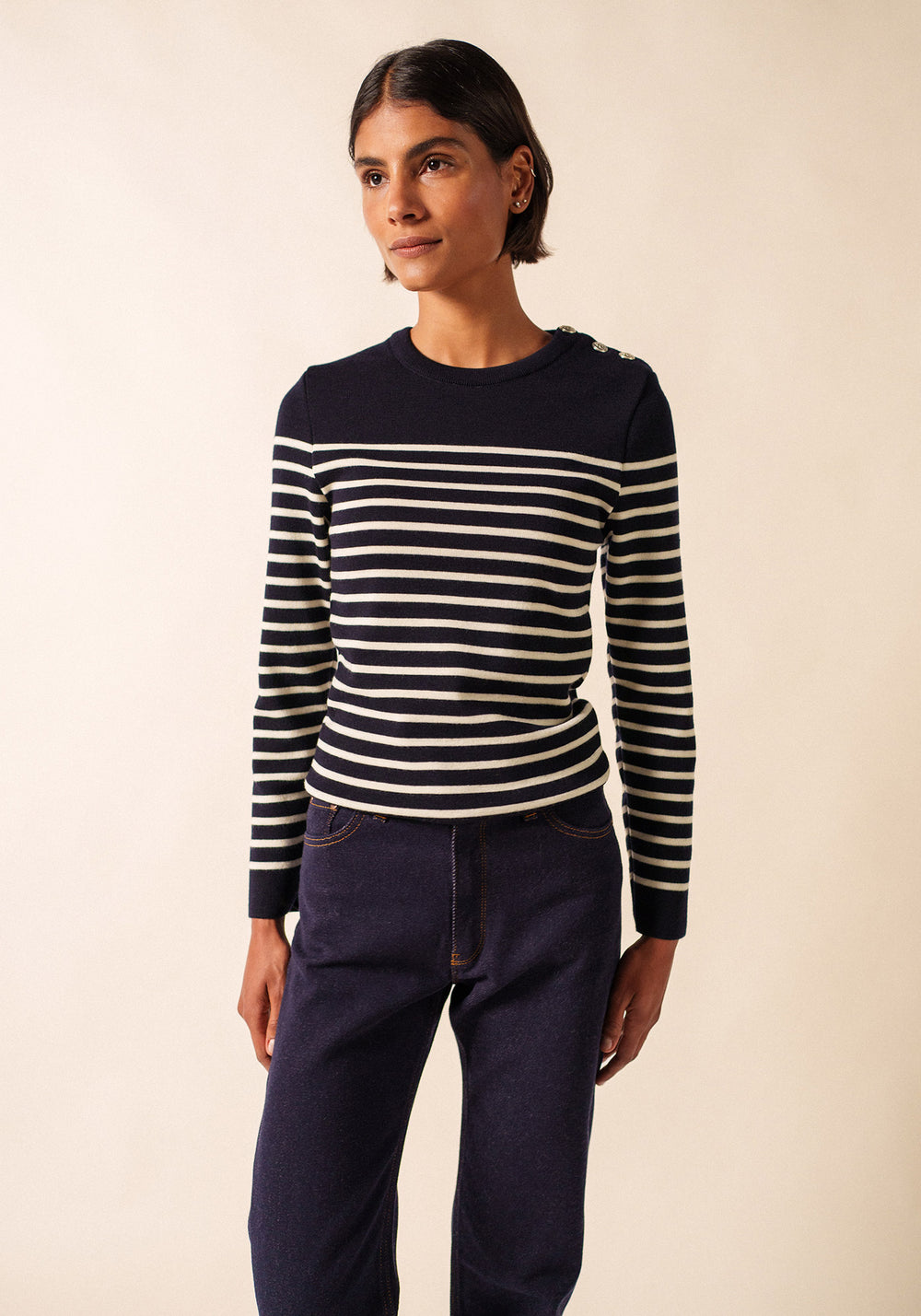
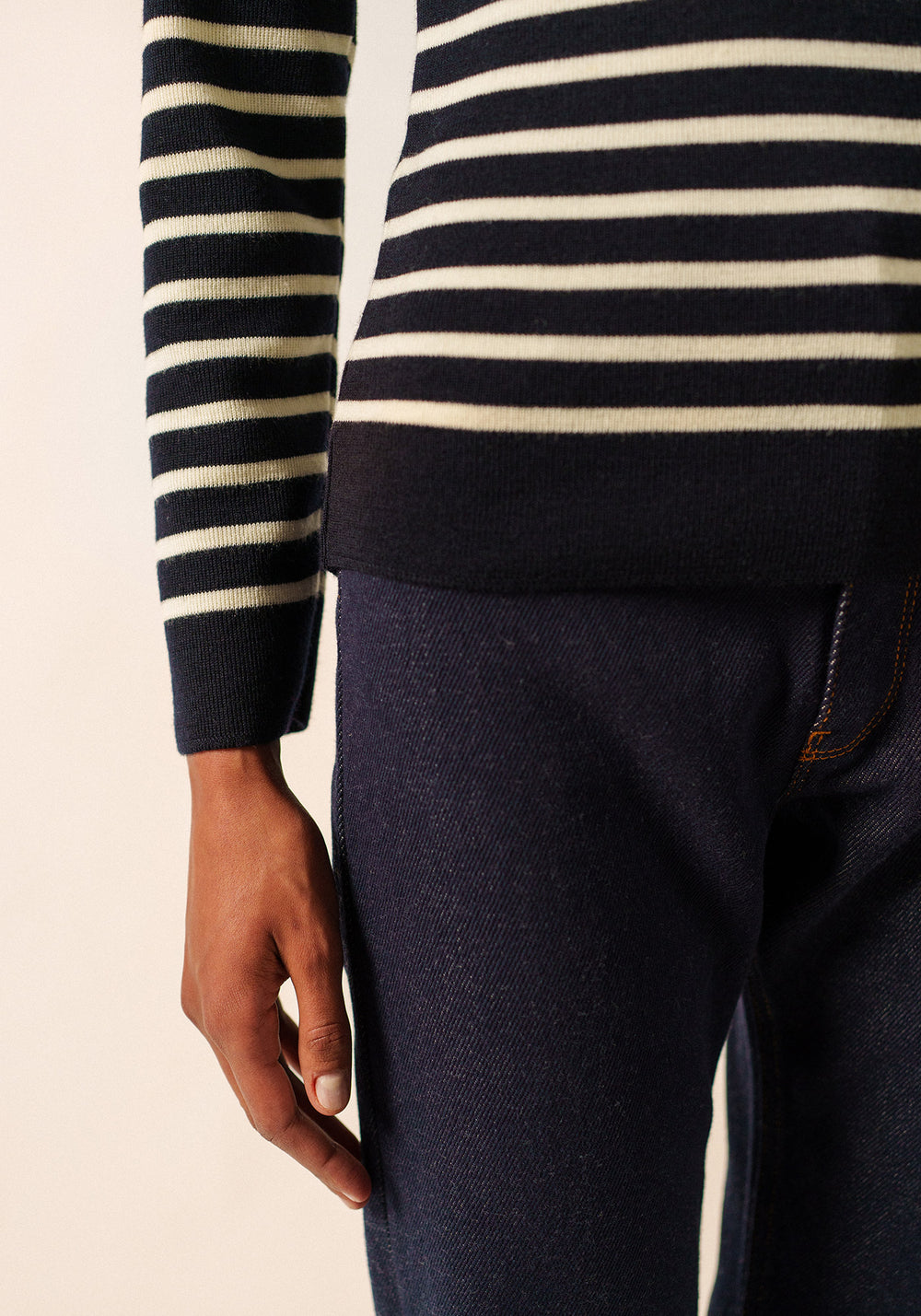
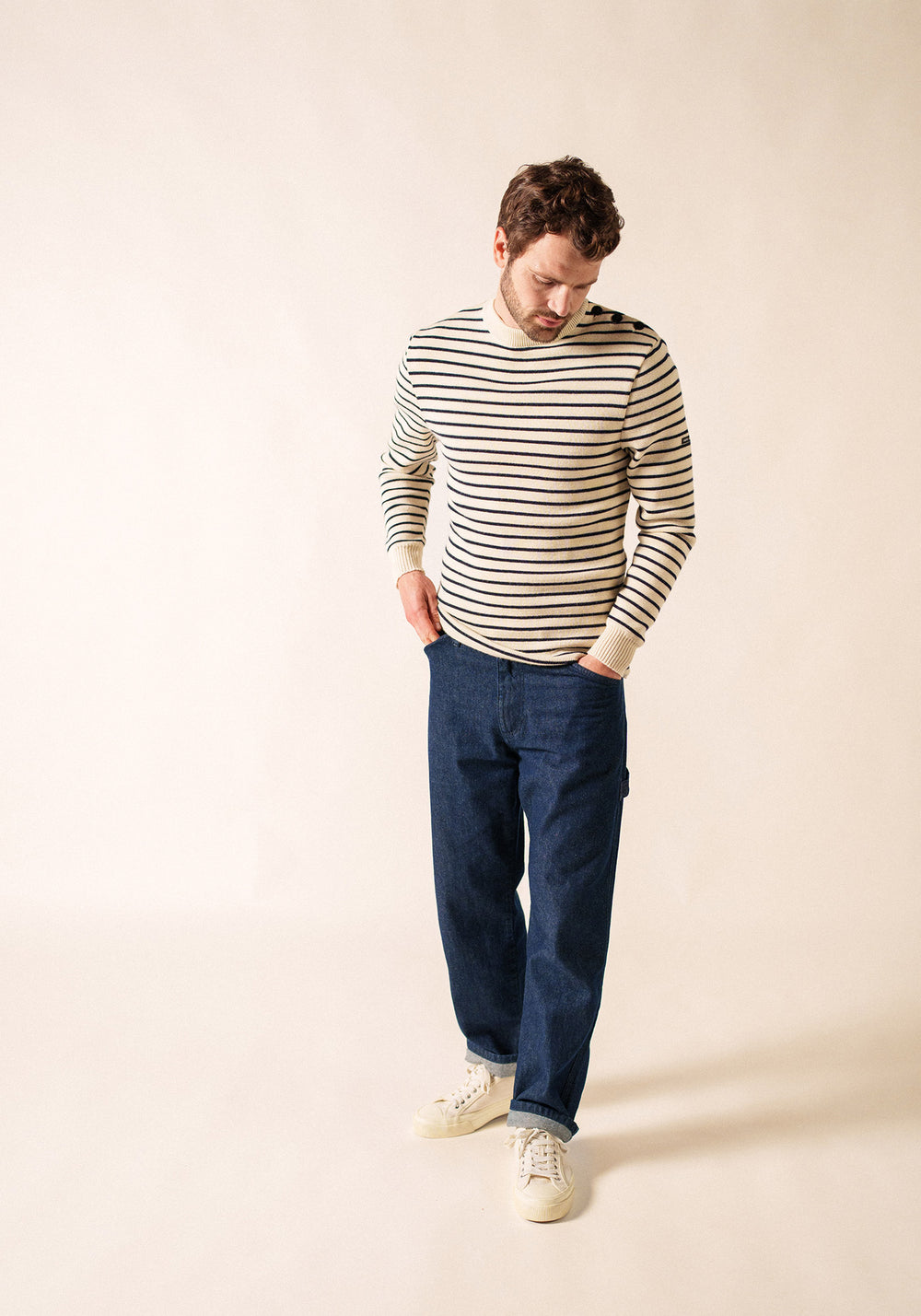
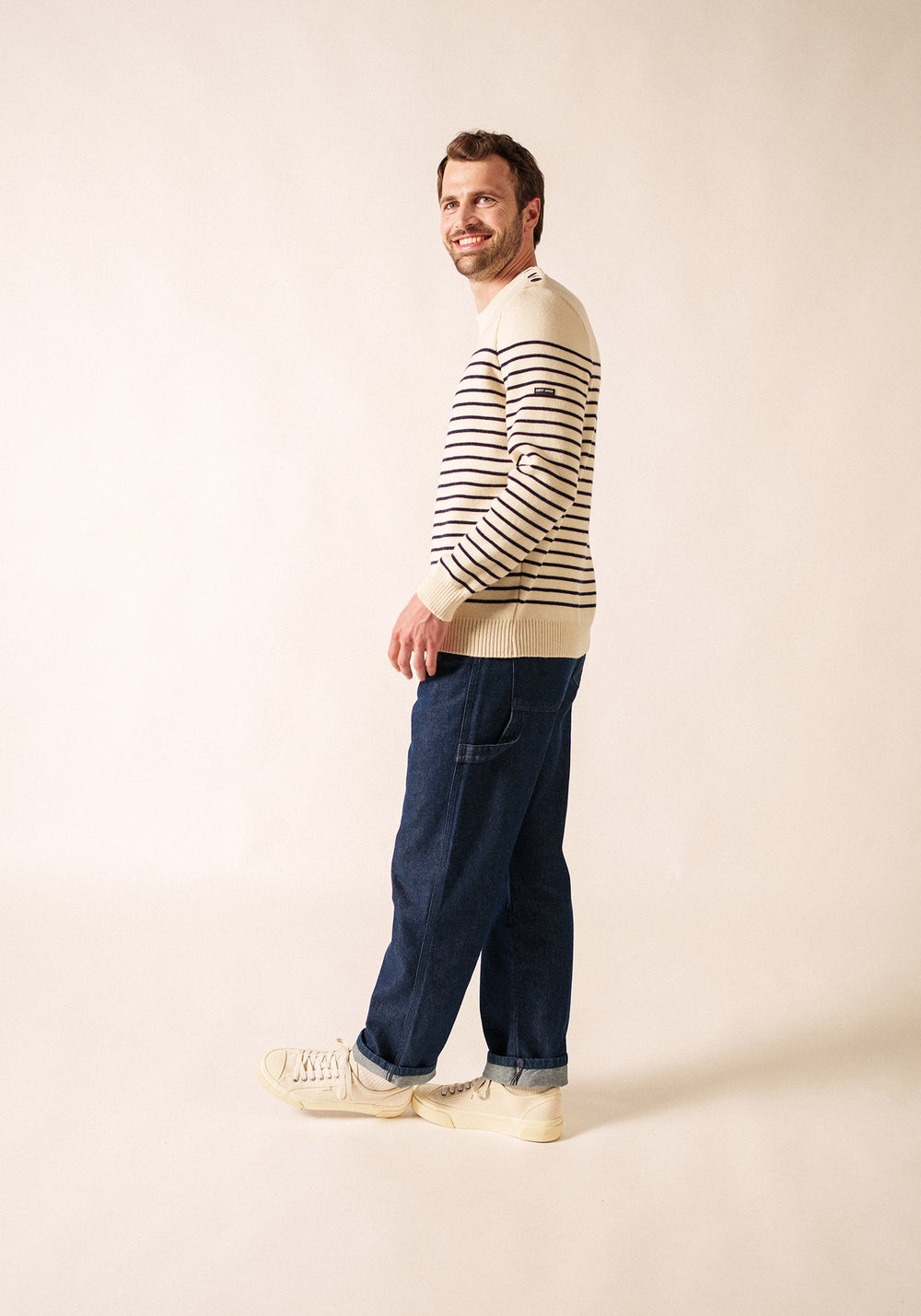
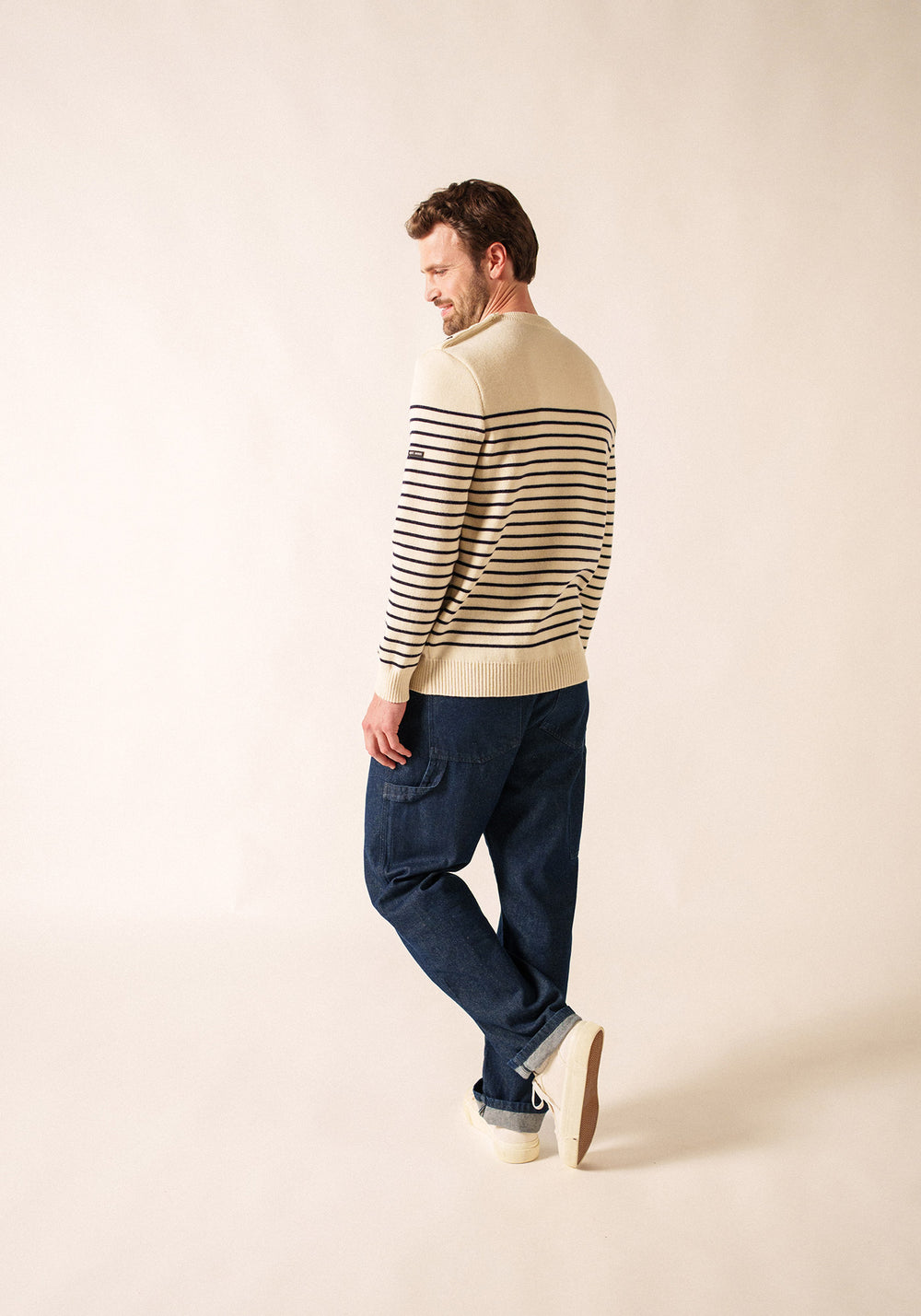
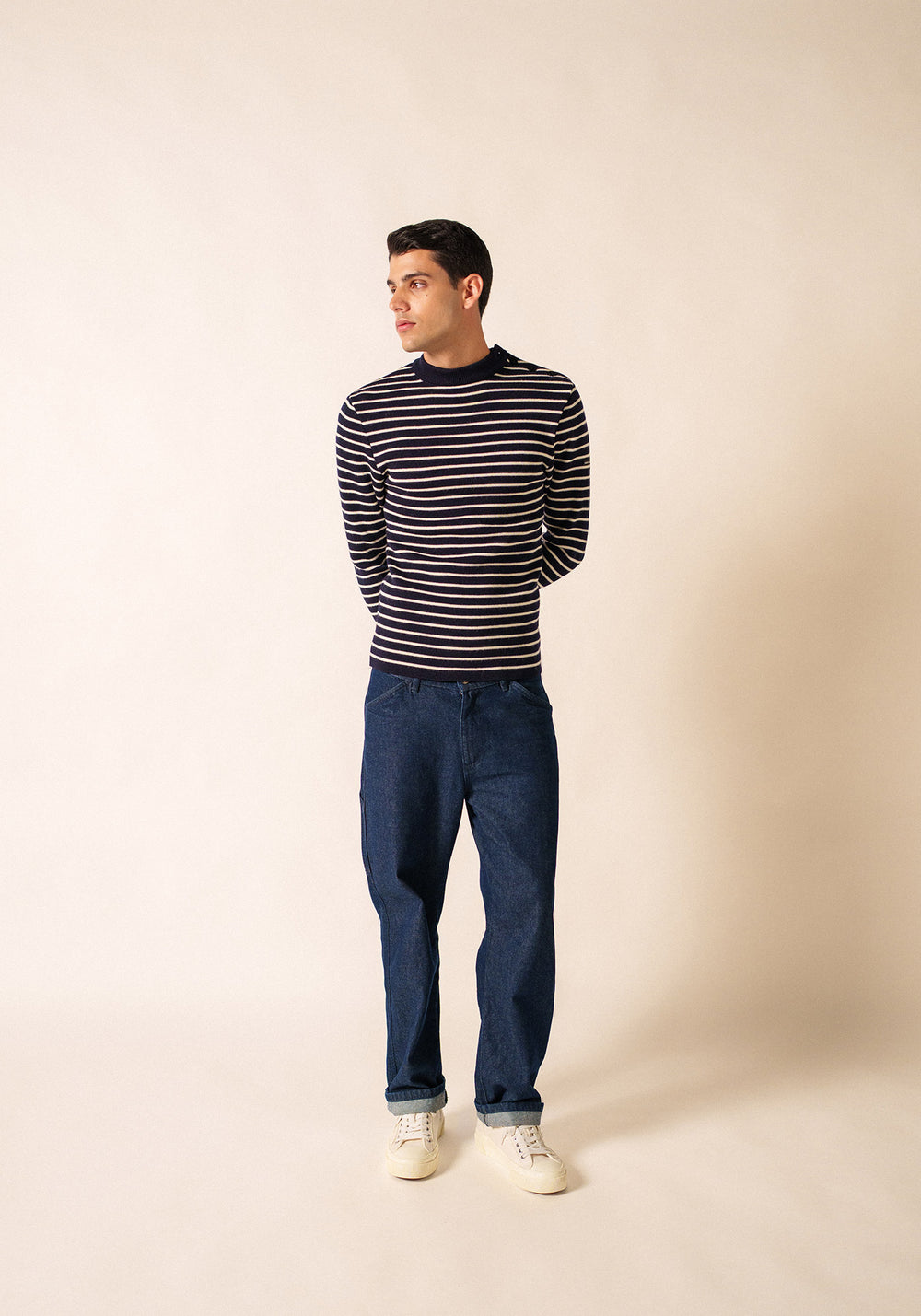
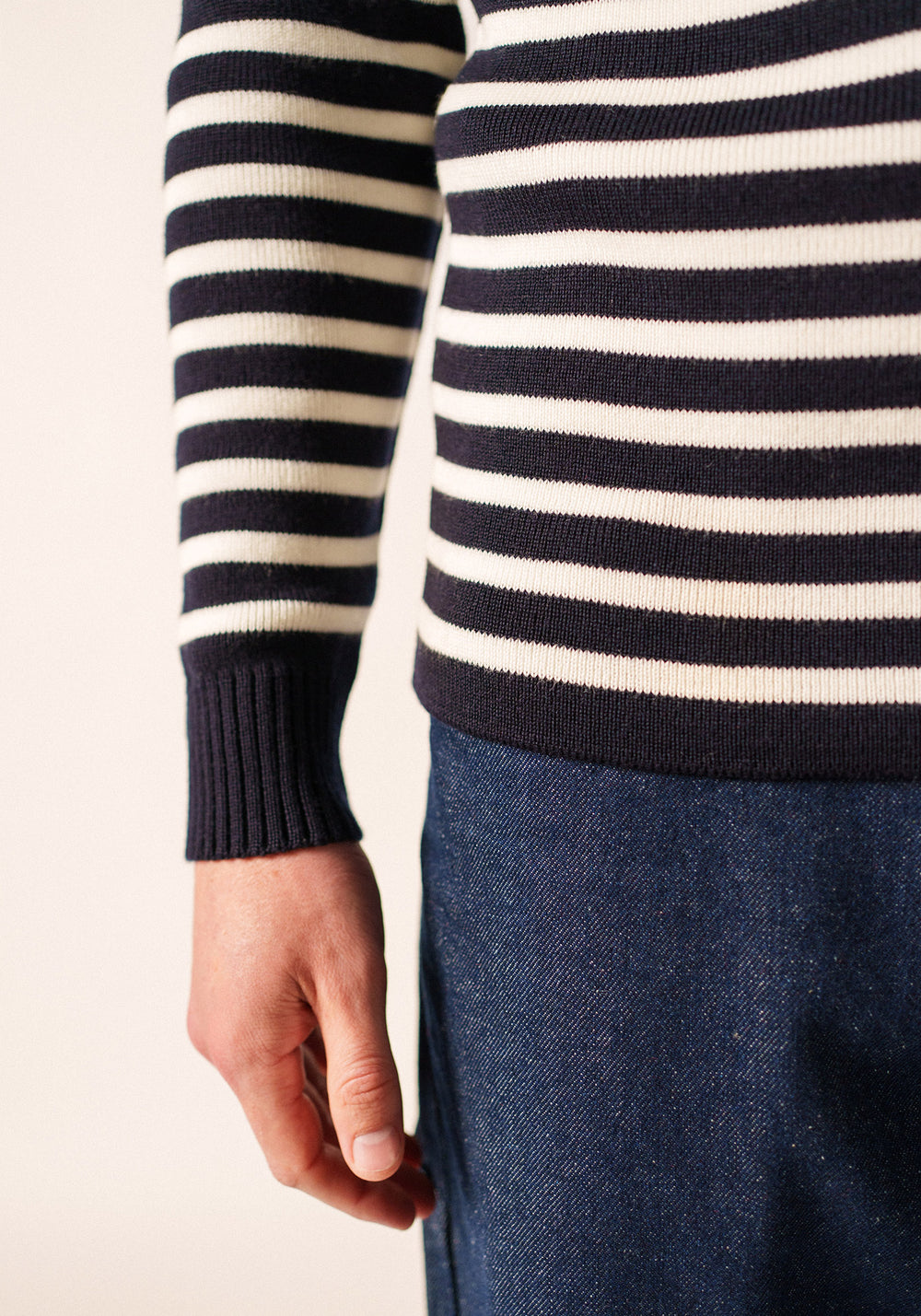
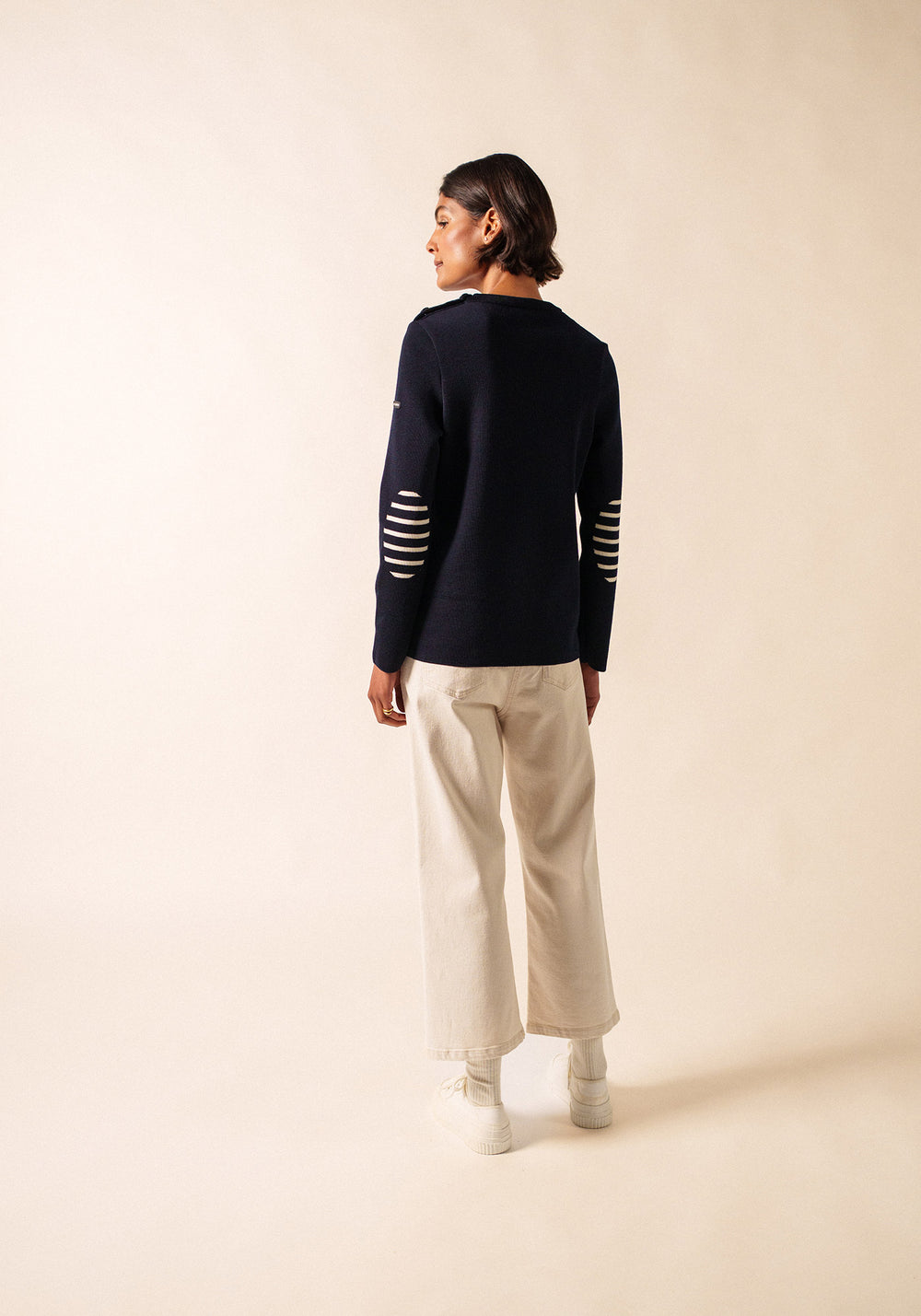
There are various cuts of wool jumpers to choose from based on your style, your existing wardrobe, and your body shape. The essential SAINT JAMES Breton shirt (the classic nautical jumper), crafted in our workshops in Normandy, is a piece that appeals to everyone. Follow our guide to Breton jumper cuts to find the model that suits you best.
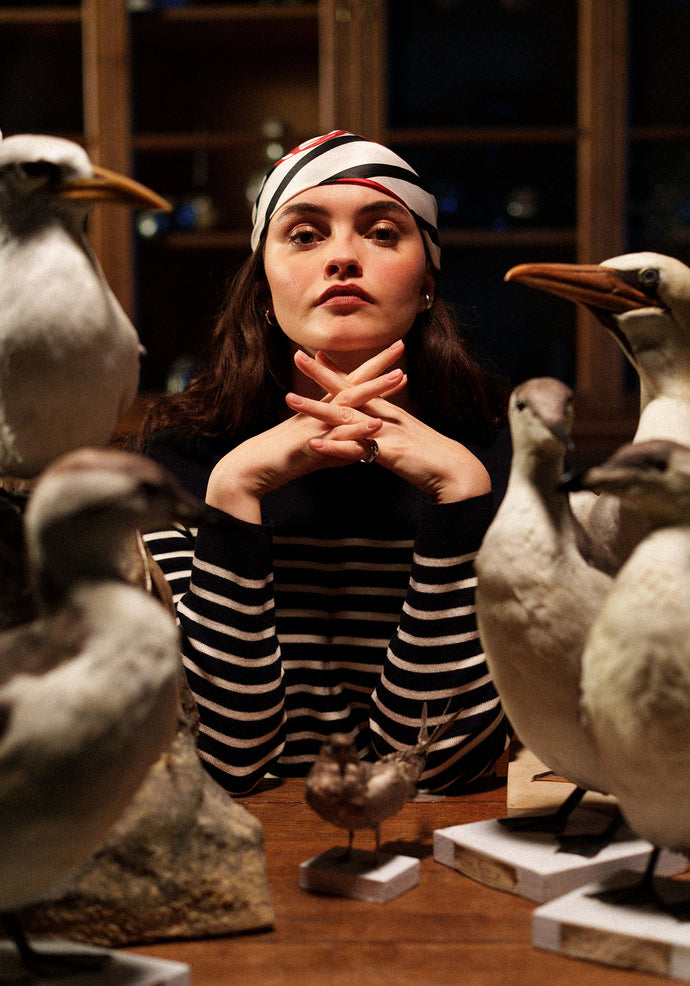
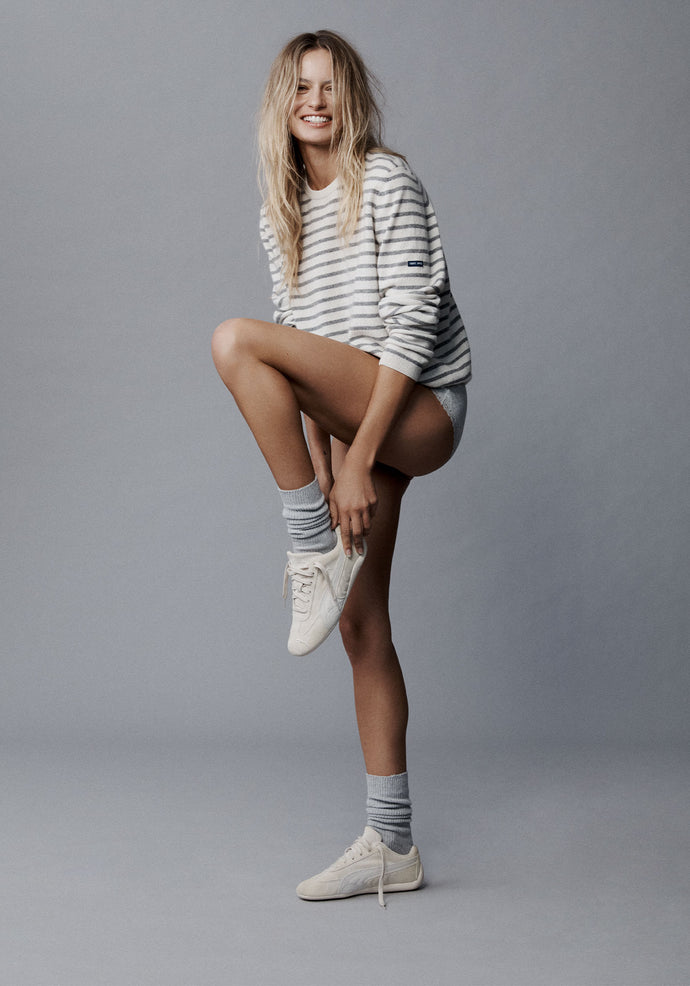
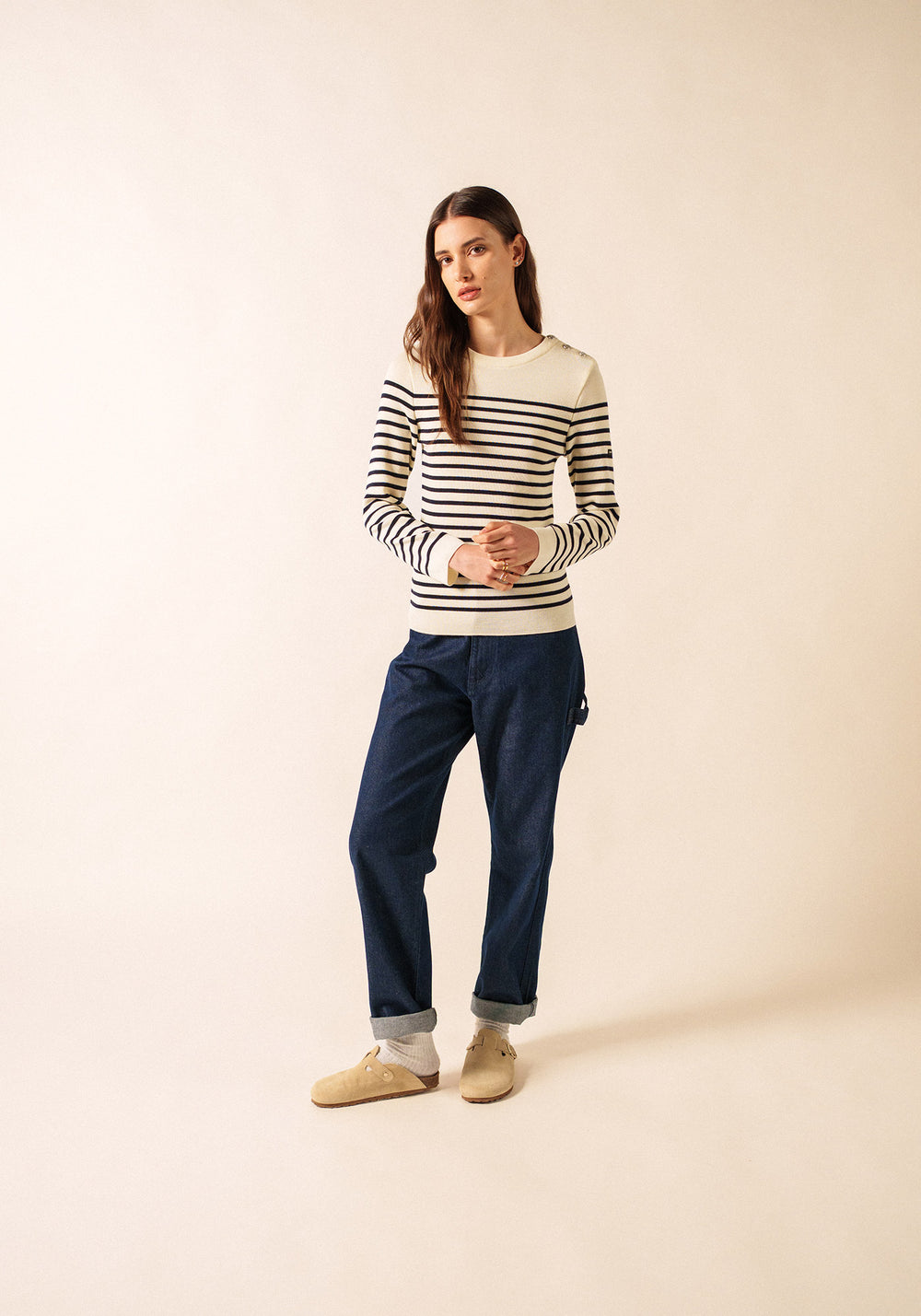
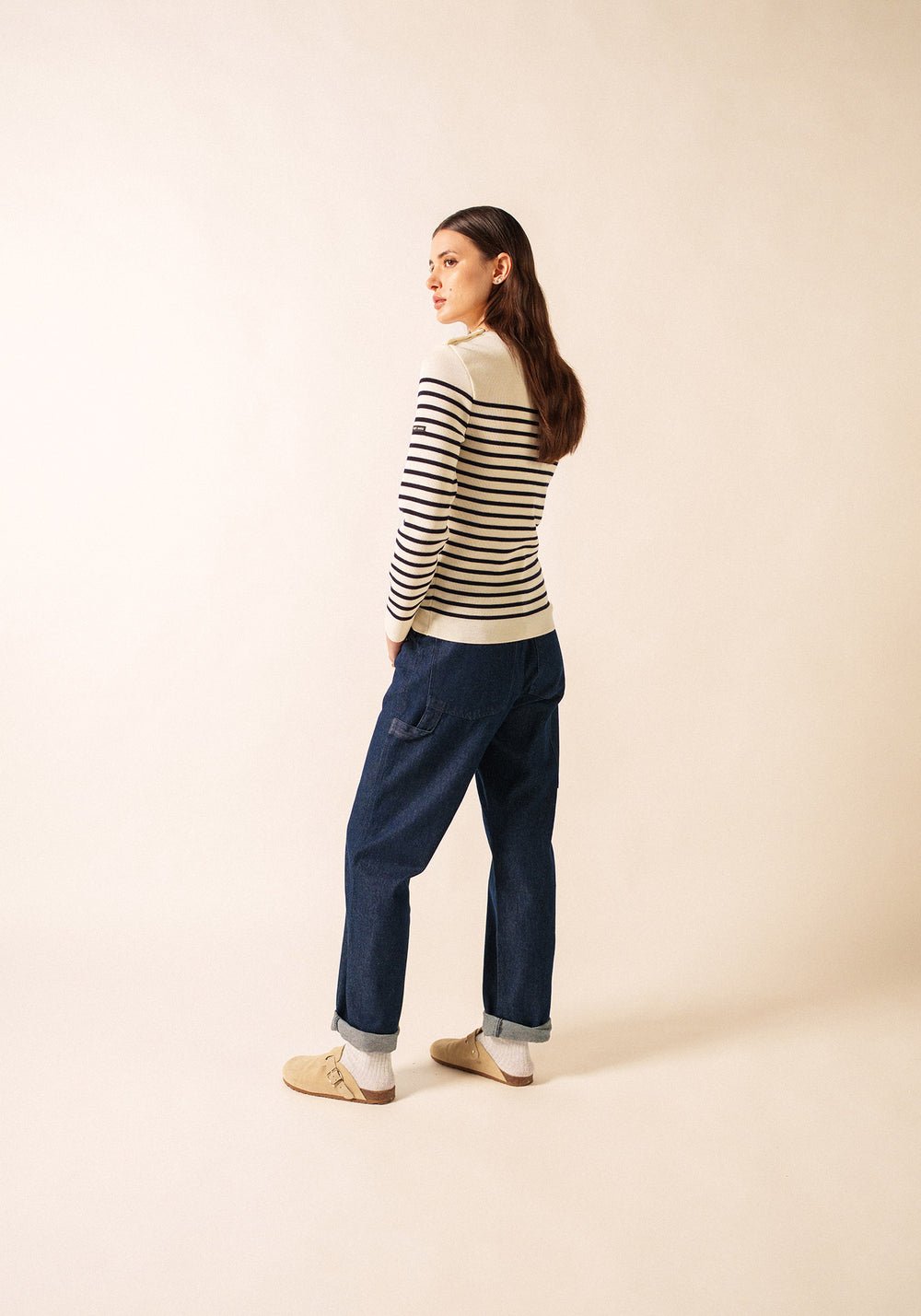
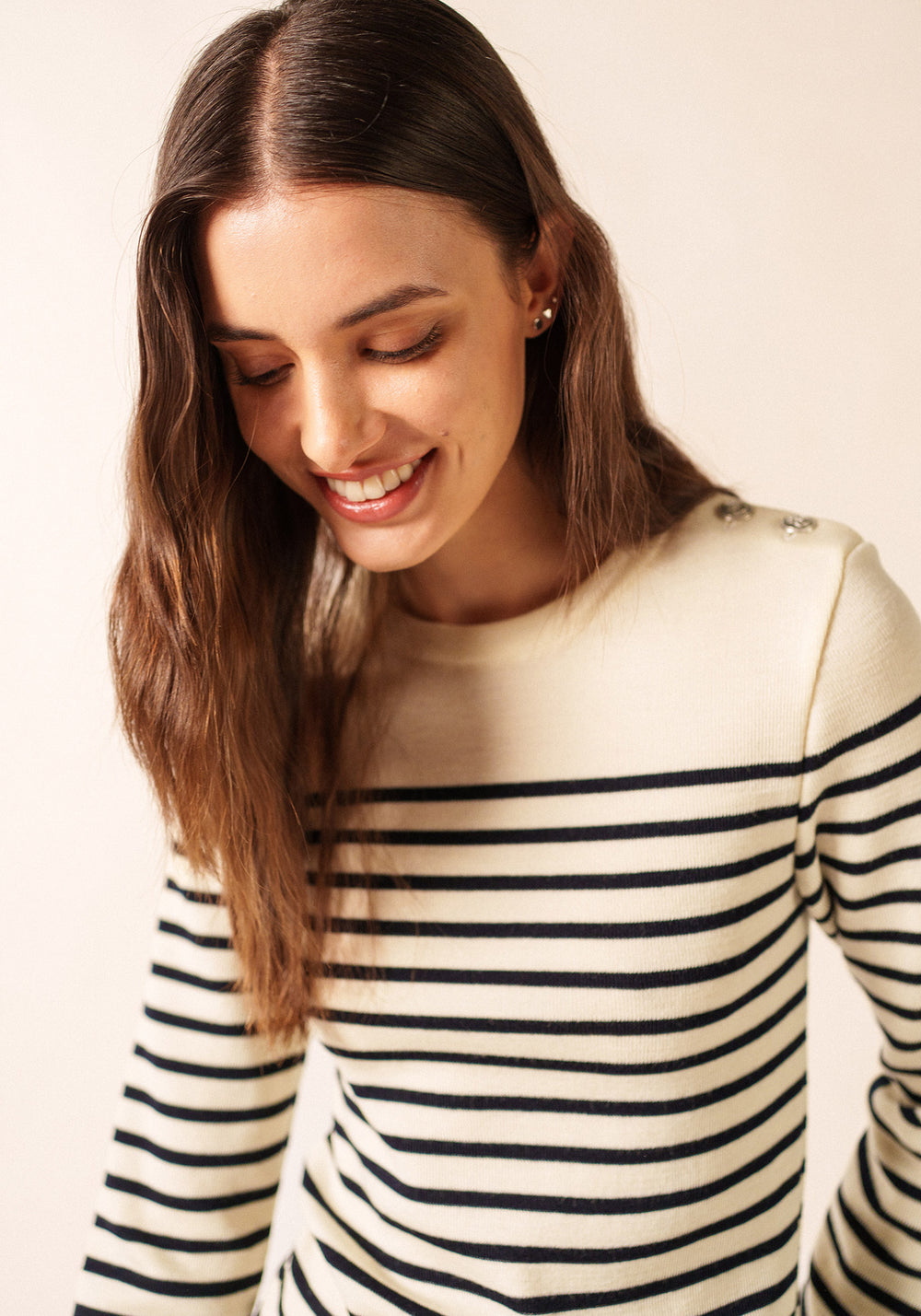
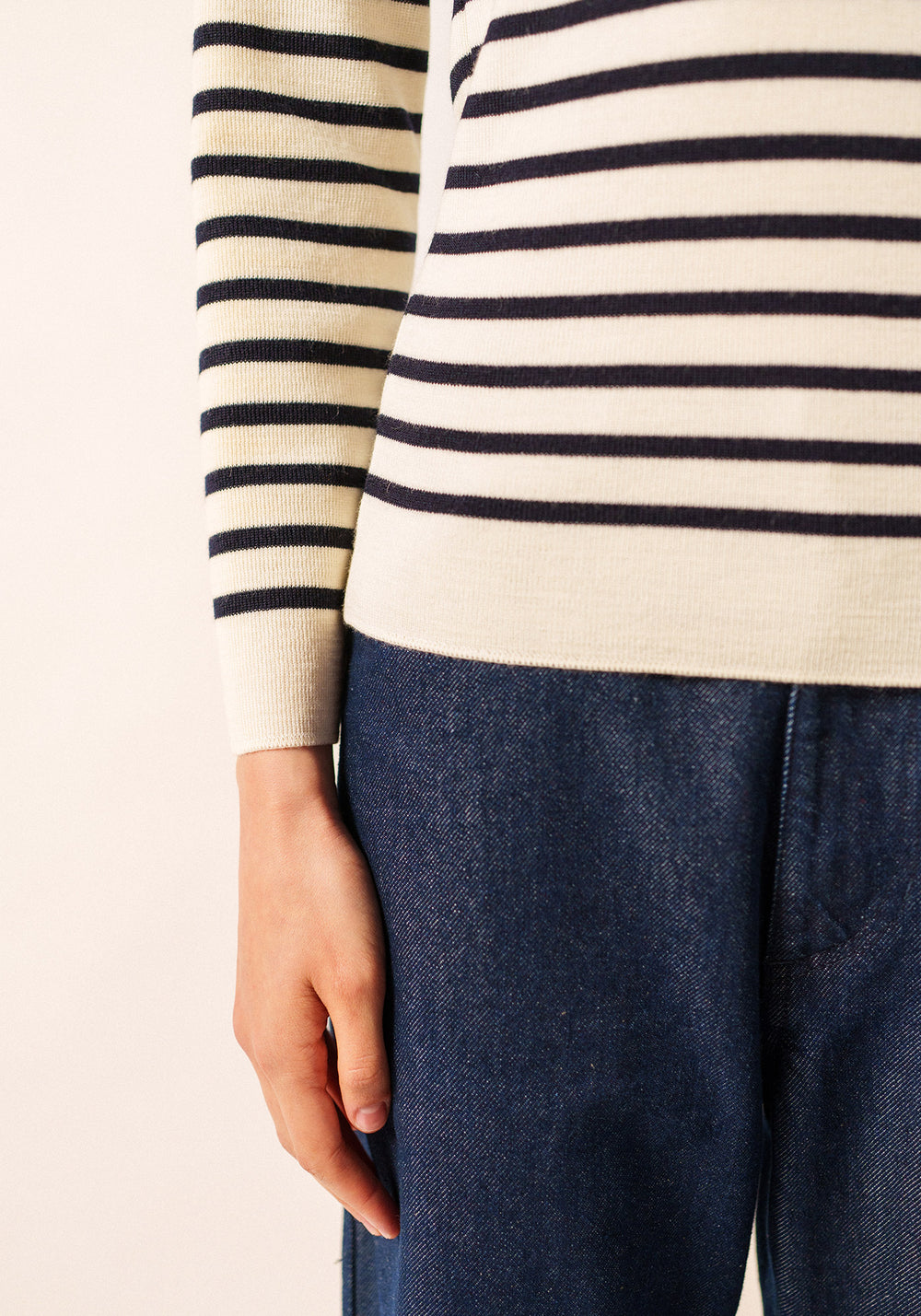
For Women: "Sock jumpers" (ribbed jumpers), which are very fitted with a roll neck, beautifully highlight slim silhouettes. Meanwhile, wool jumpers with a looser fit, such as batwing jumpers, are better suited to curvier figures. The iconic model for women at SAINT JAMES is the MAREE Breton jumper; close-fitting and made from soft wool, it is available in many colours.
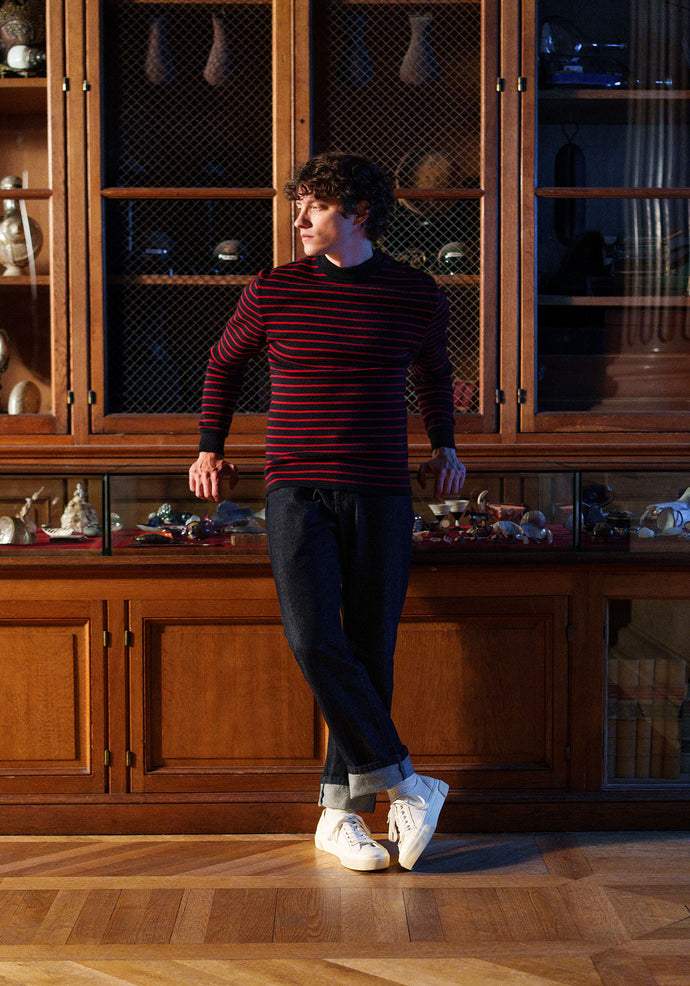
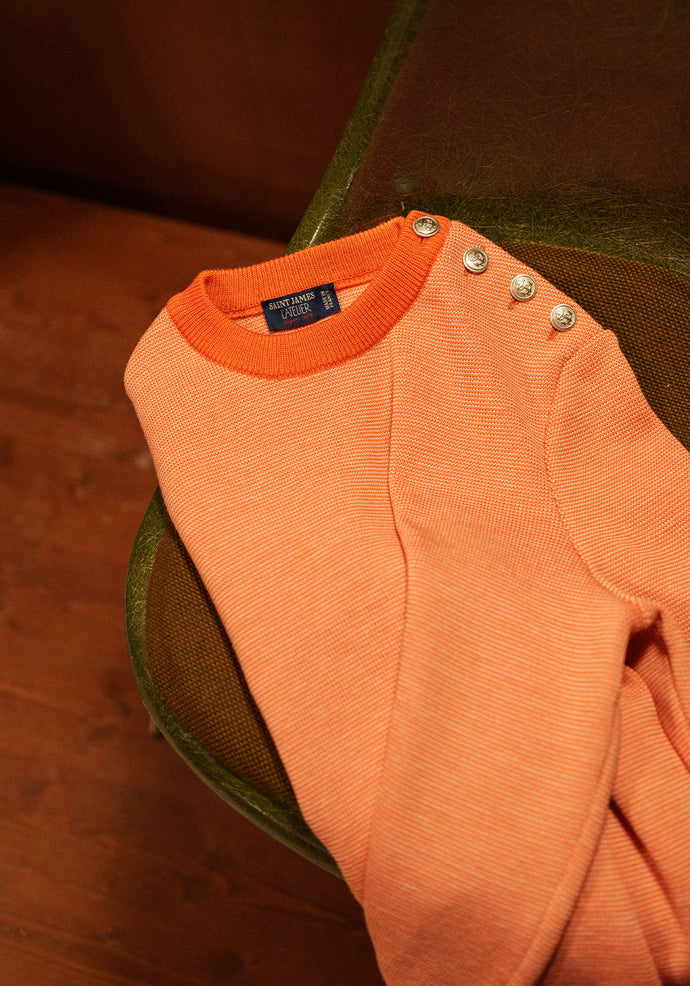
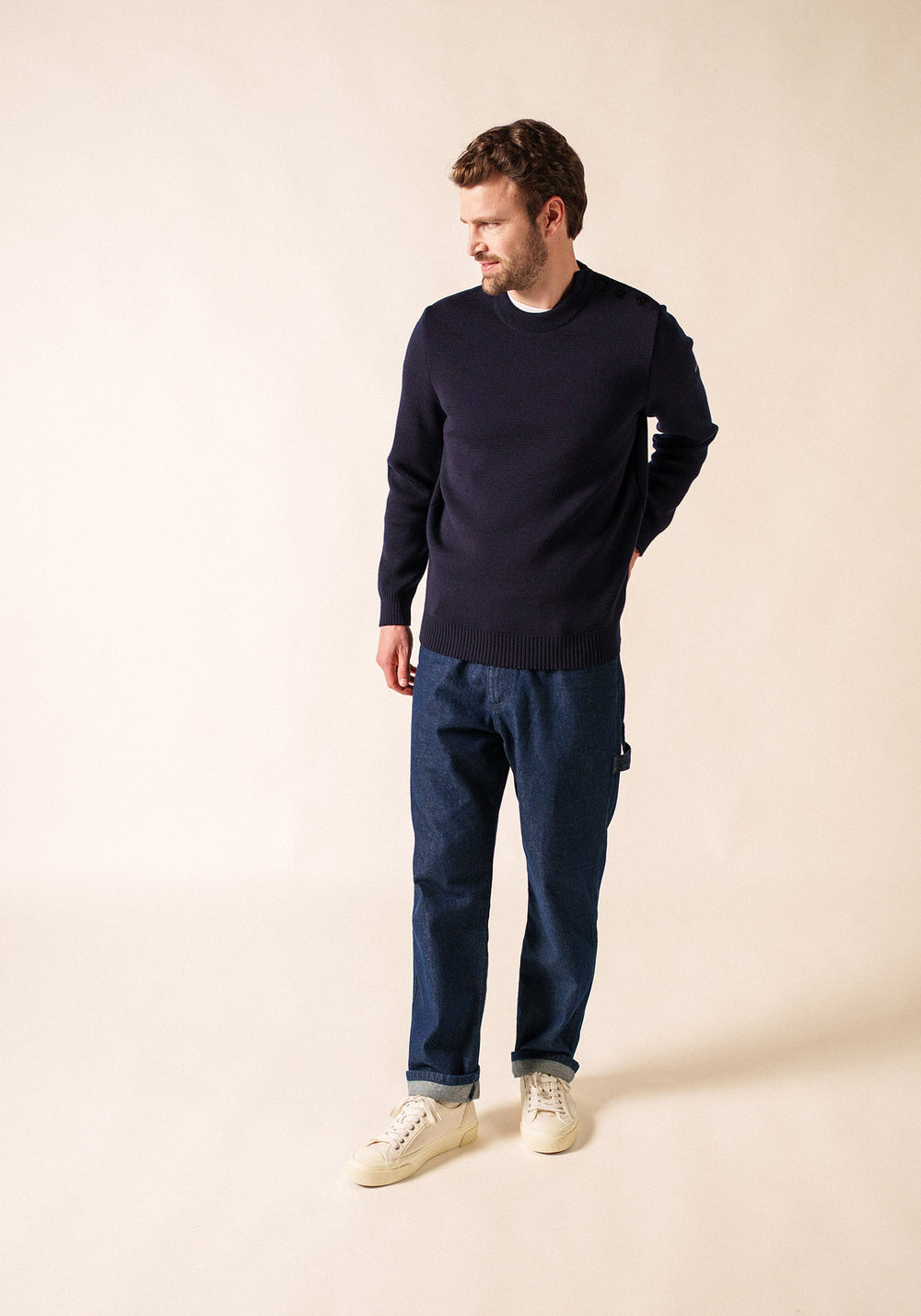
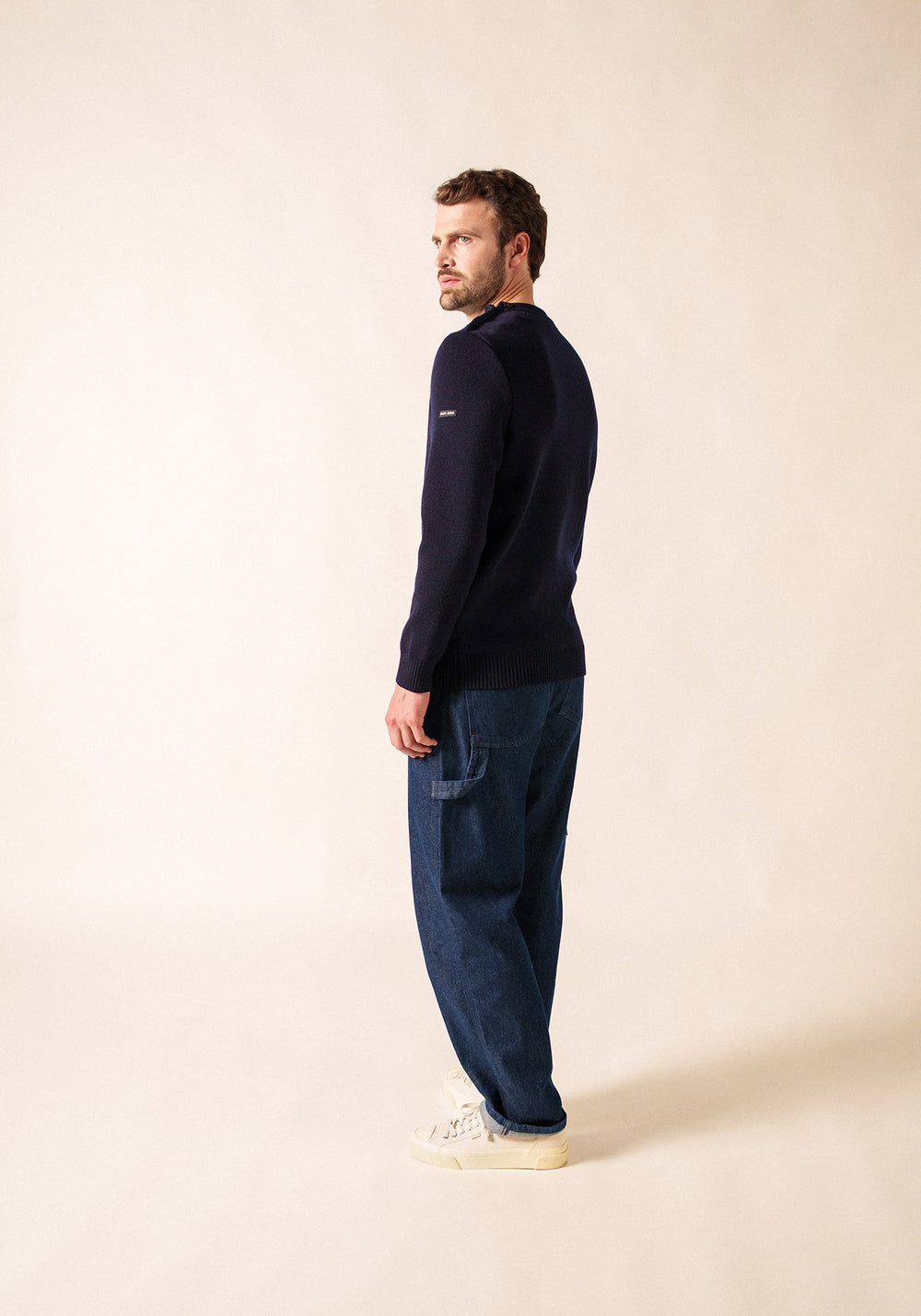
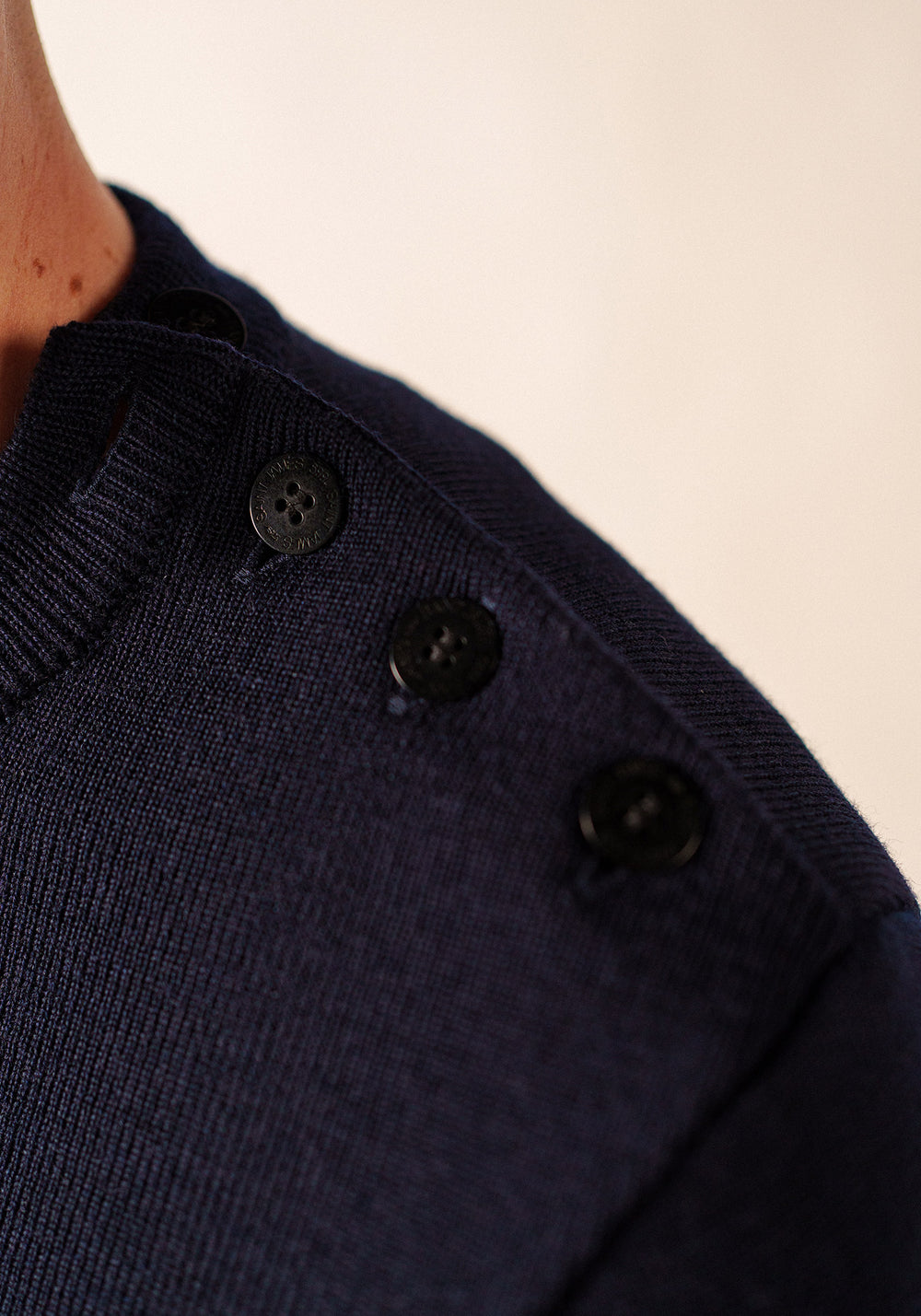
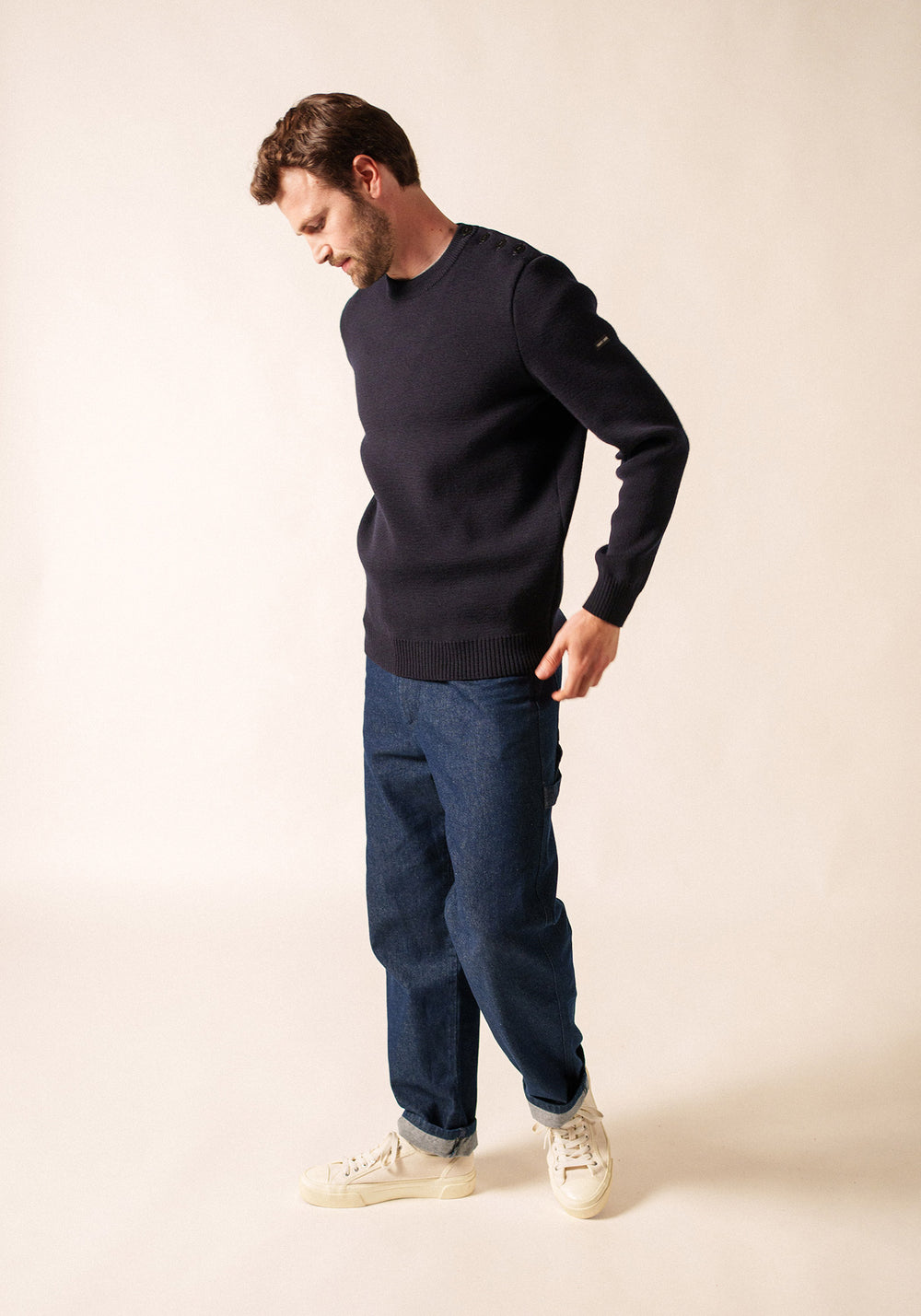
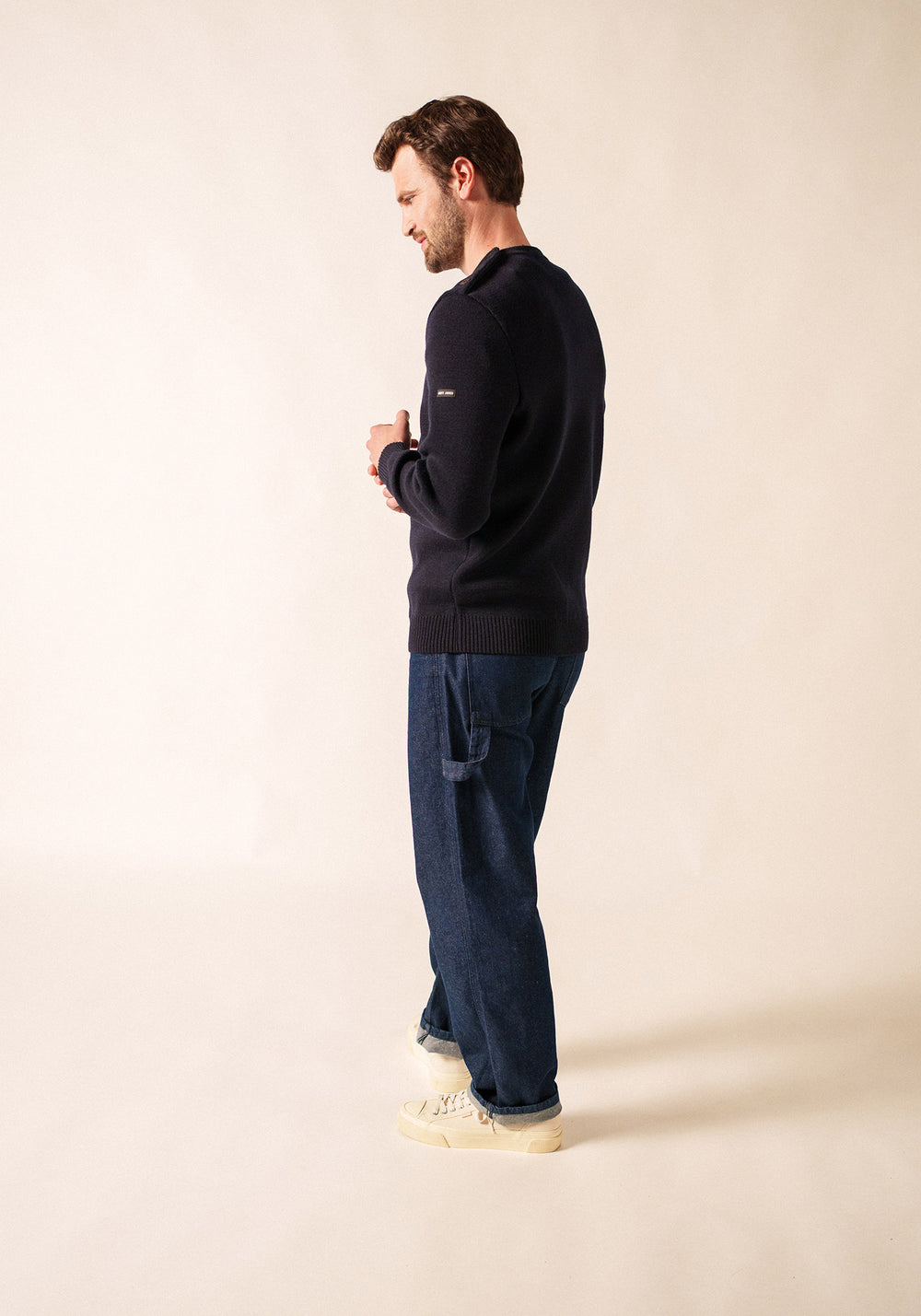
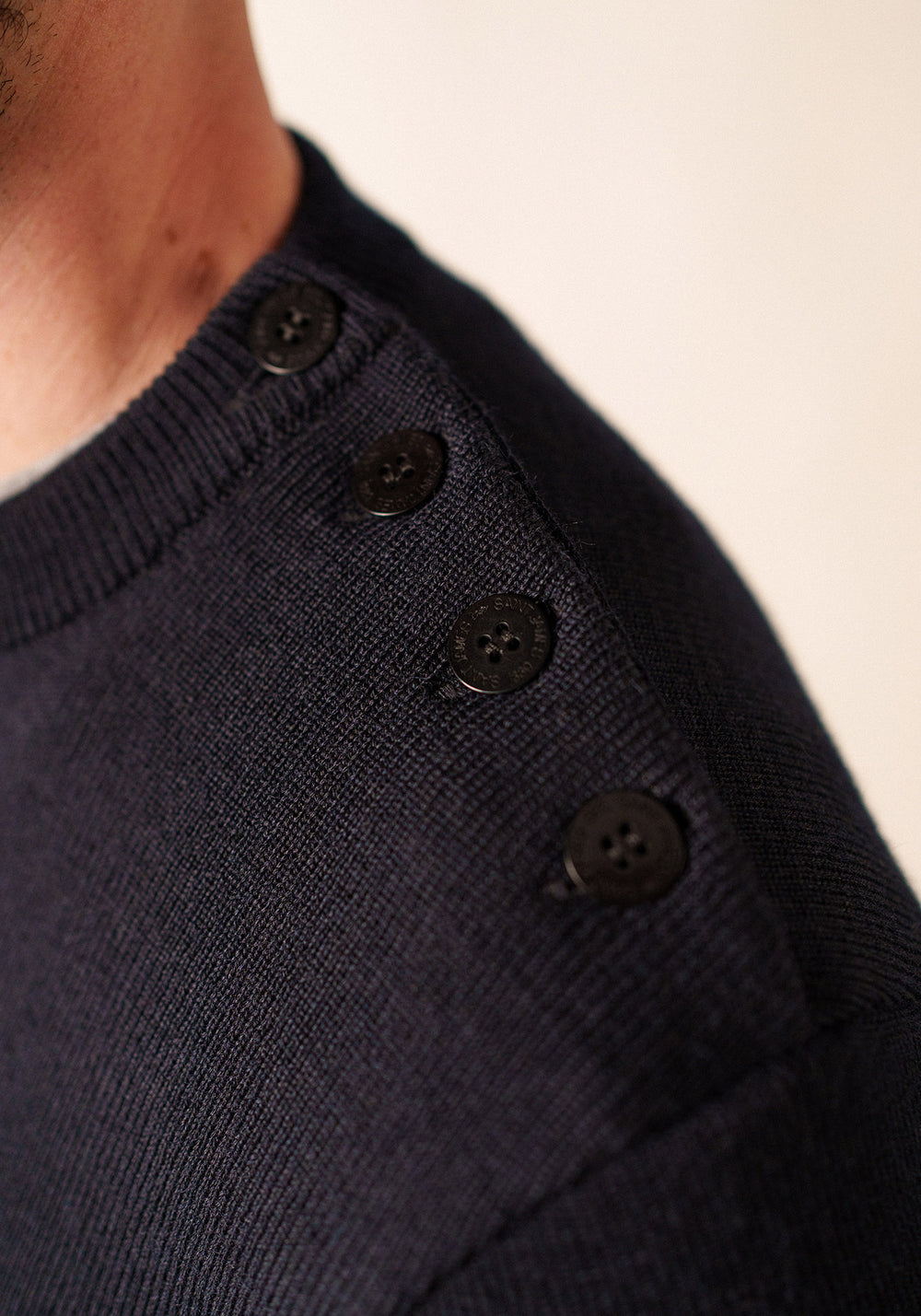
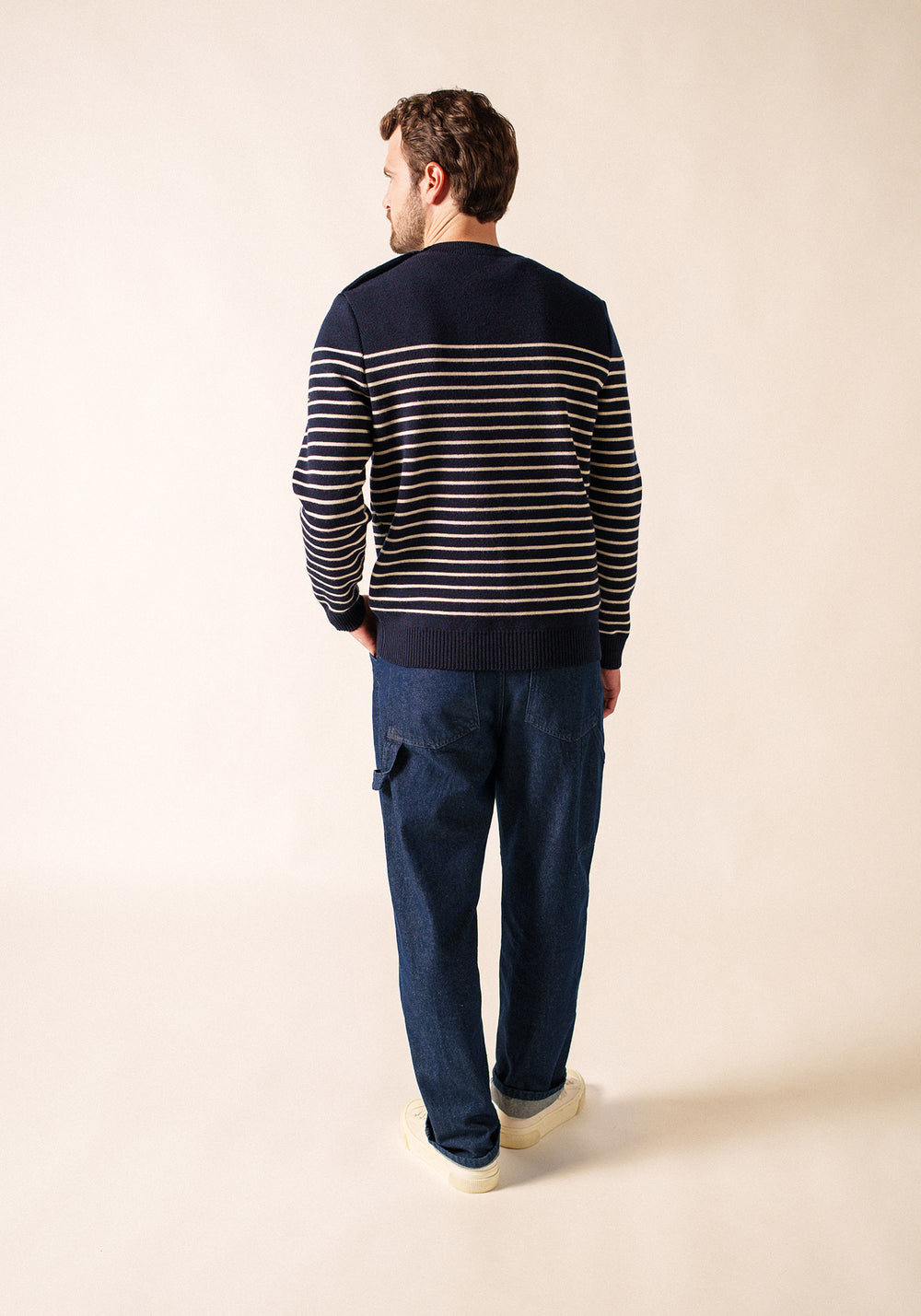
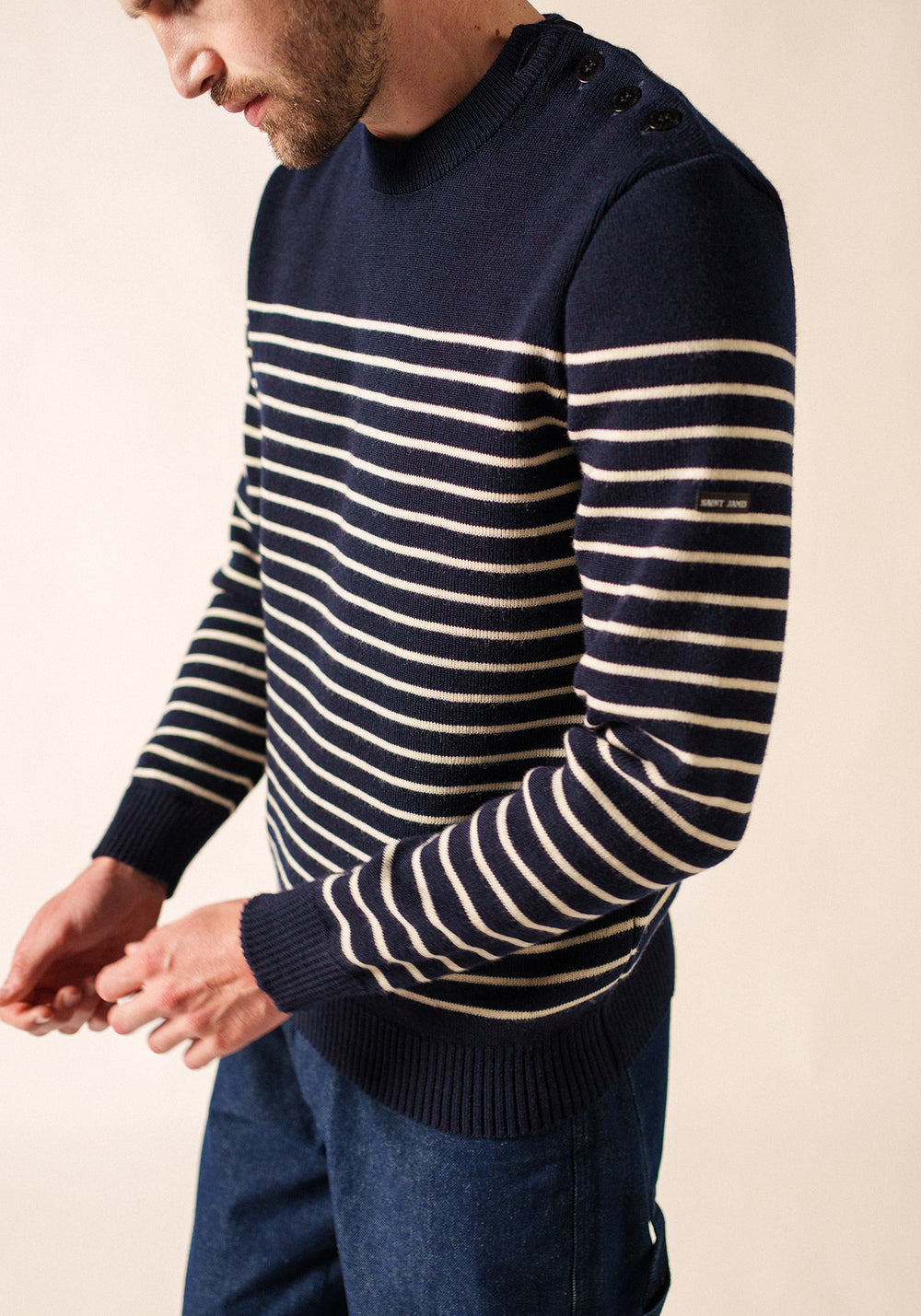
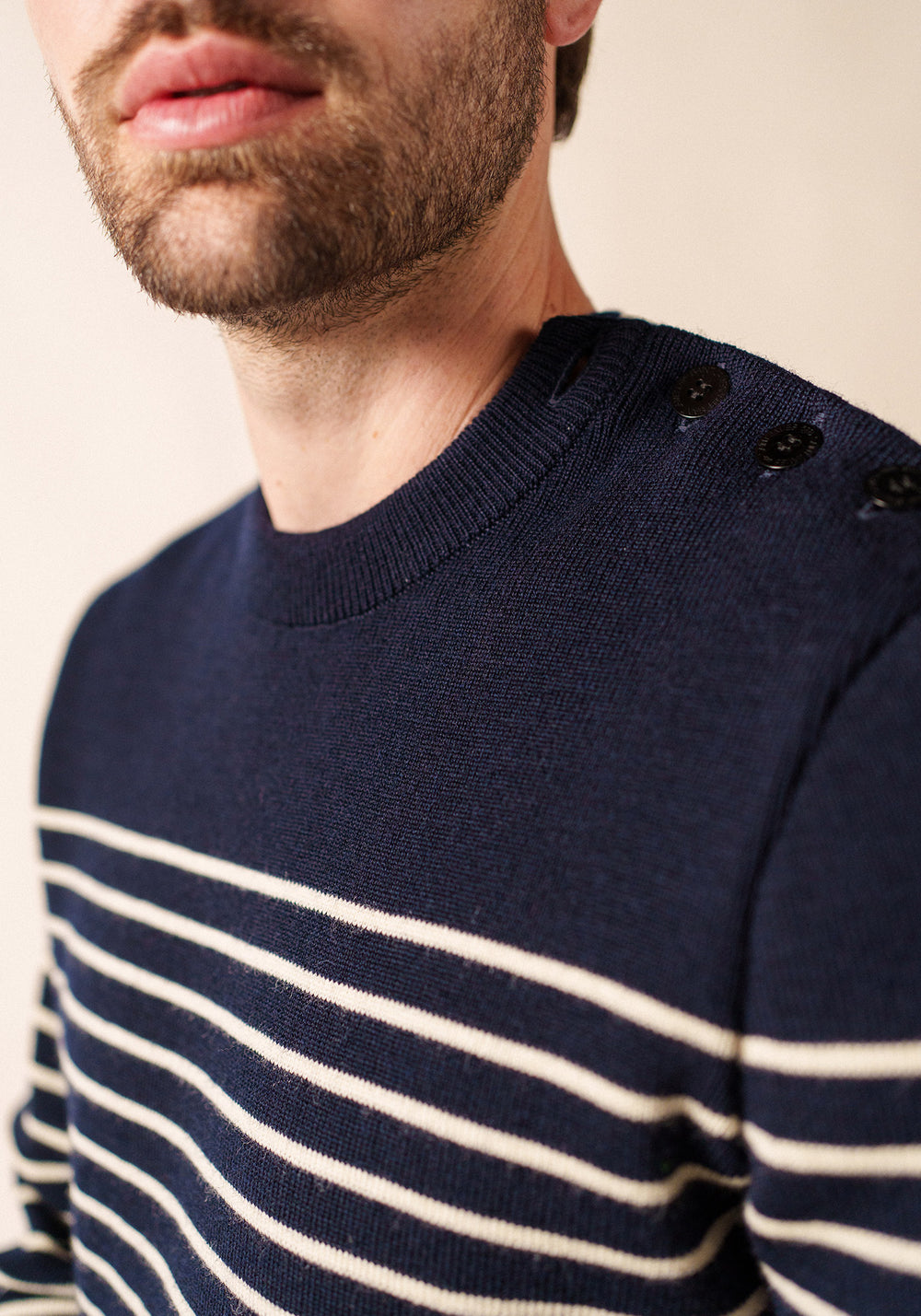
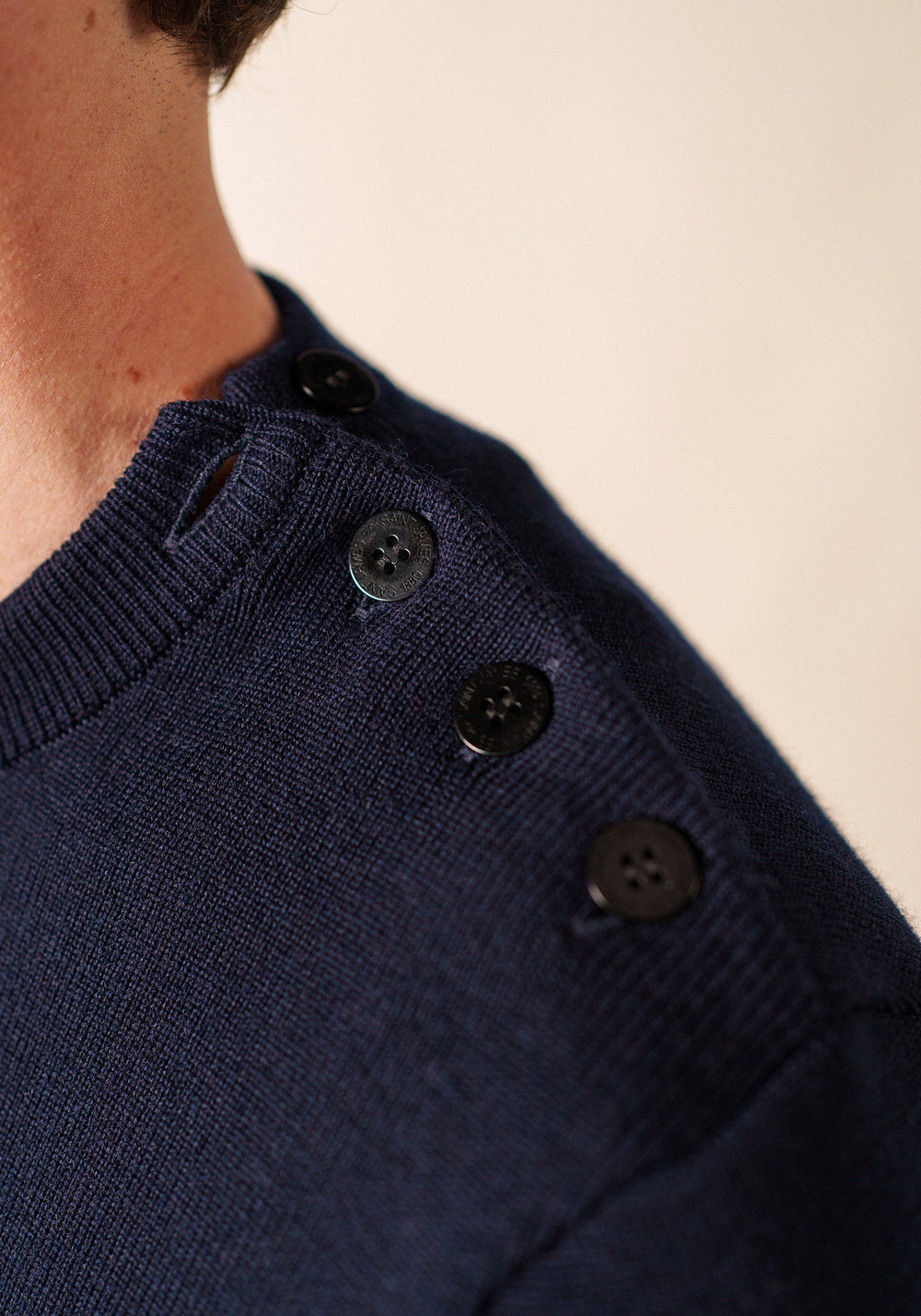
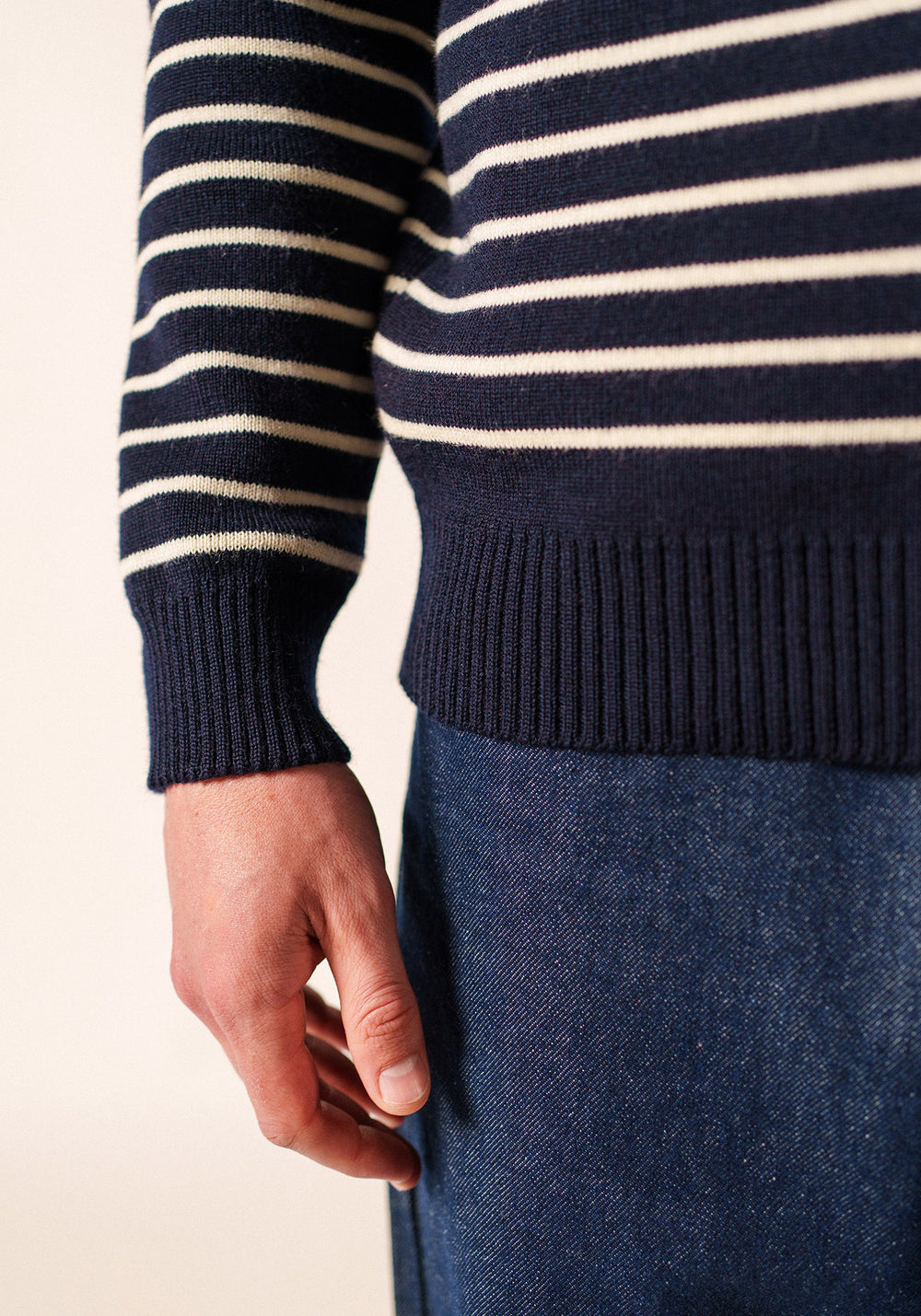
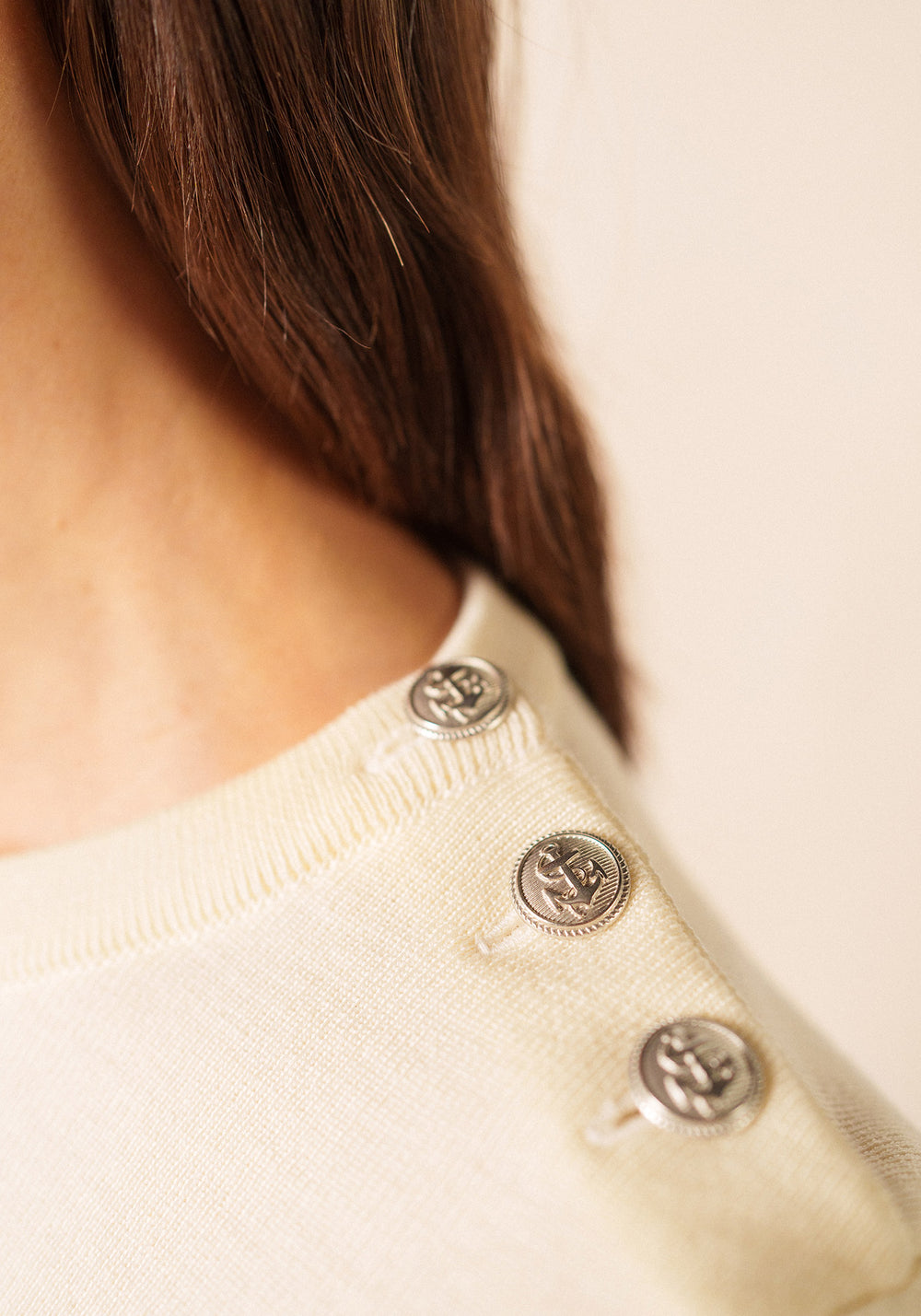
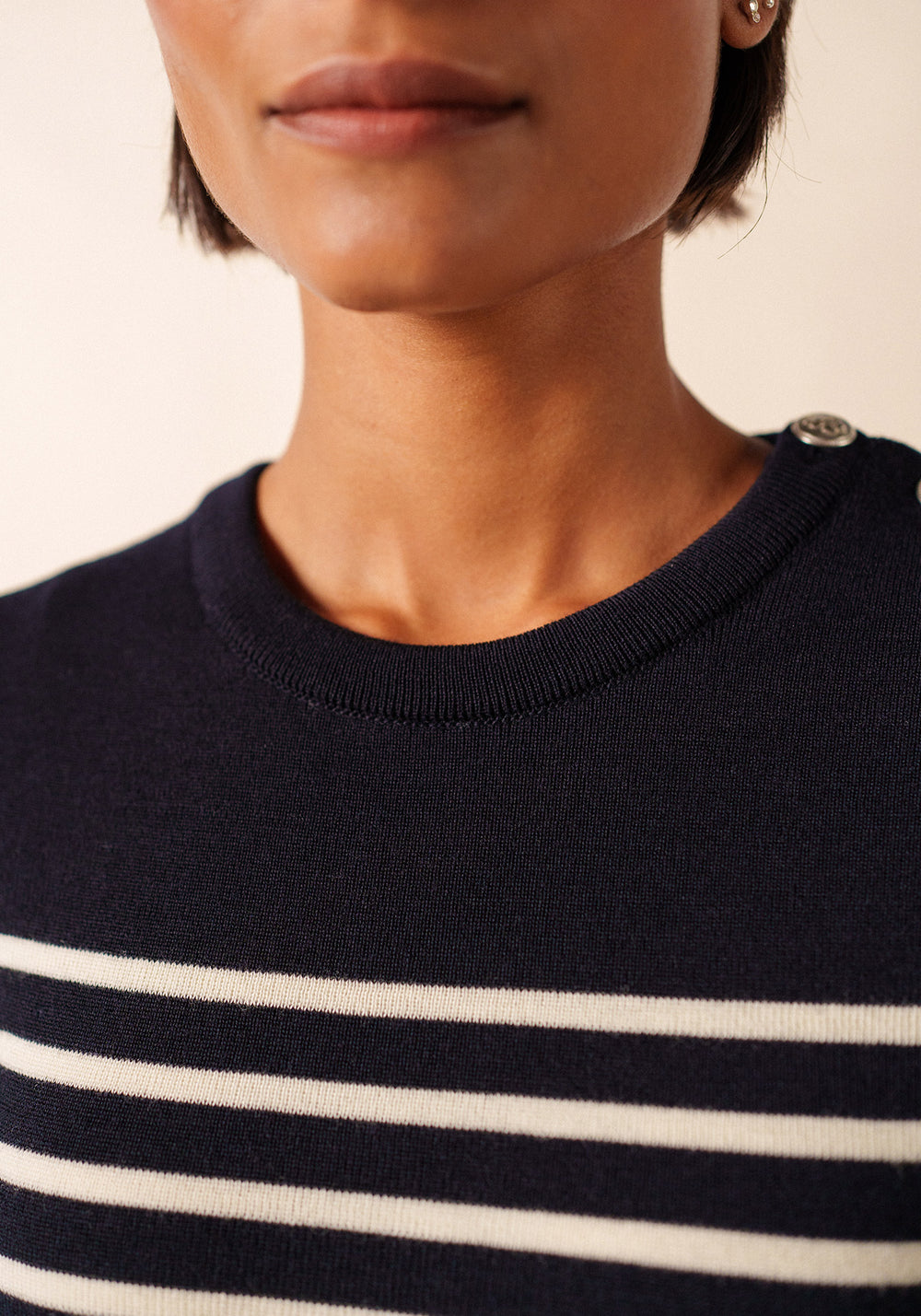
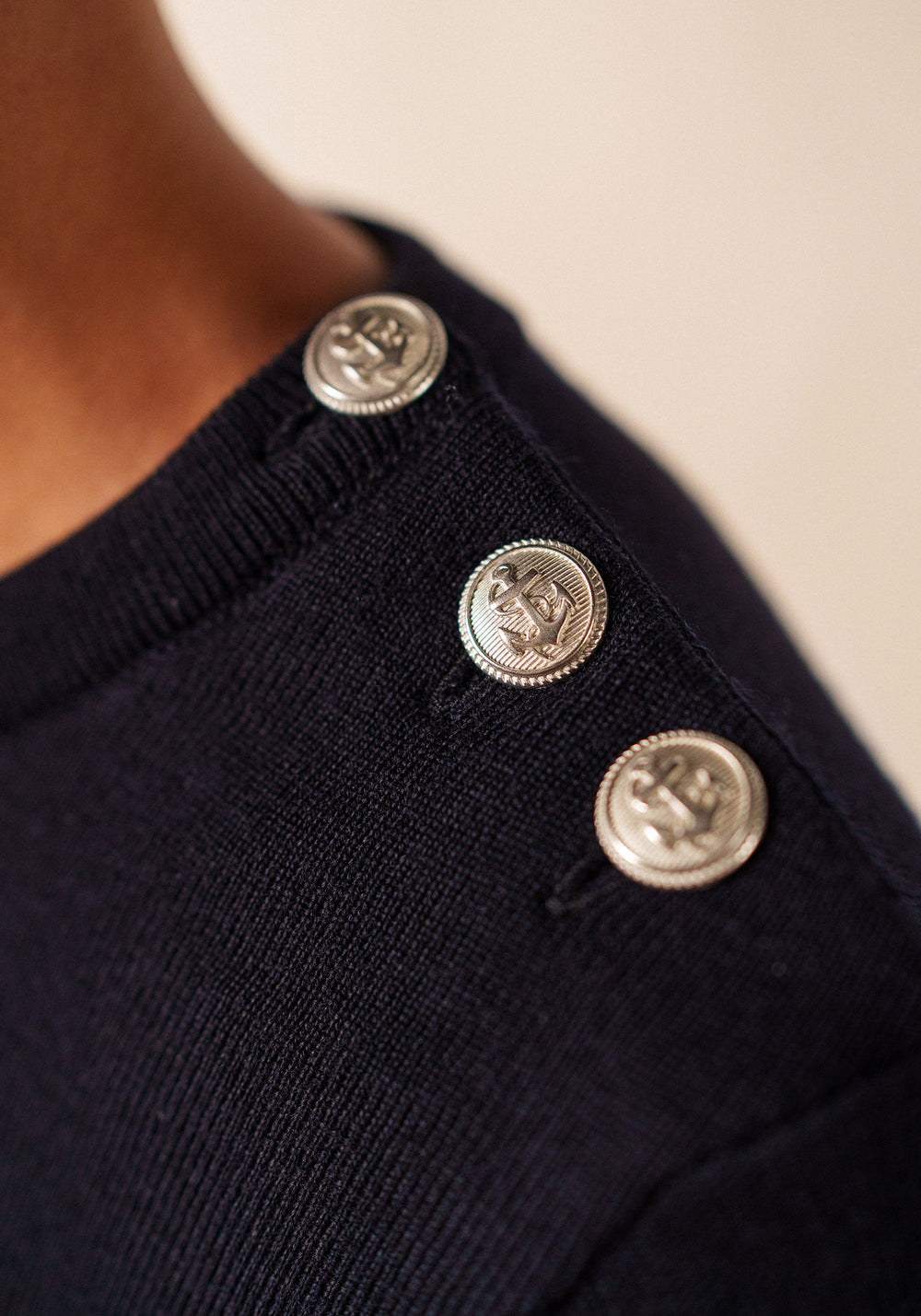
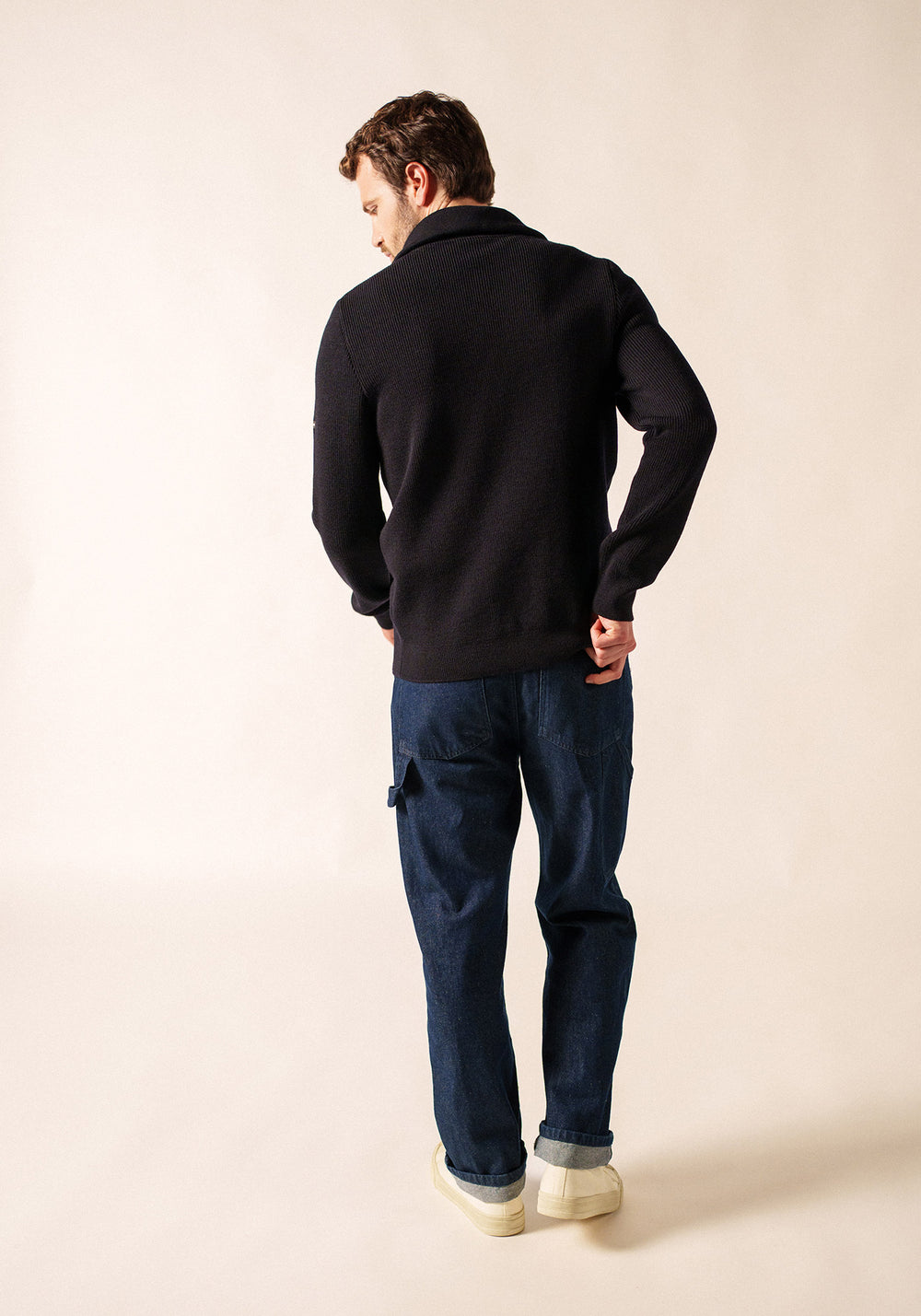
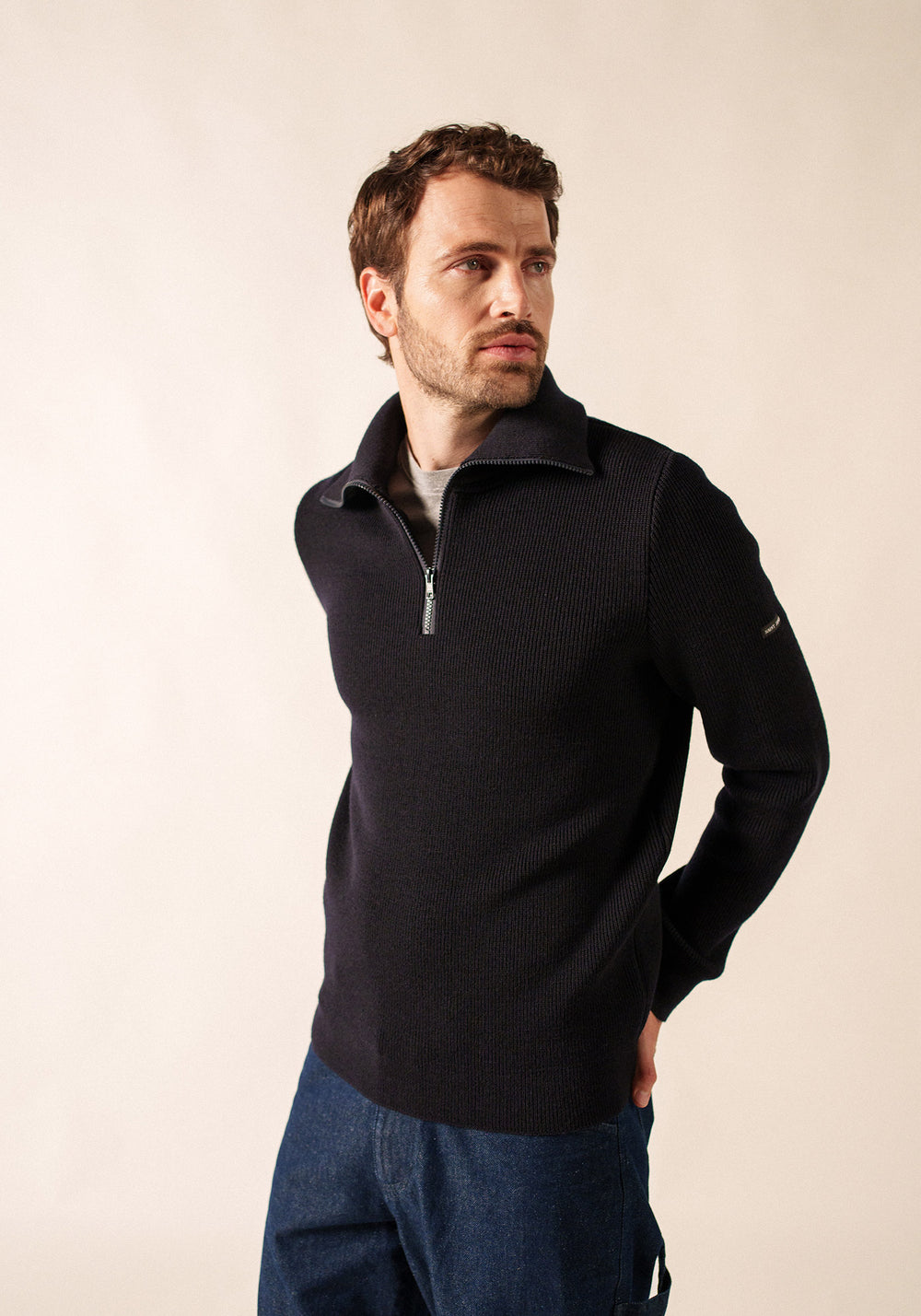
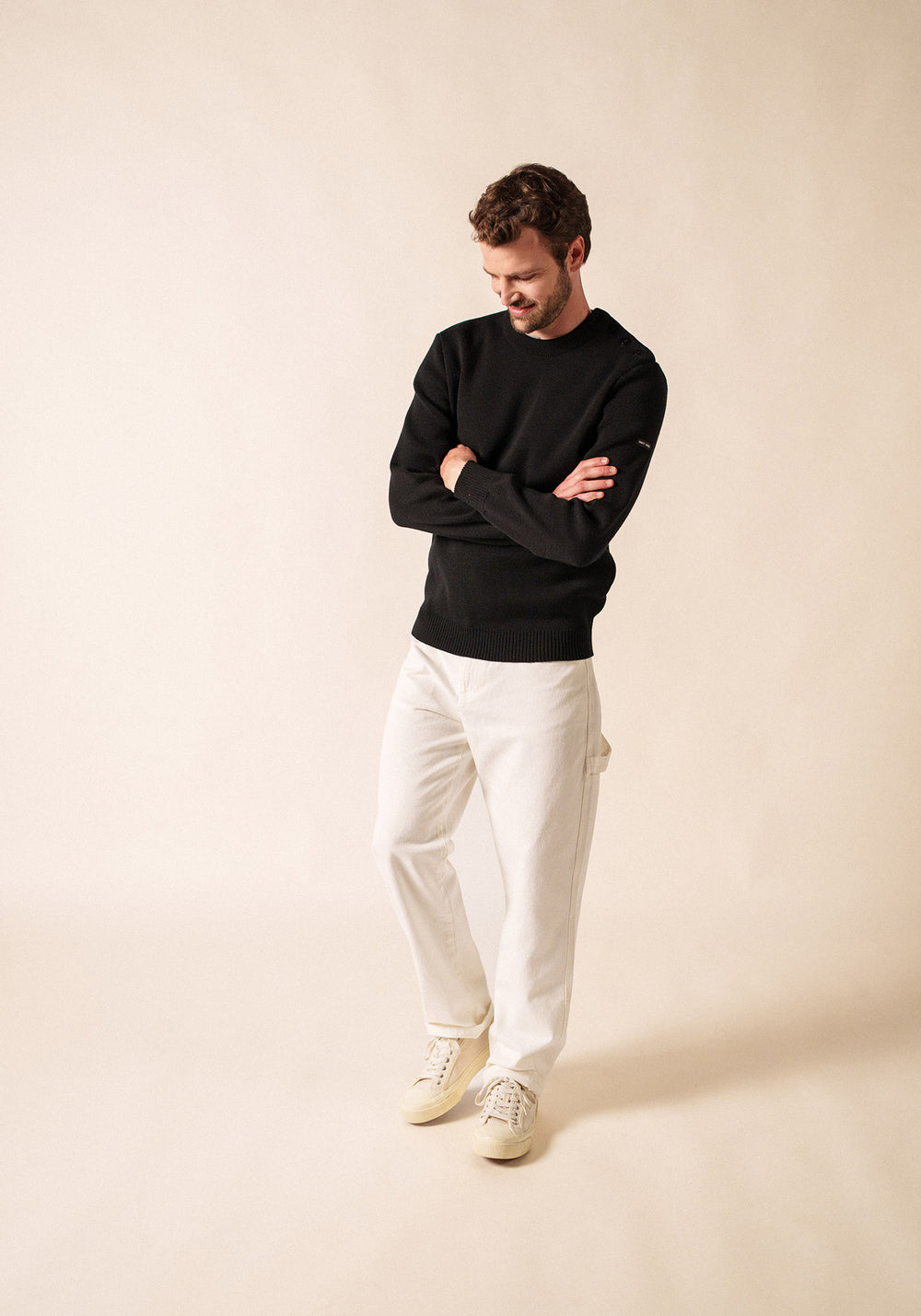
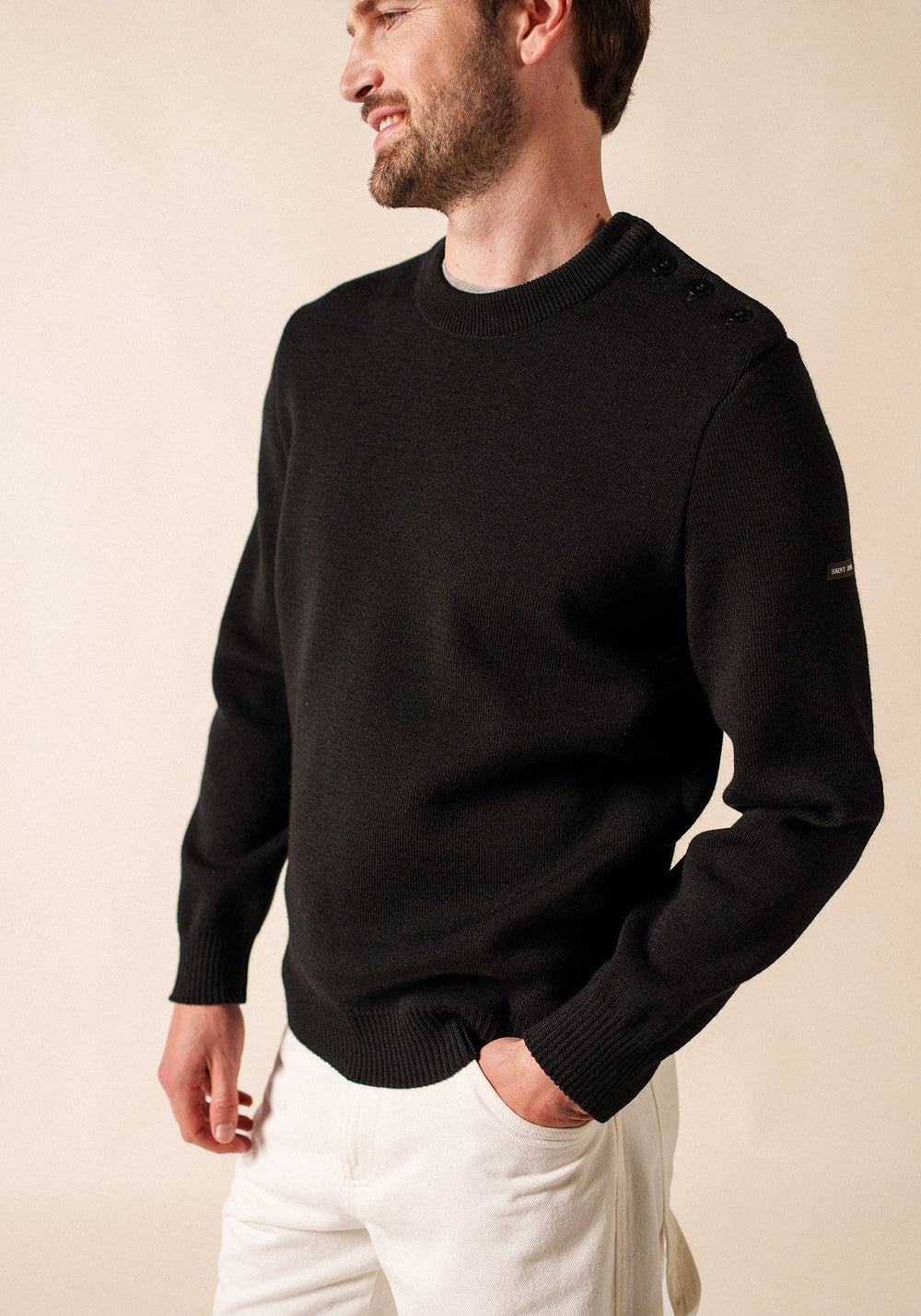
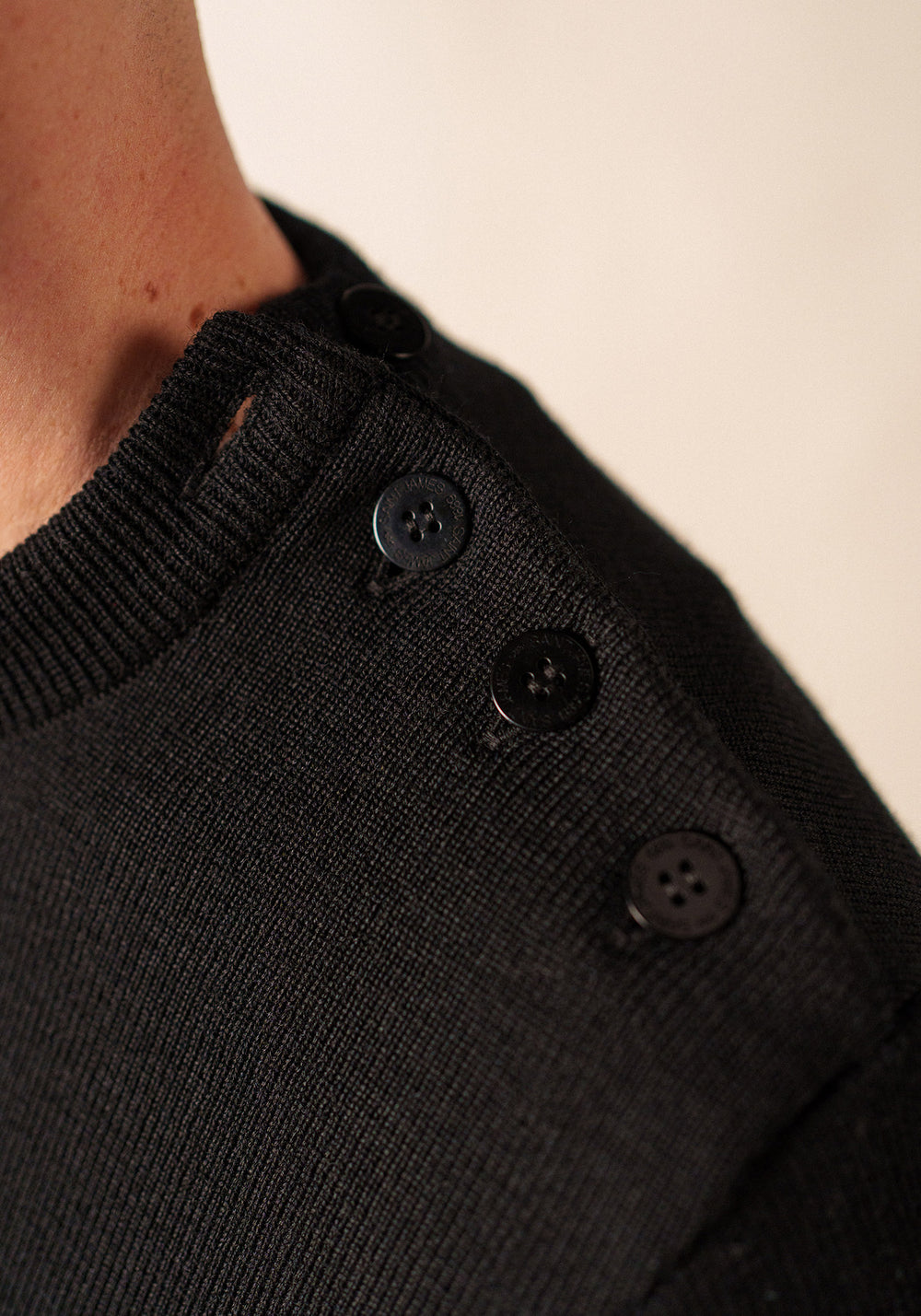
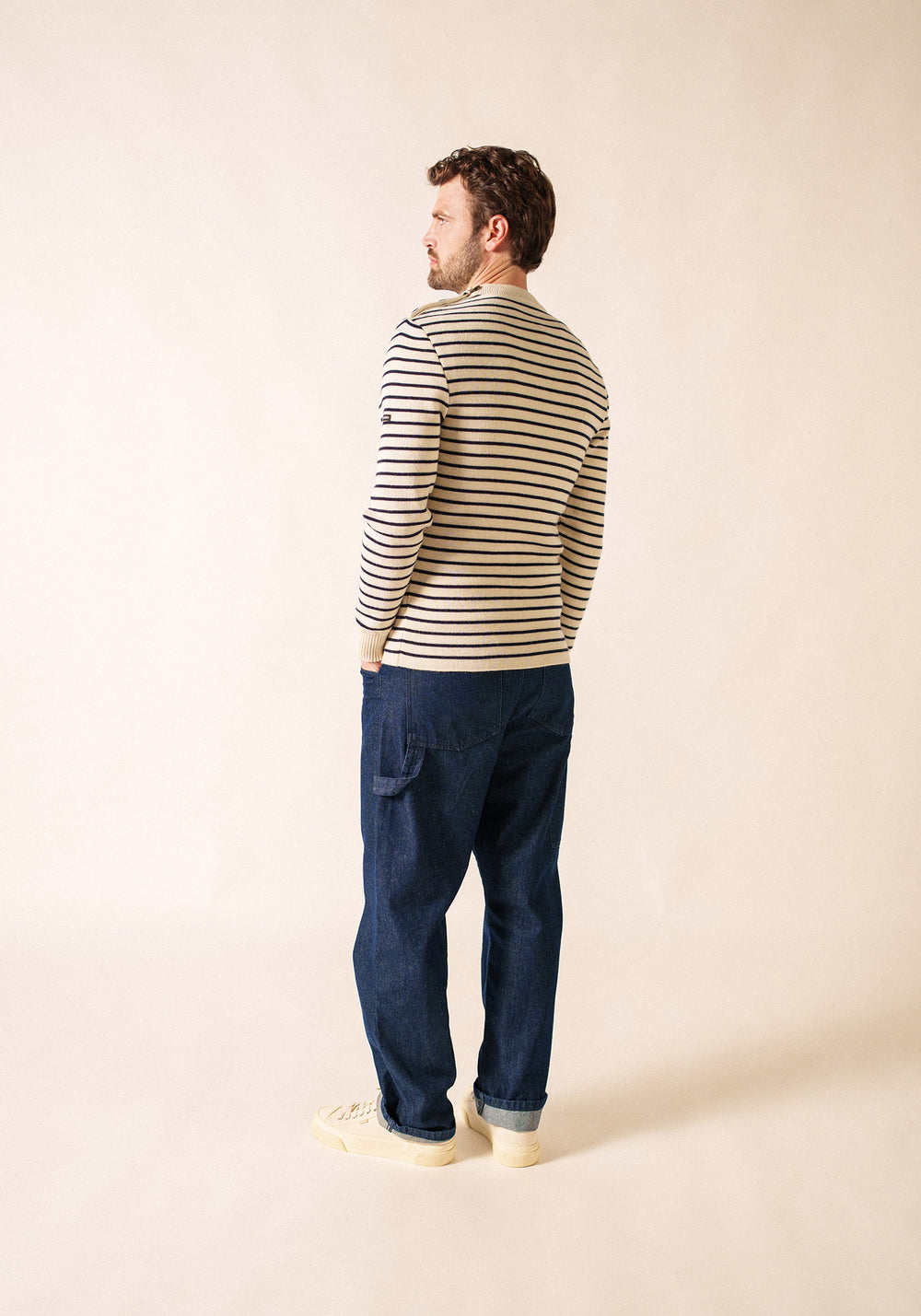
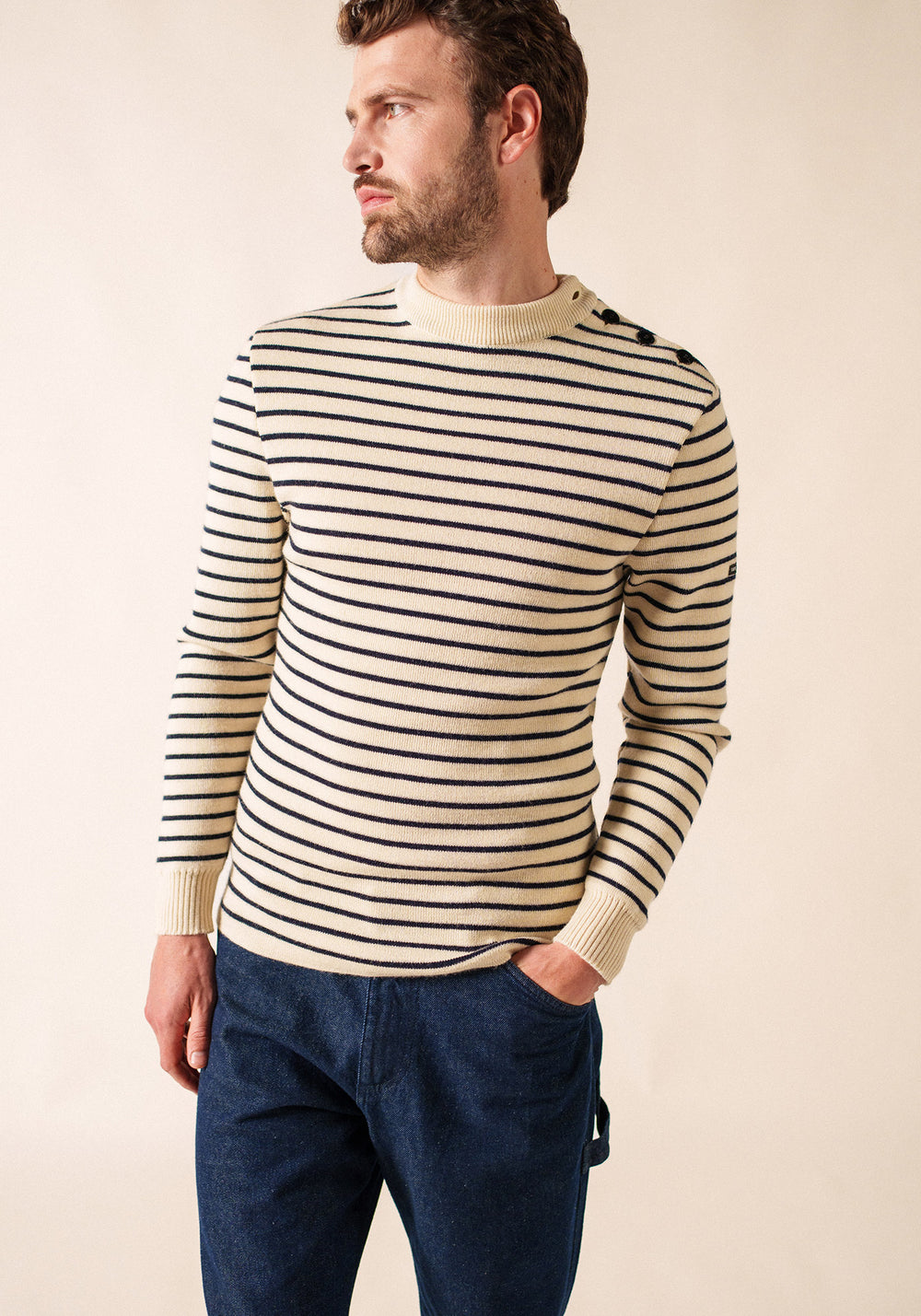
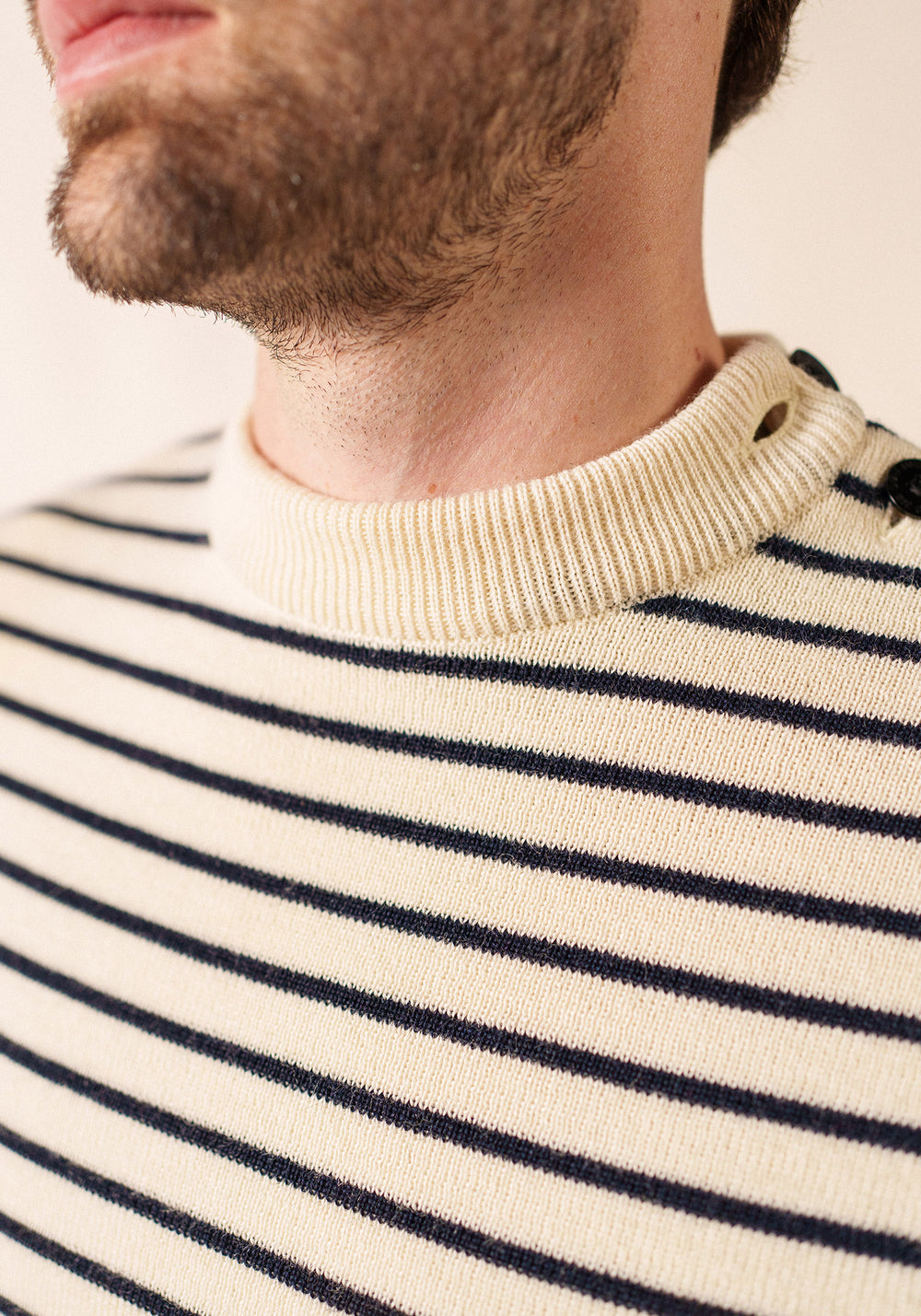
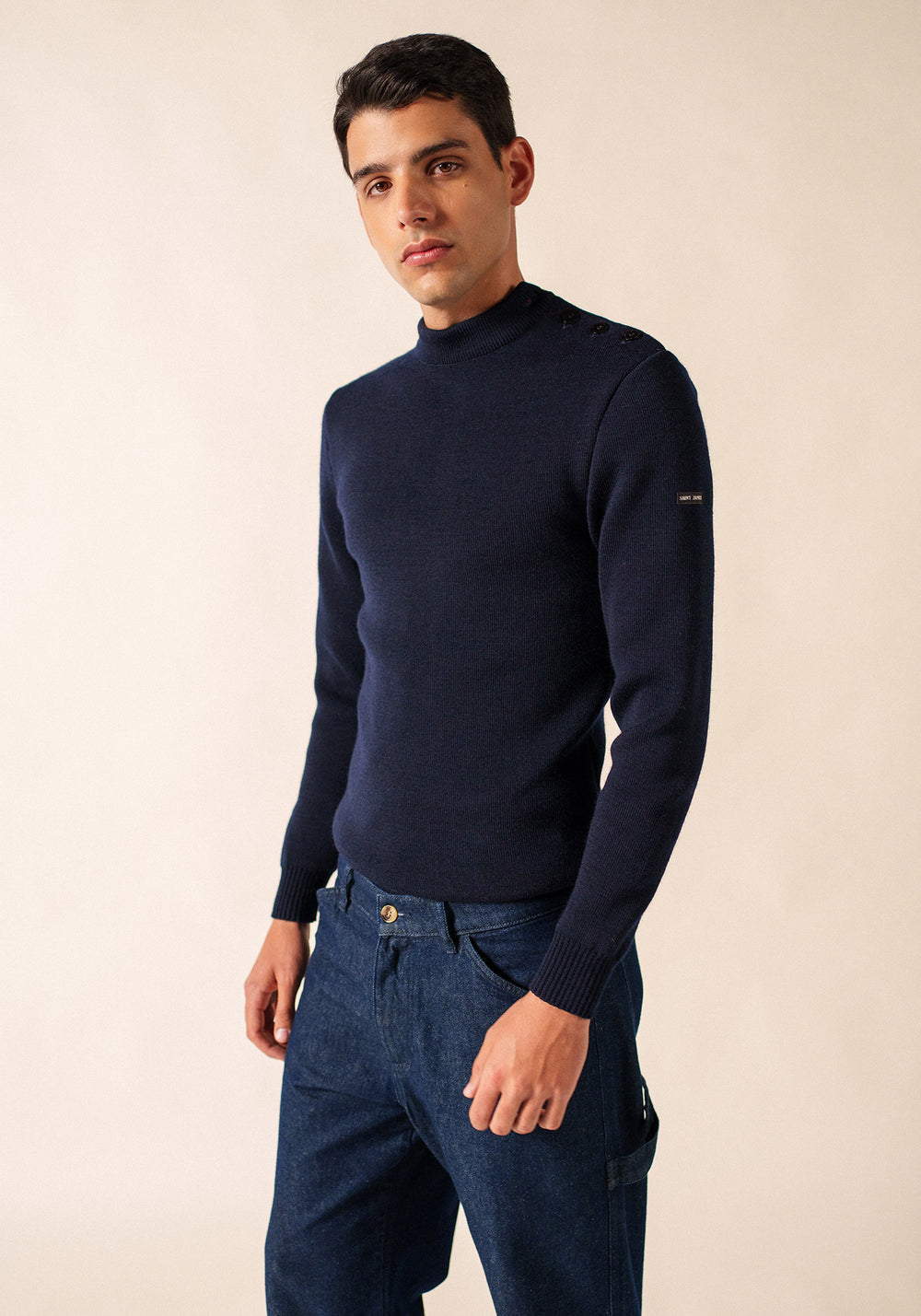
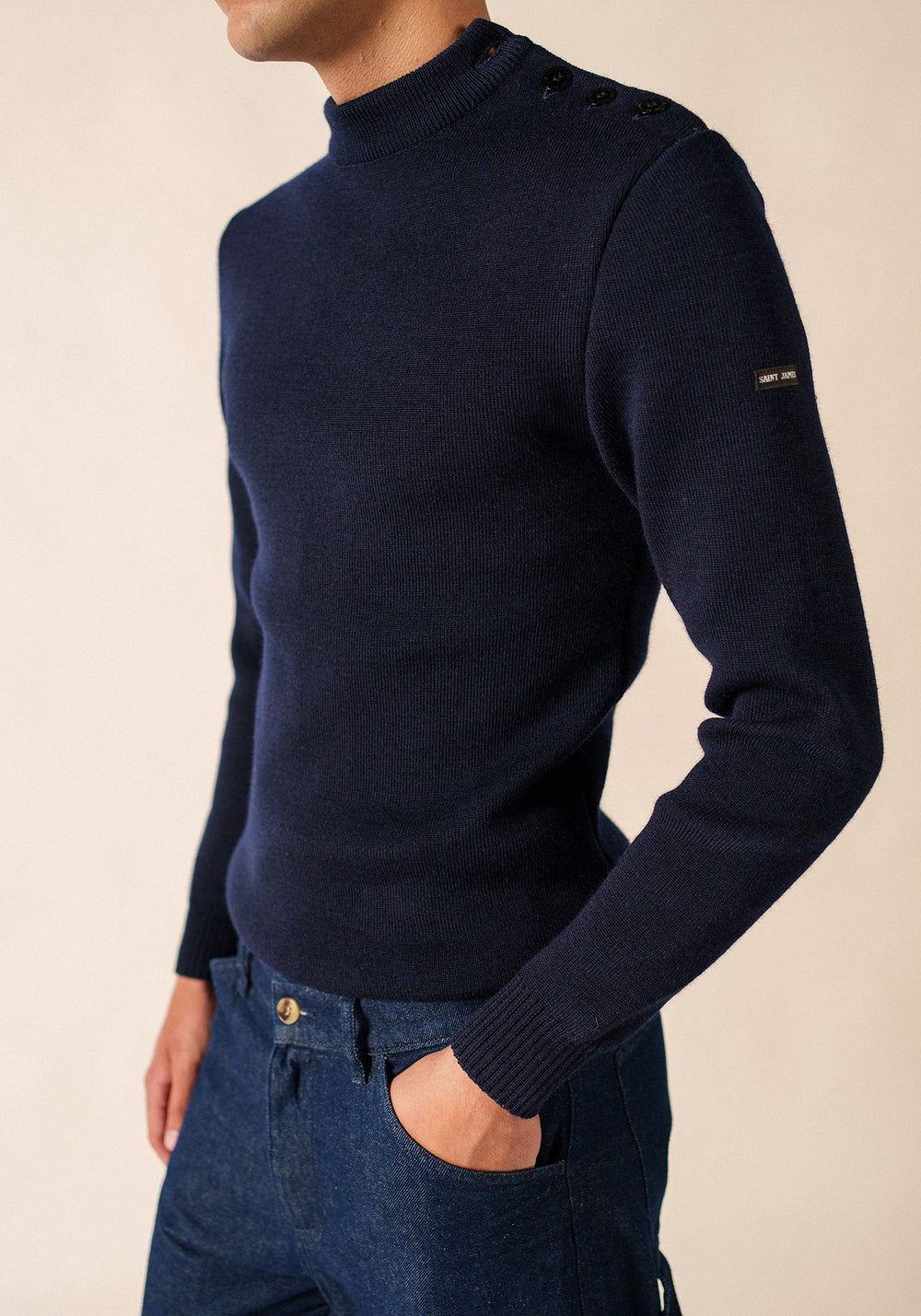
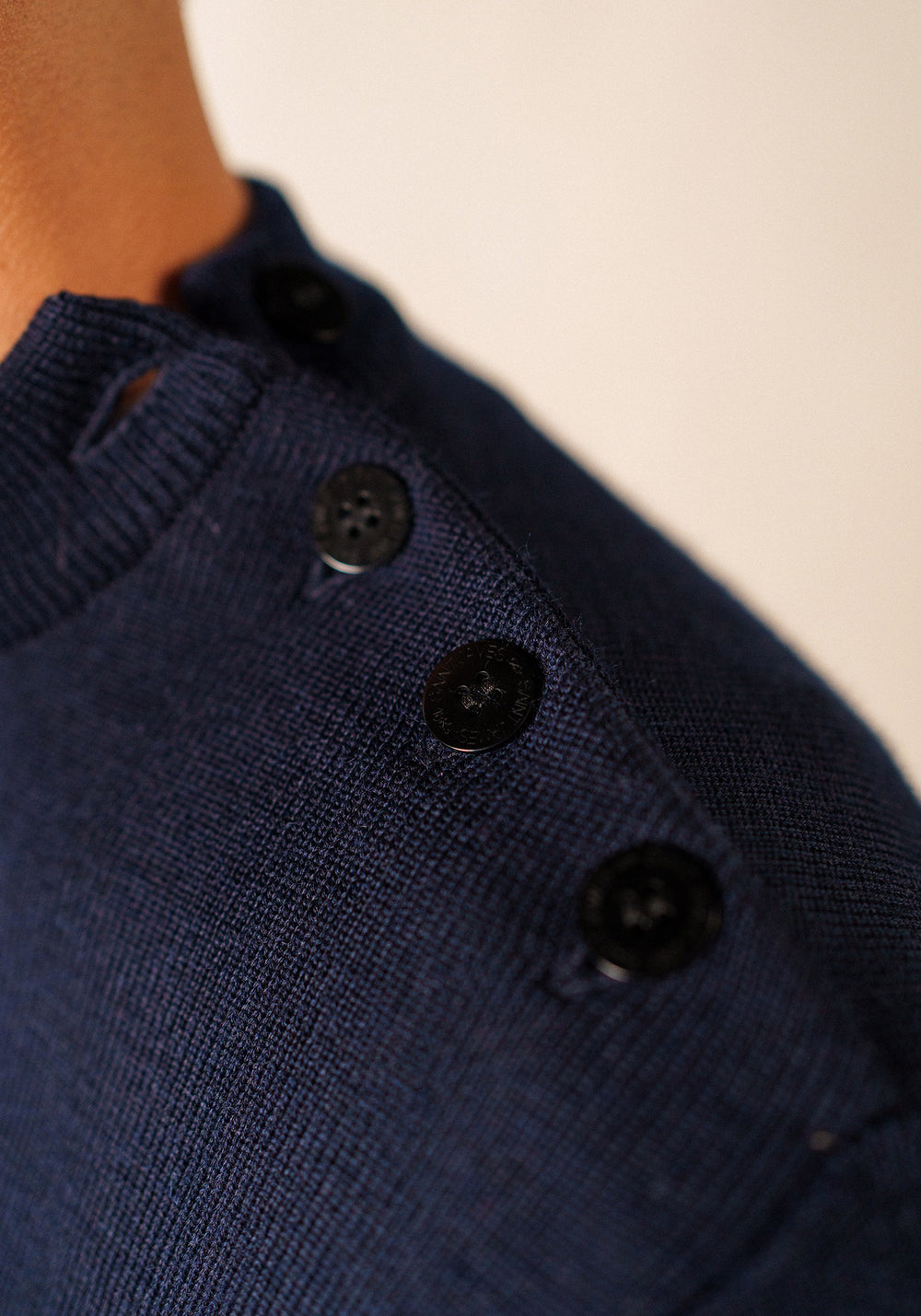
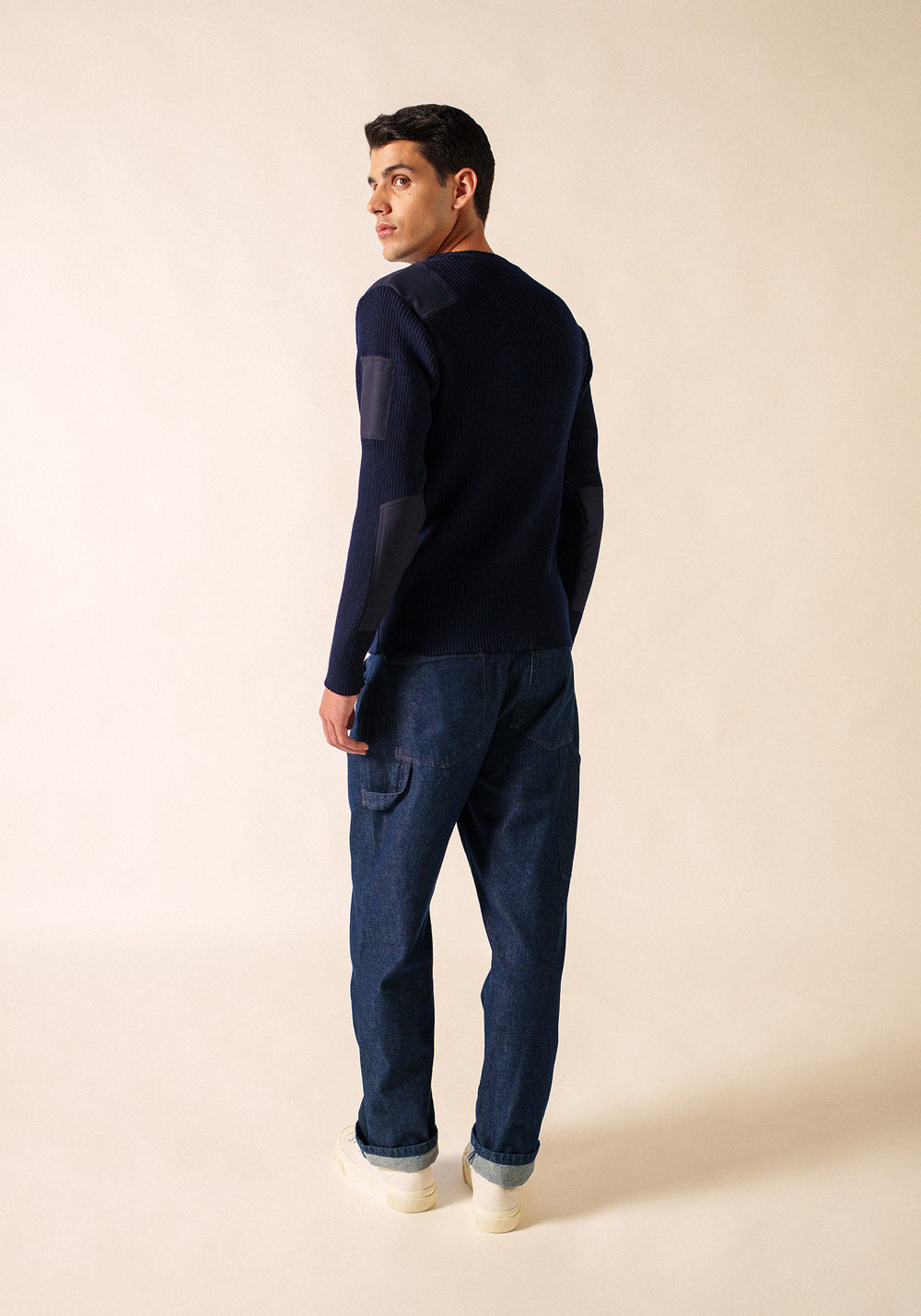
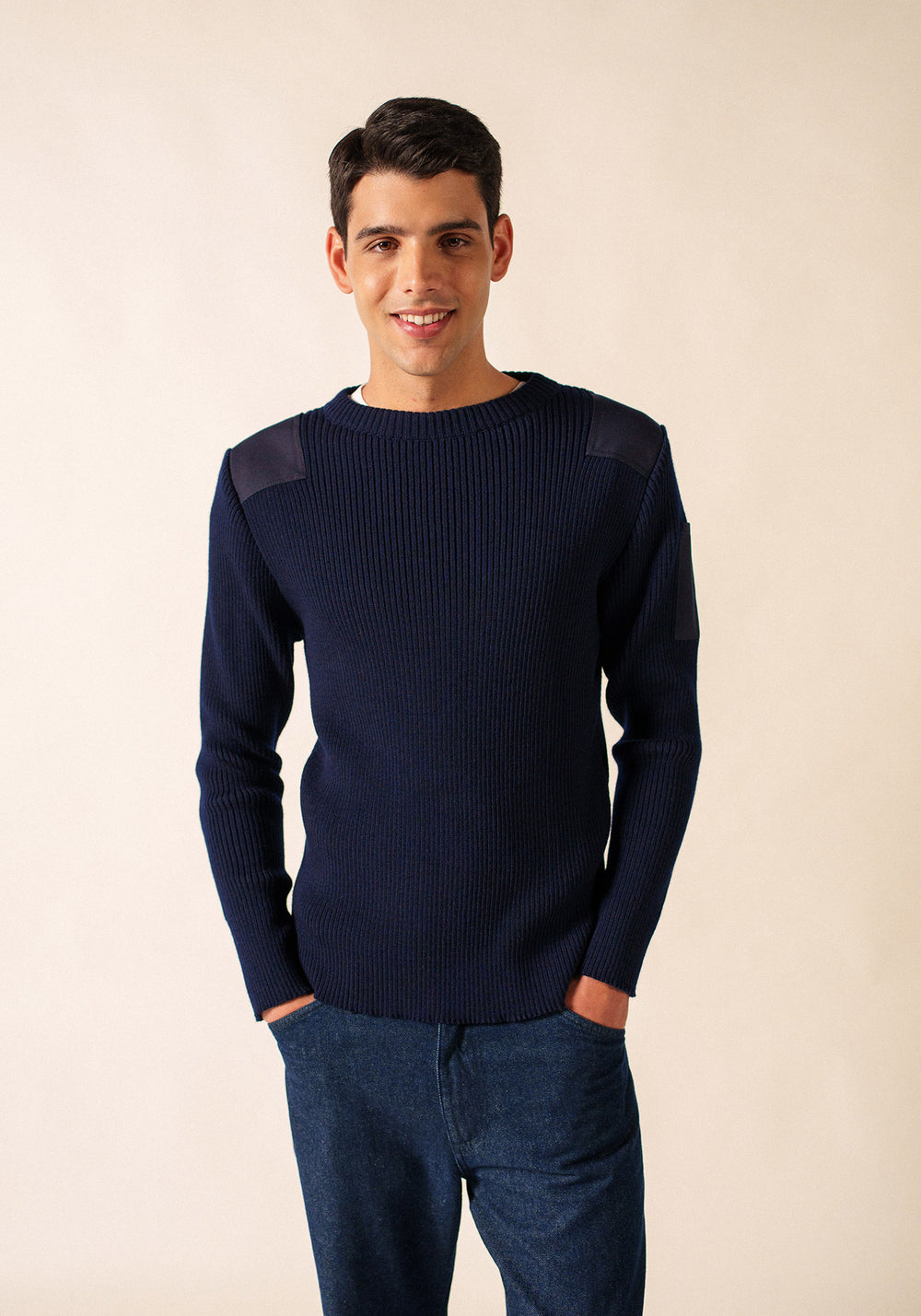
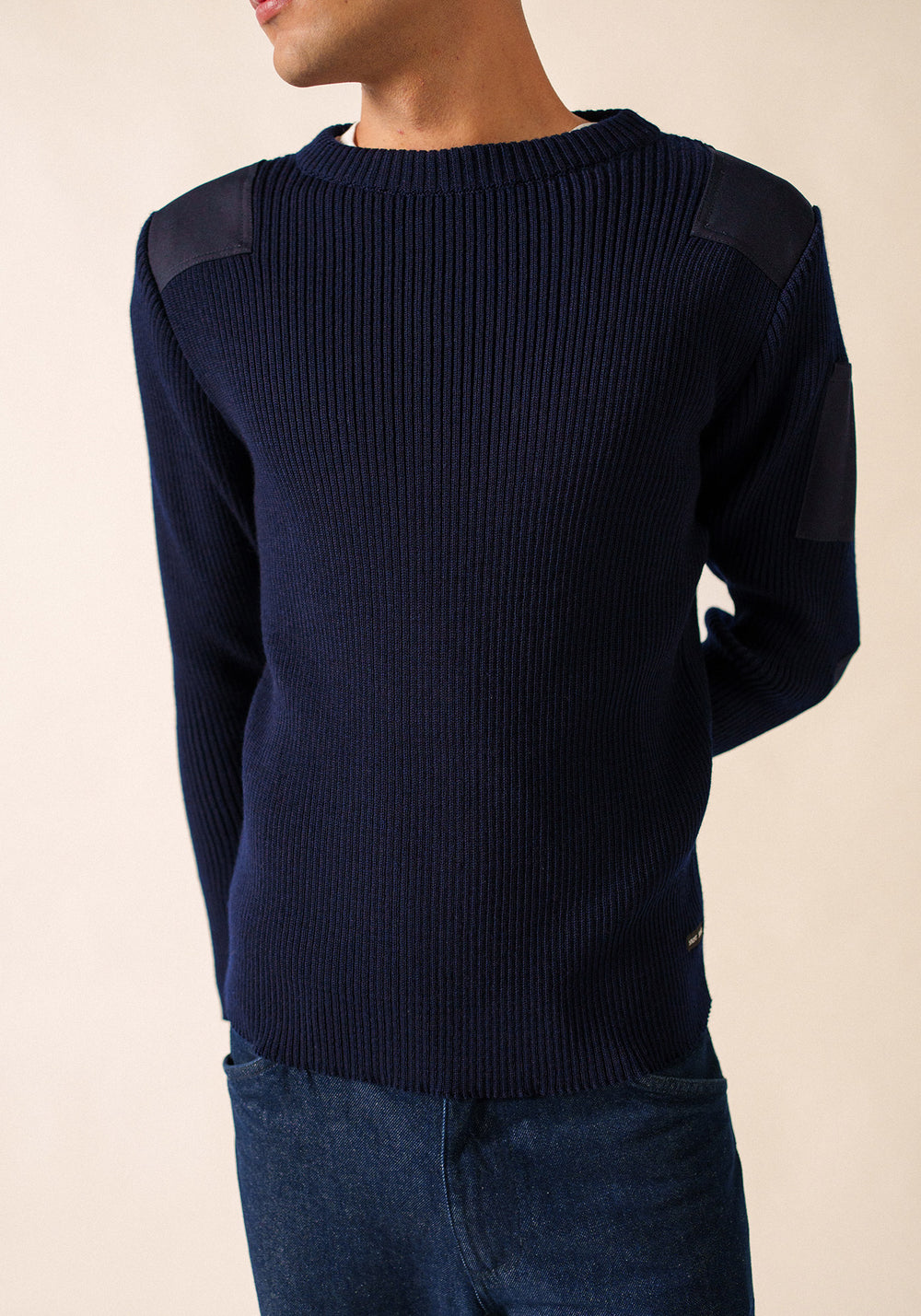
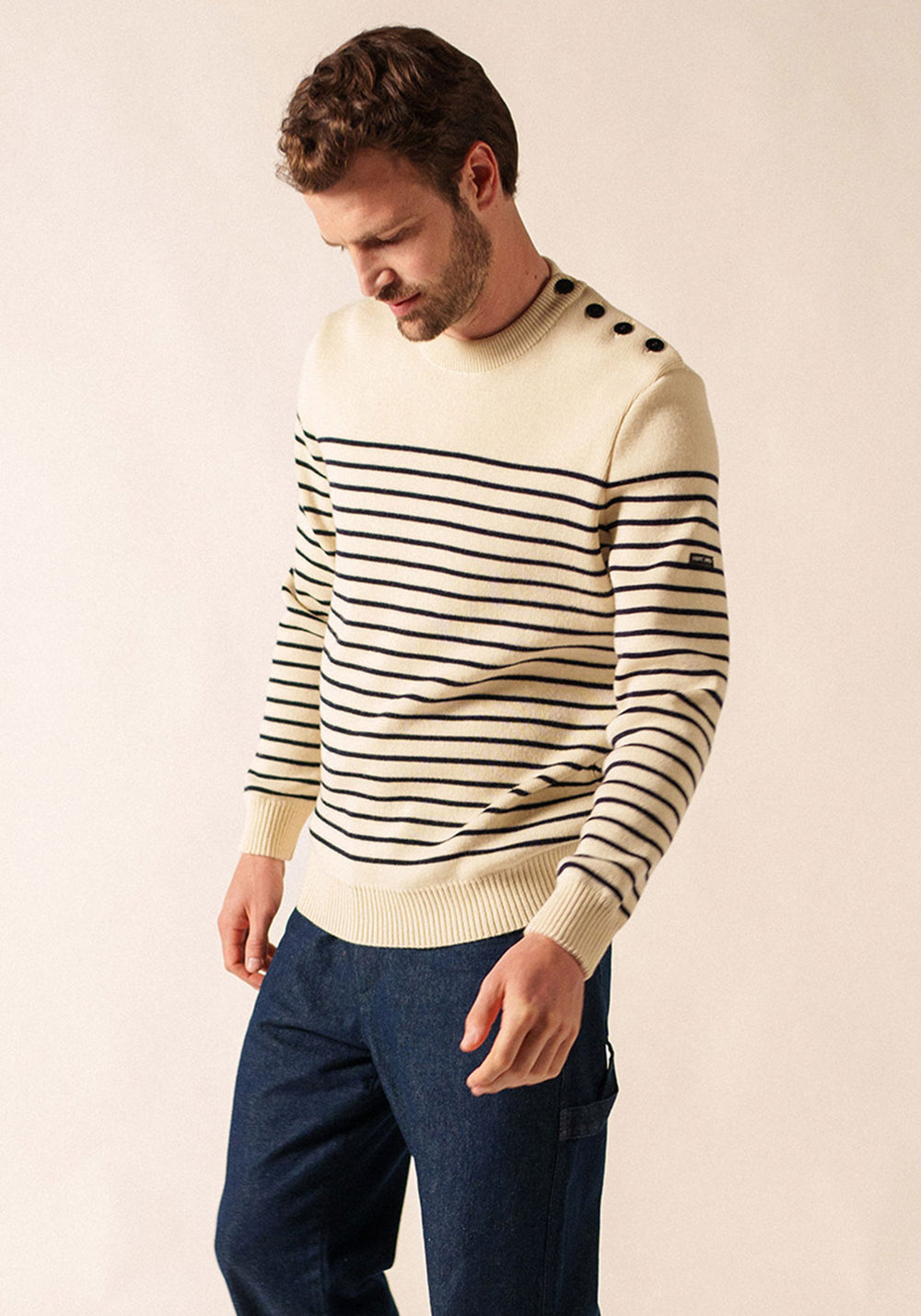
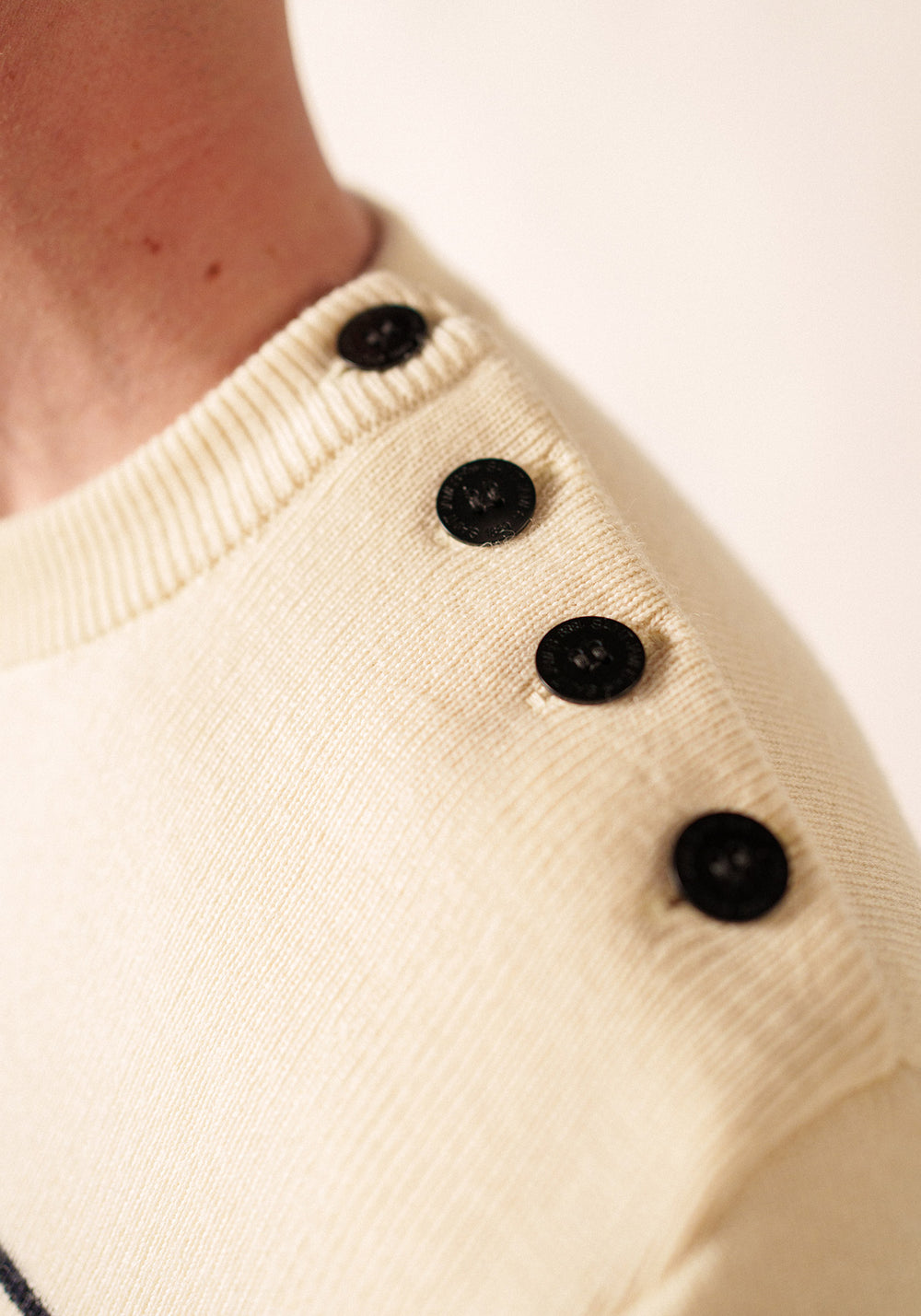
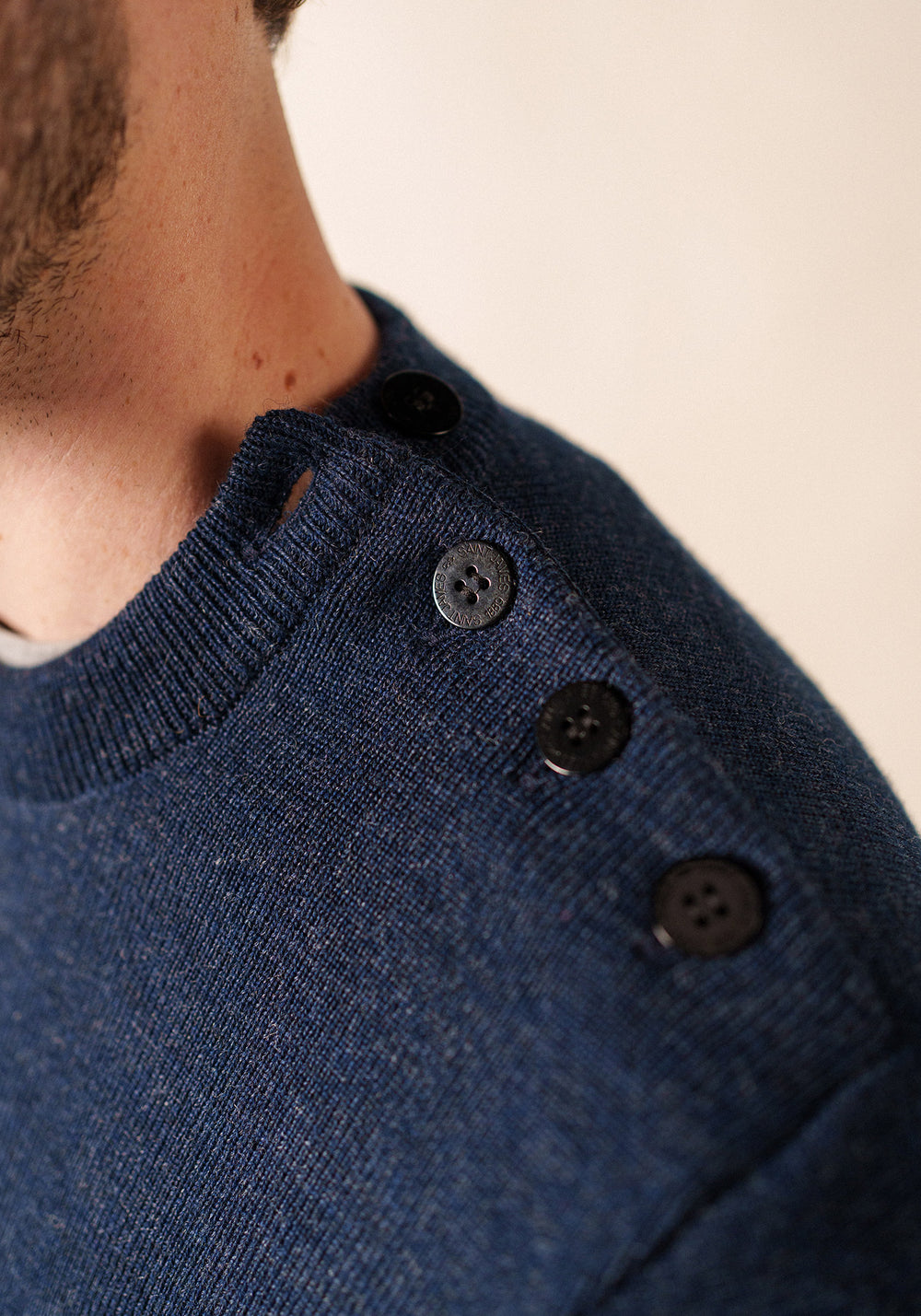
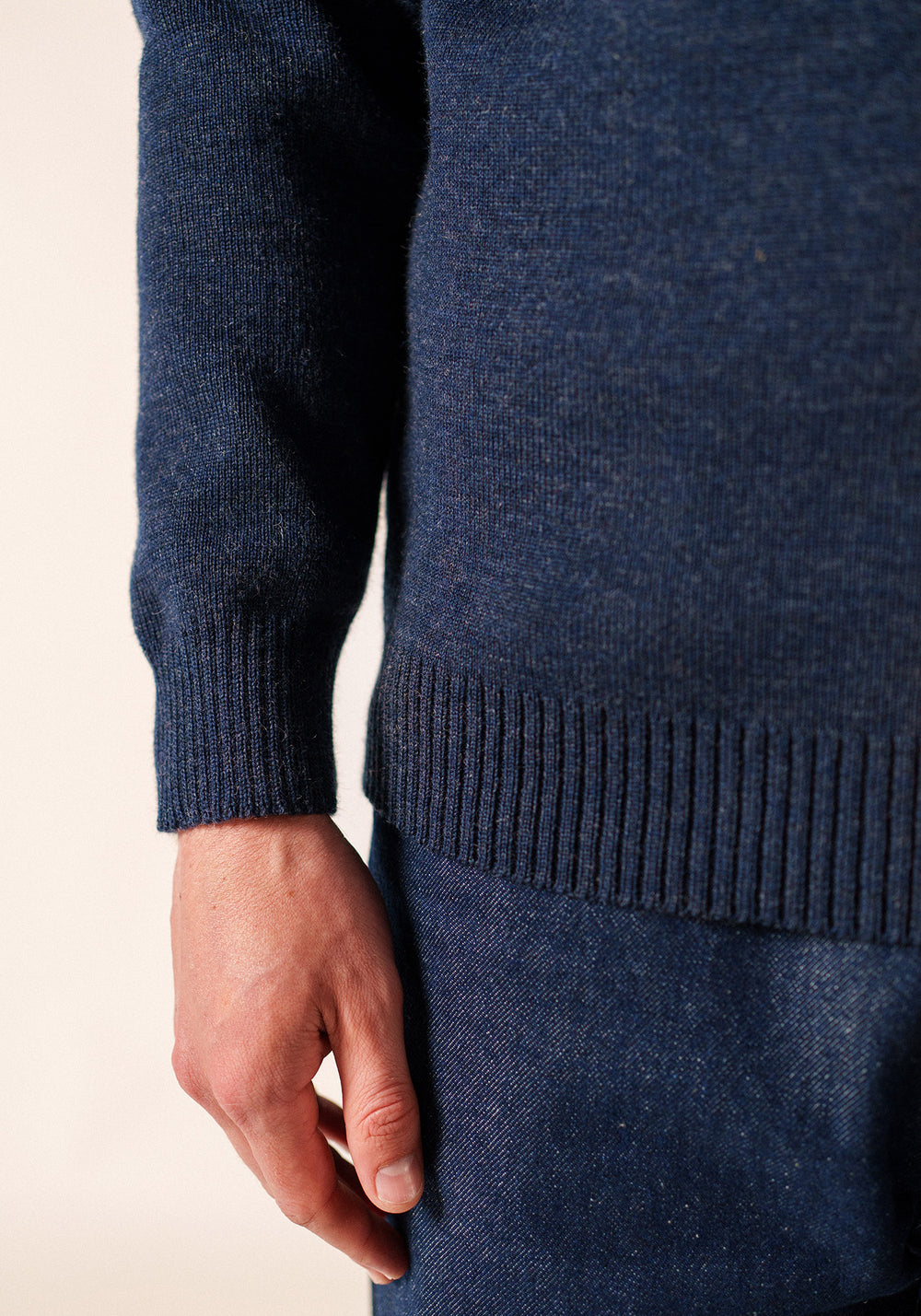
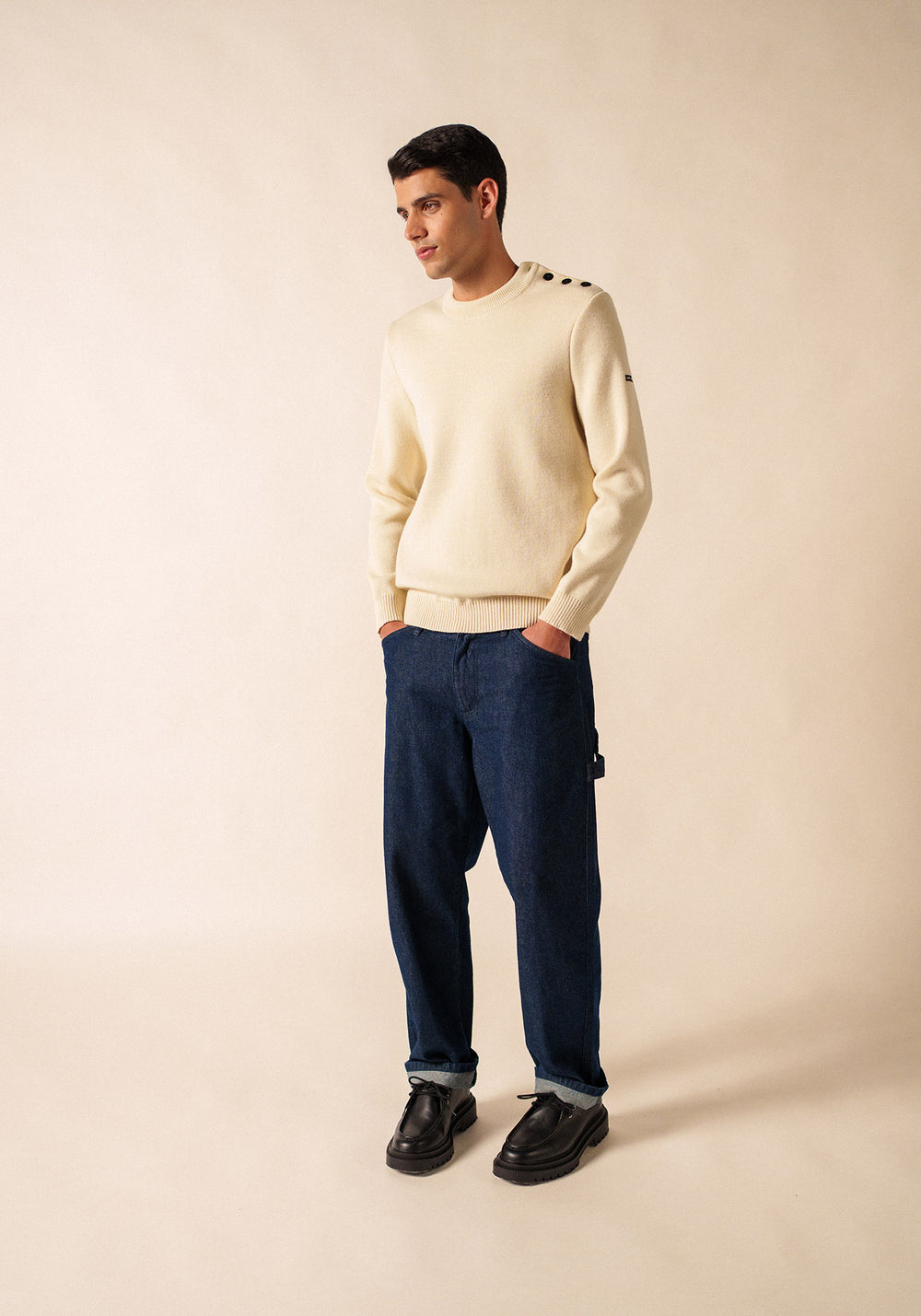
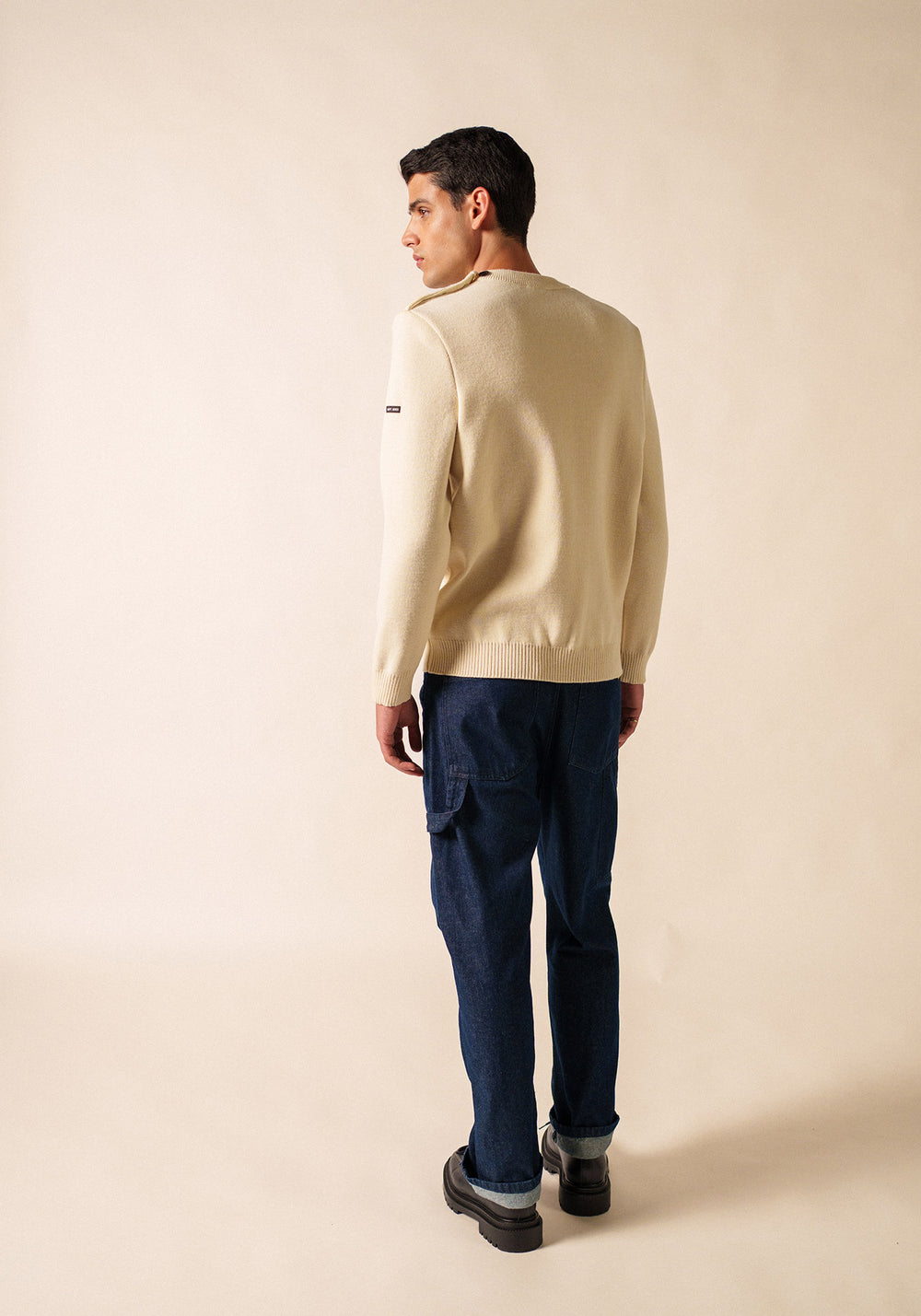
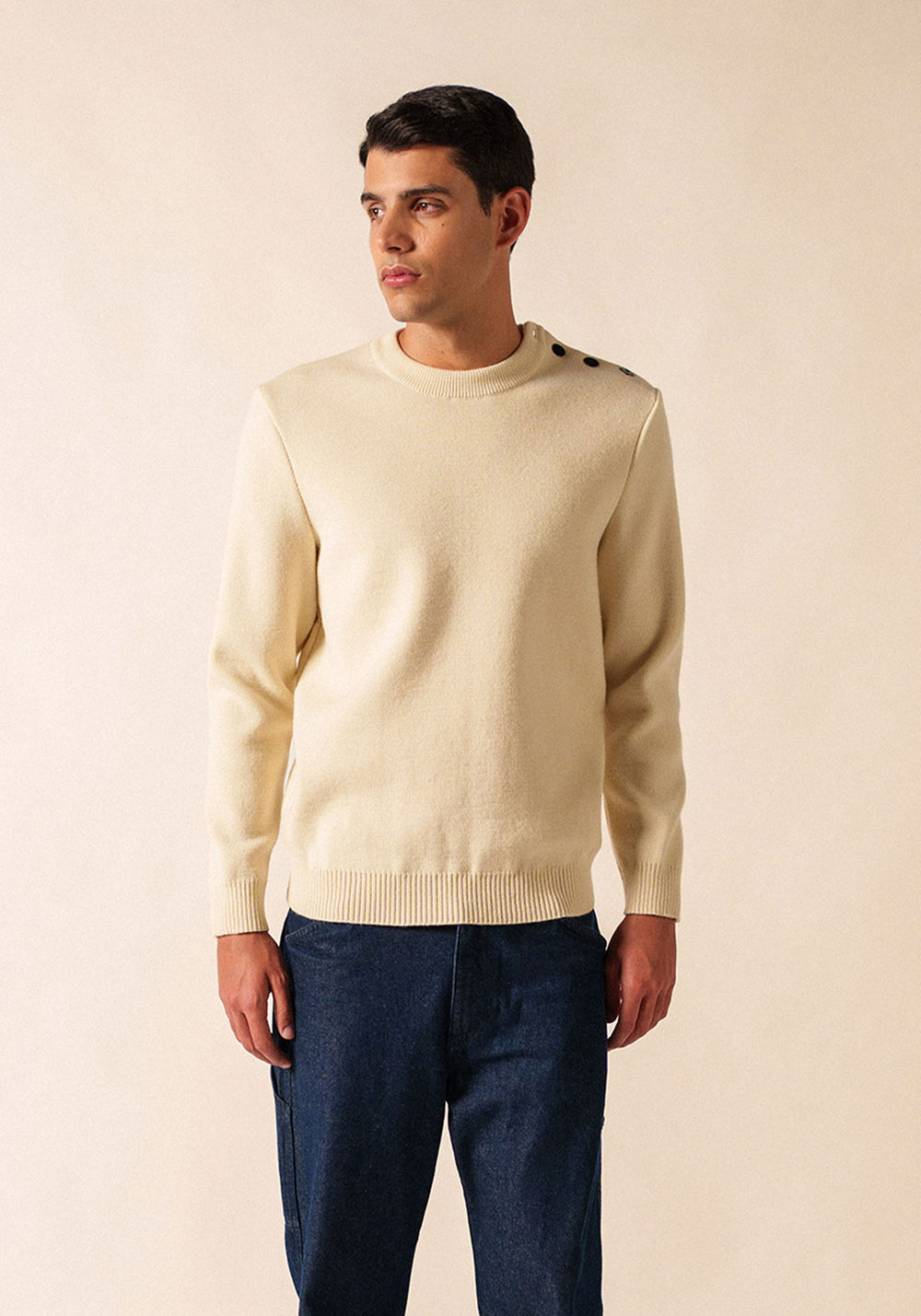
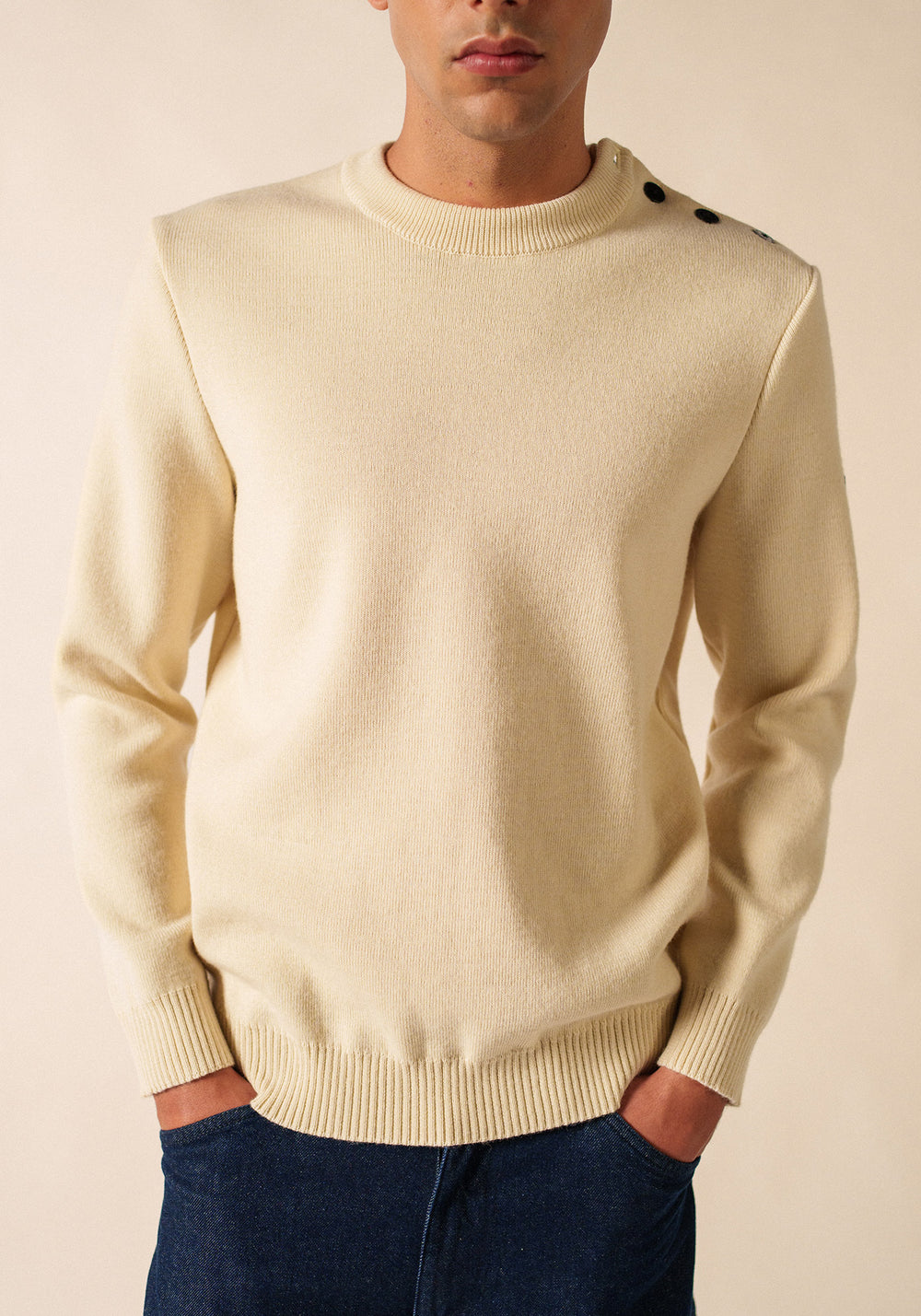
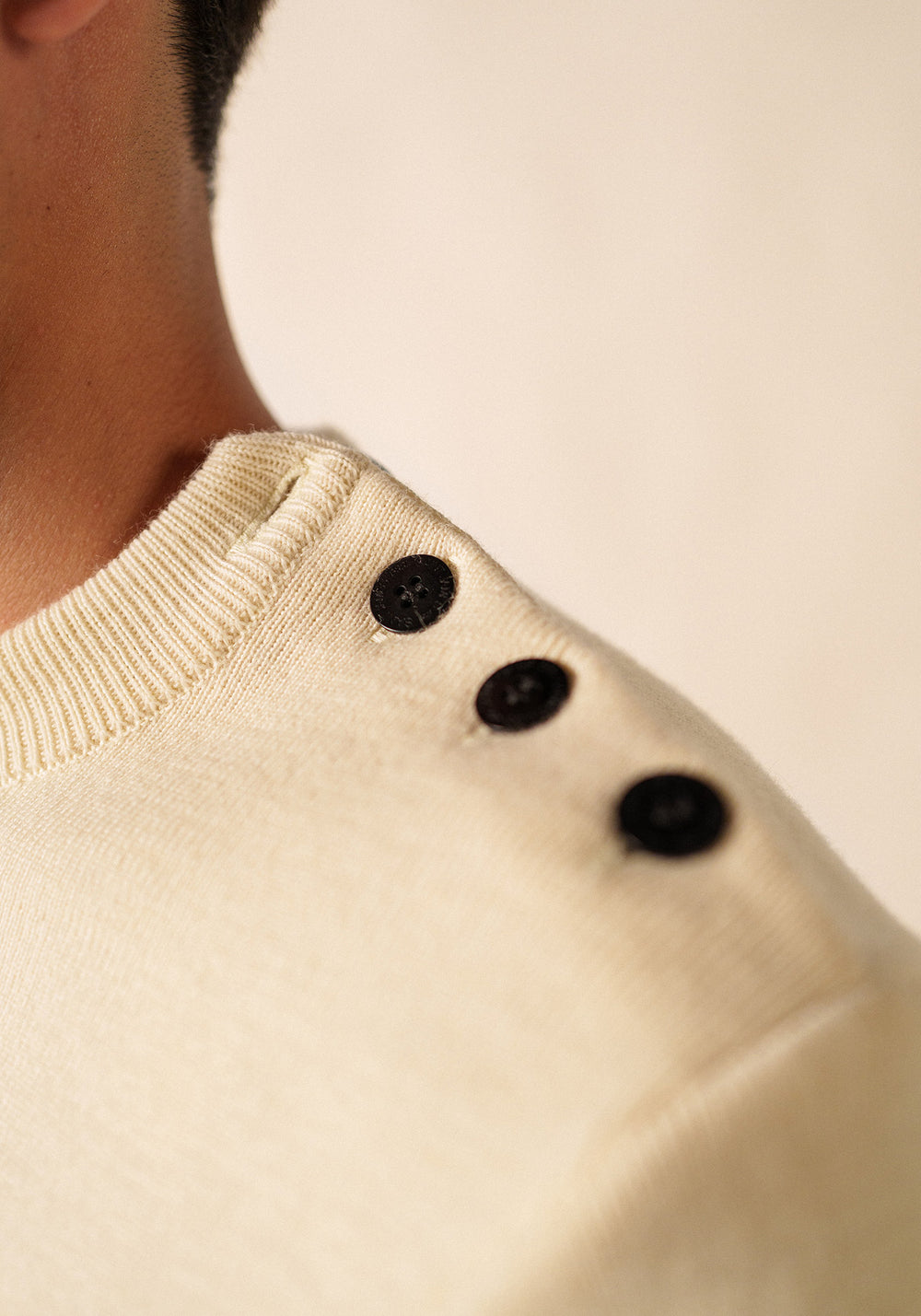
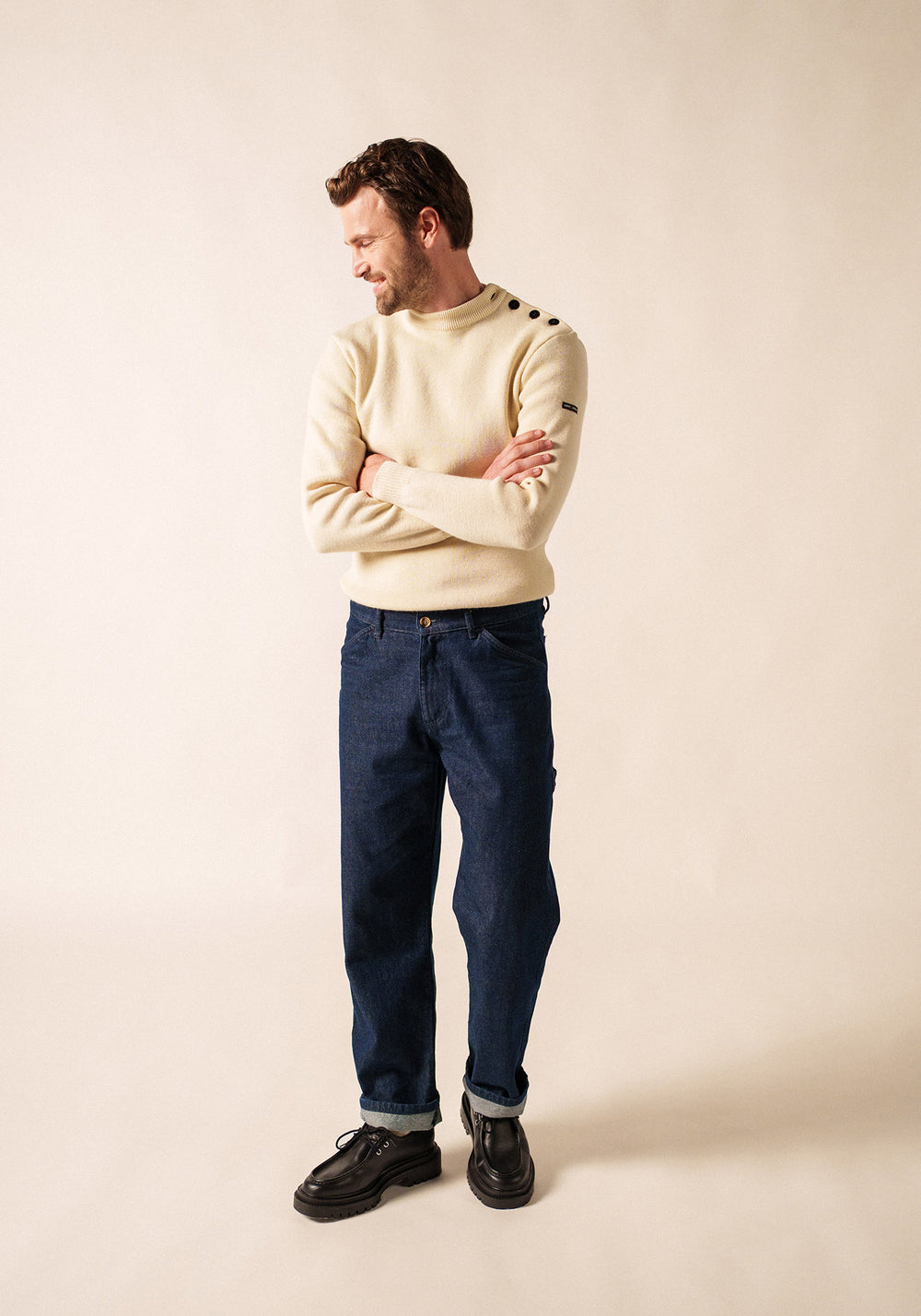
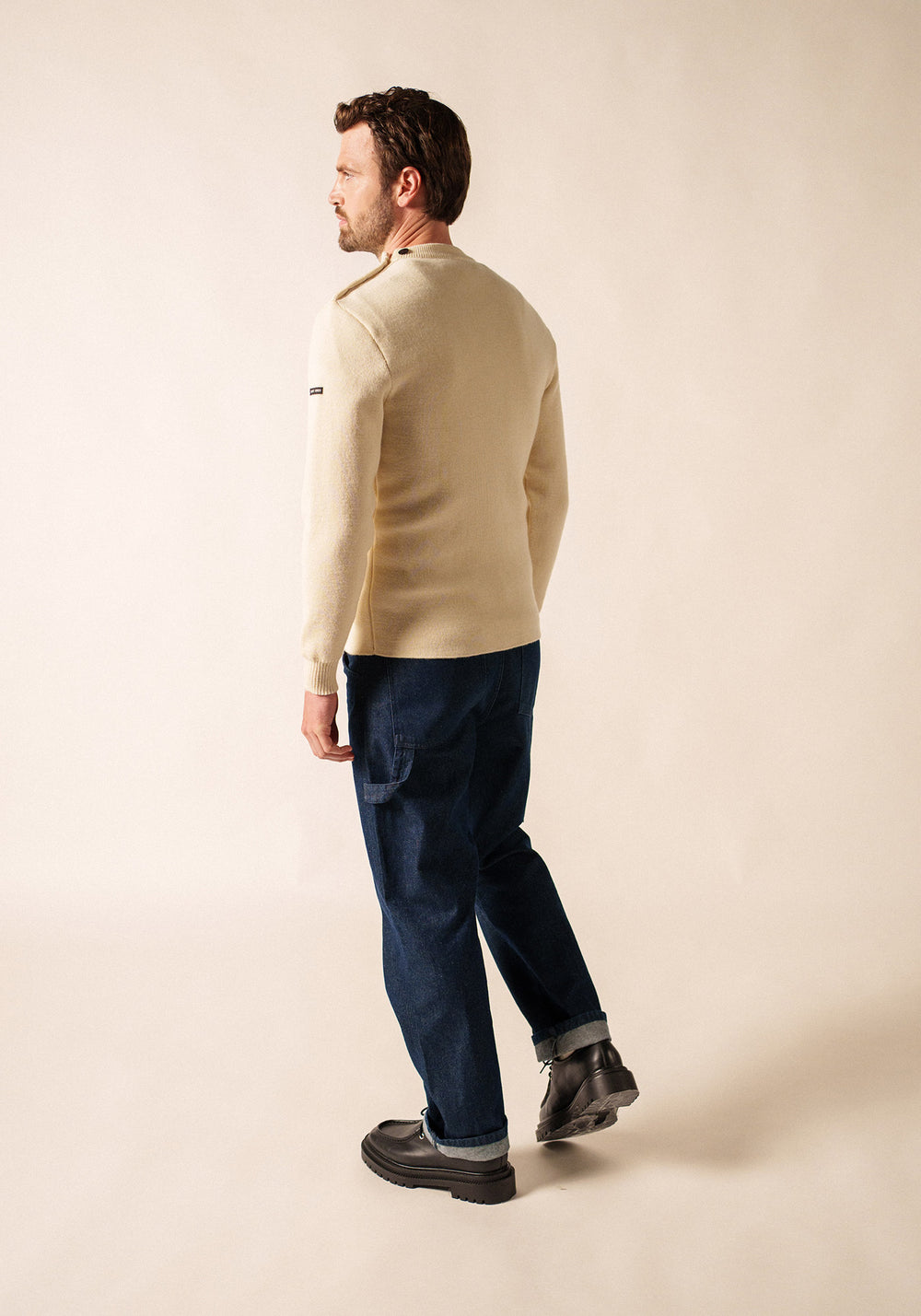
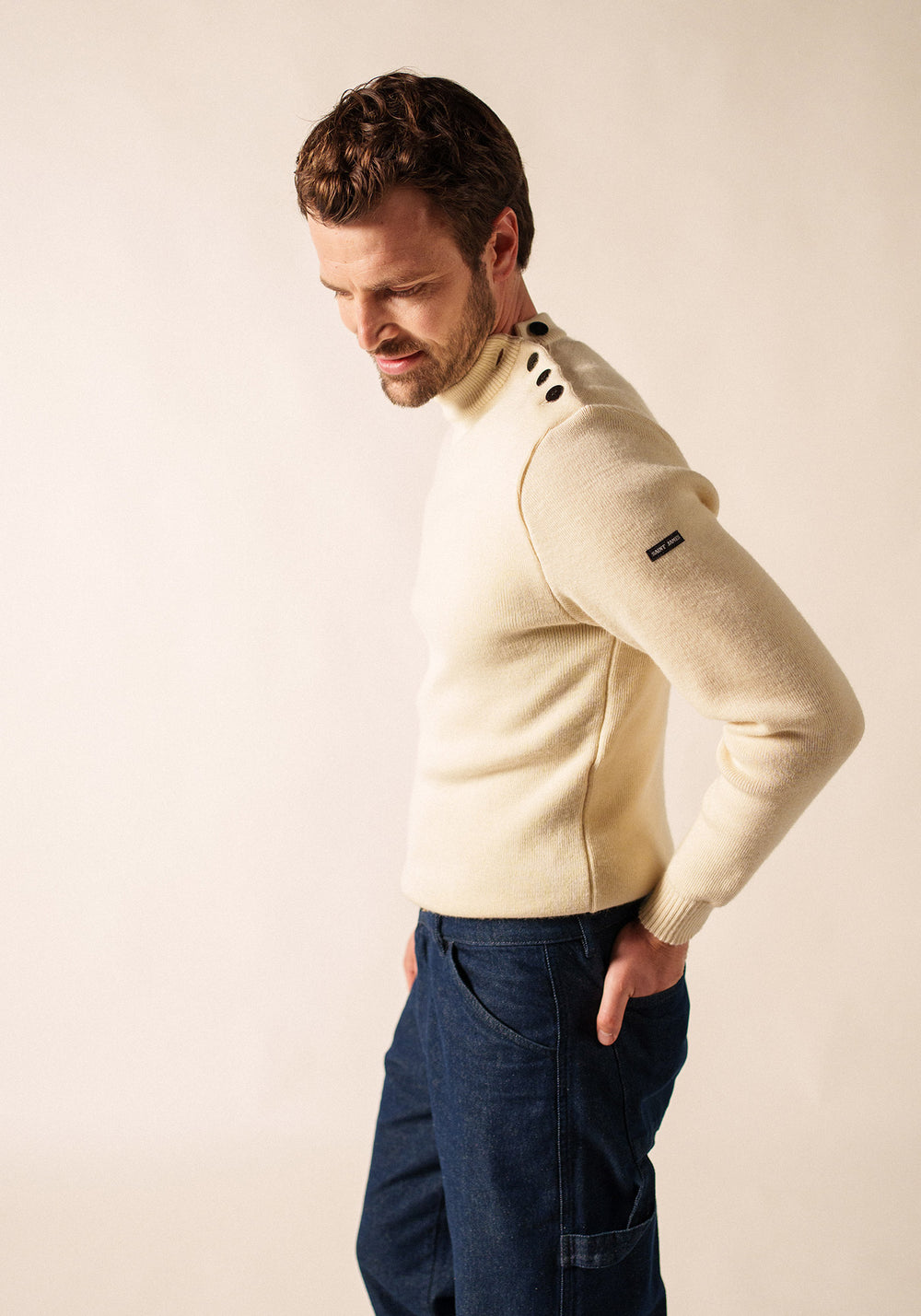
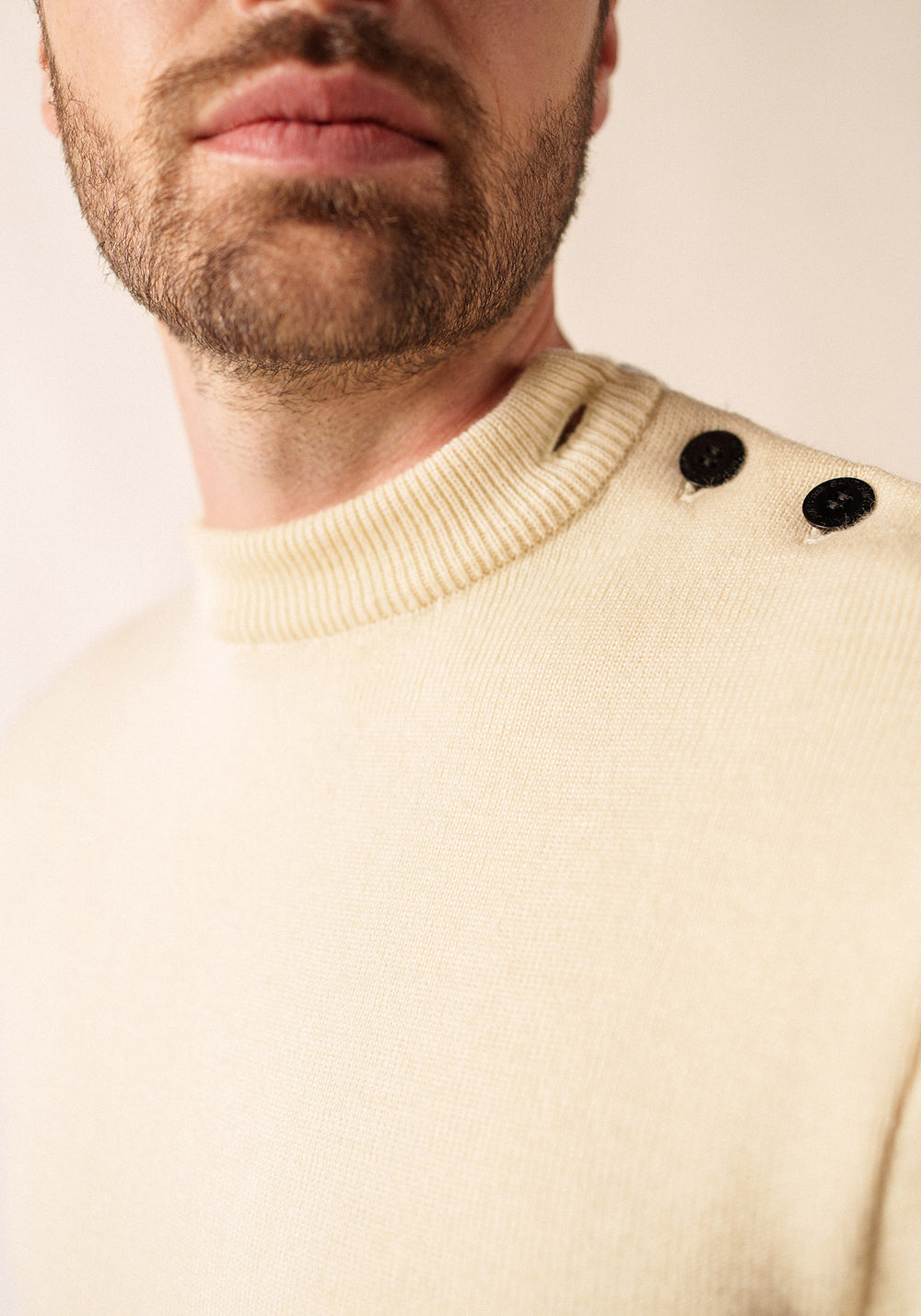
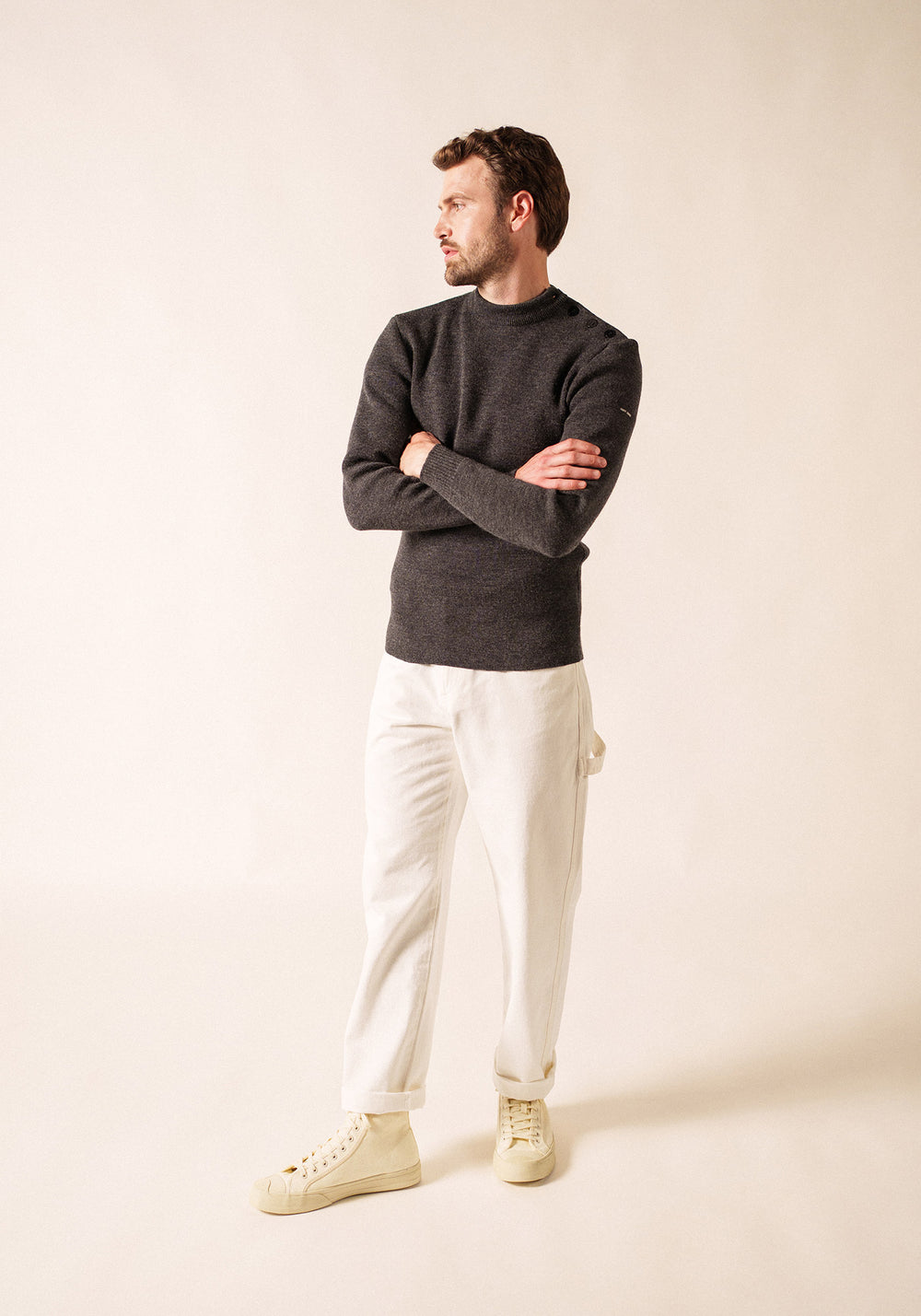
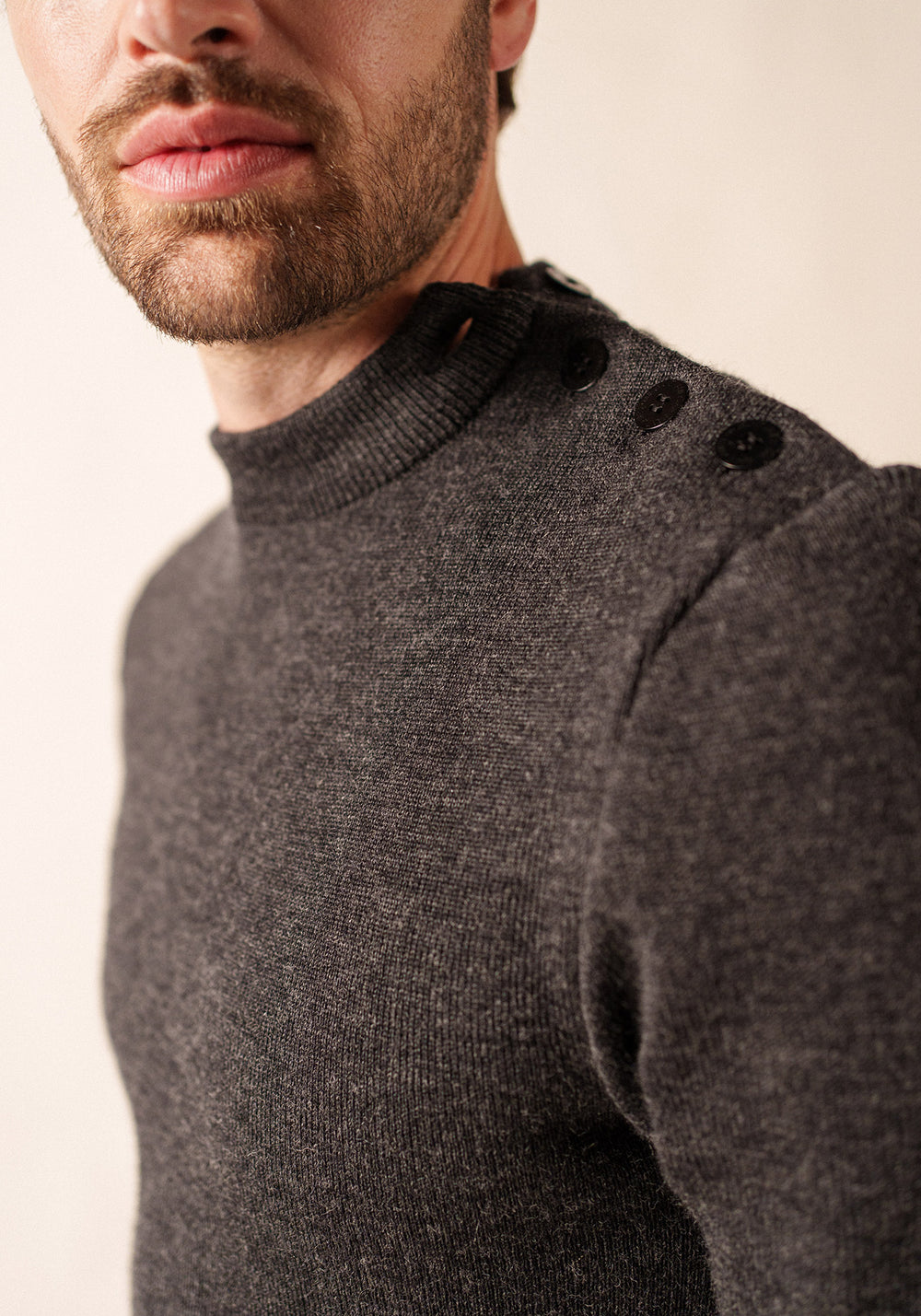
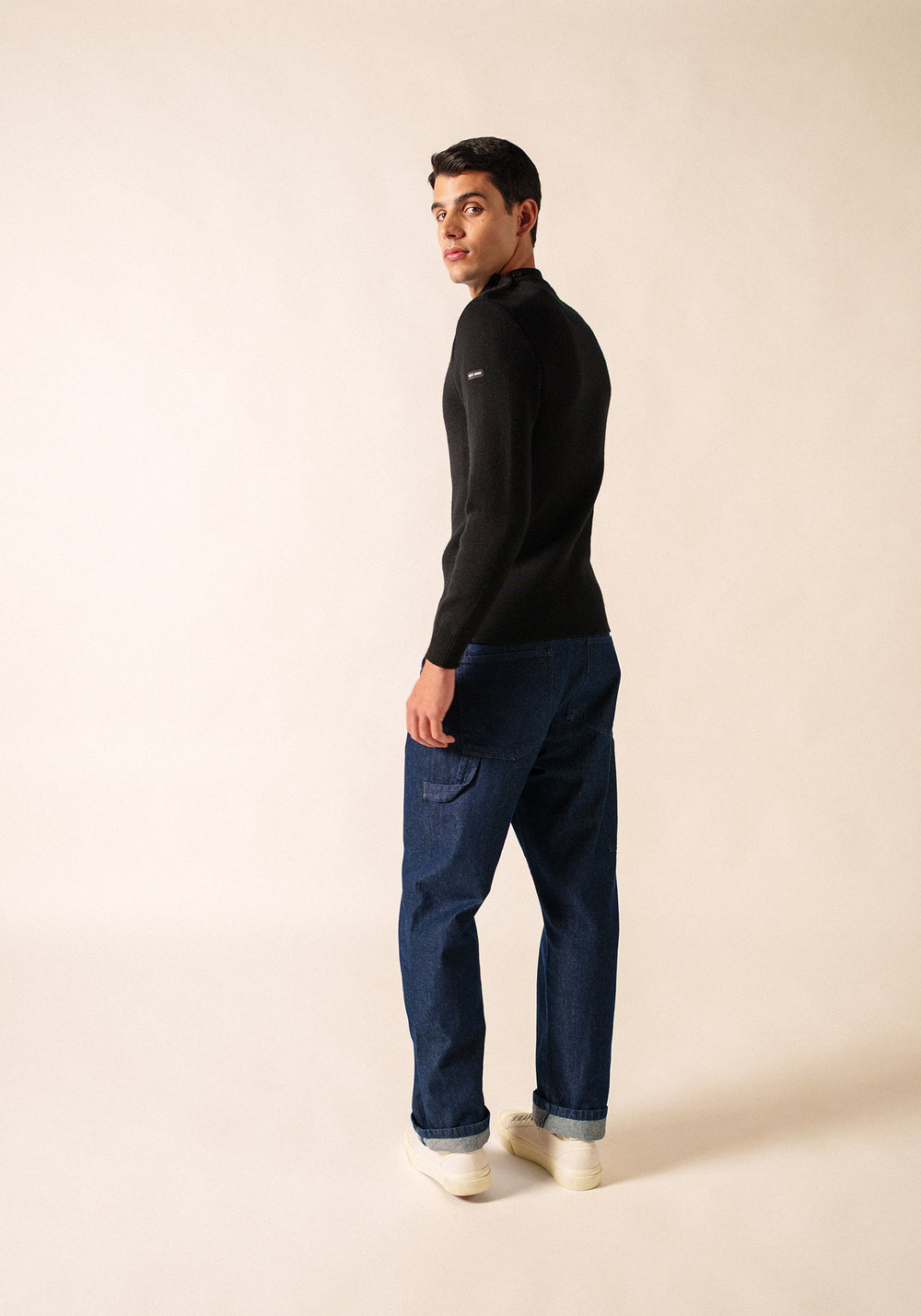
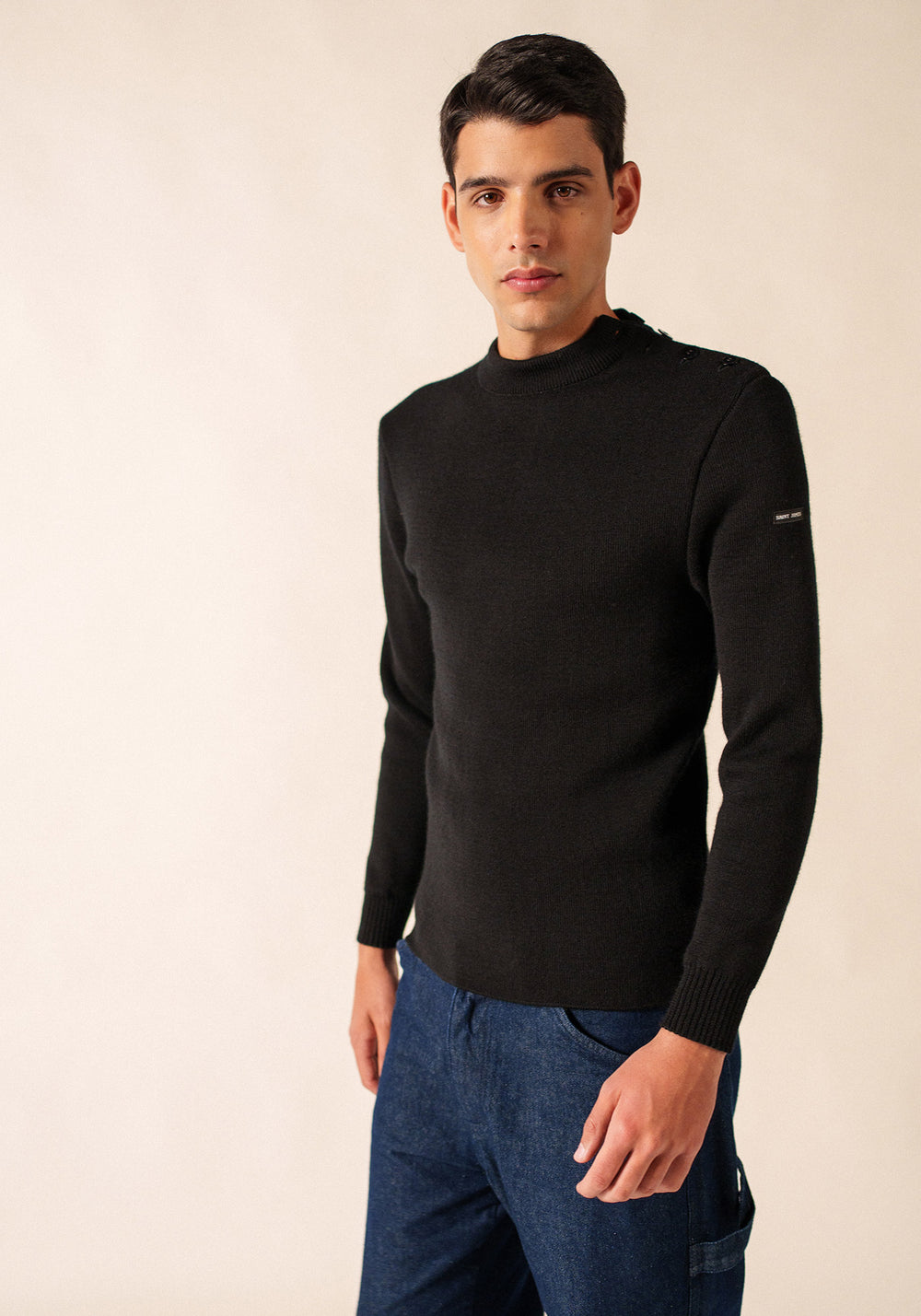
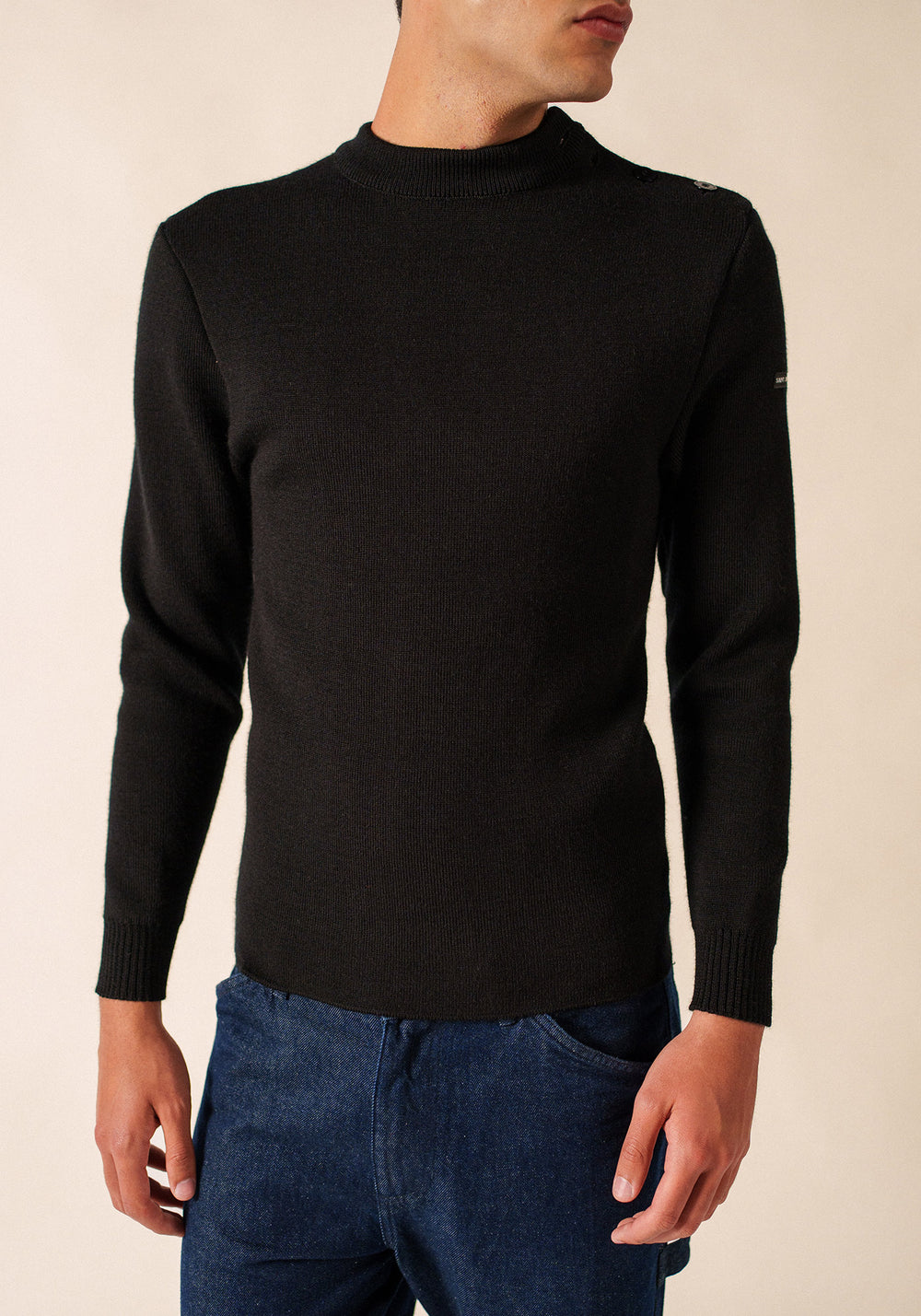
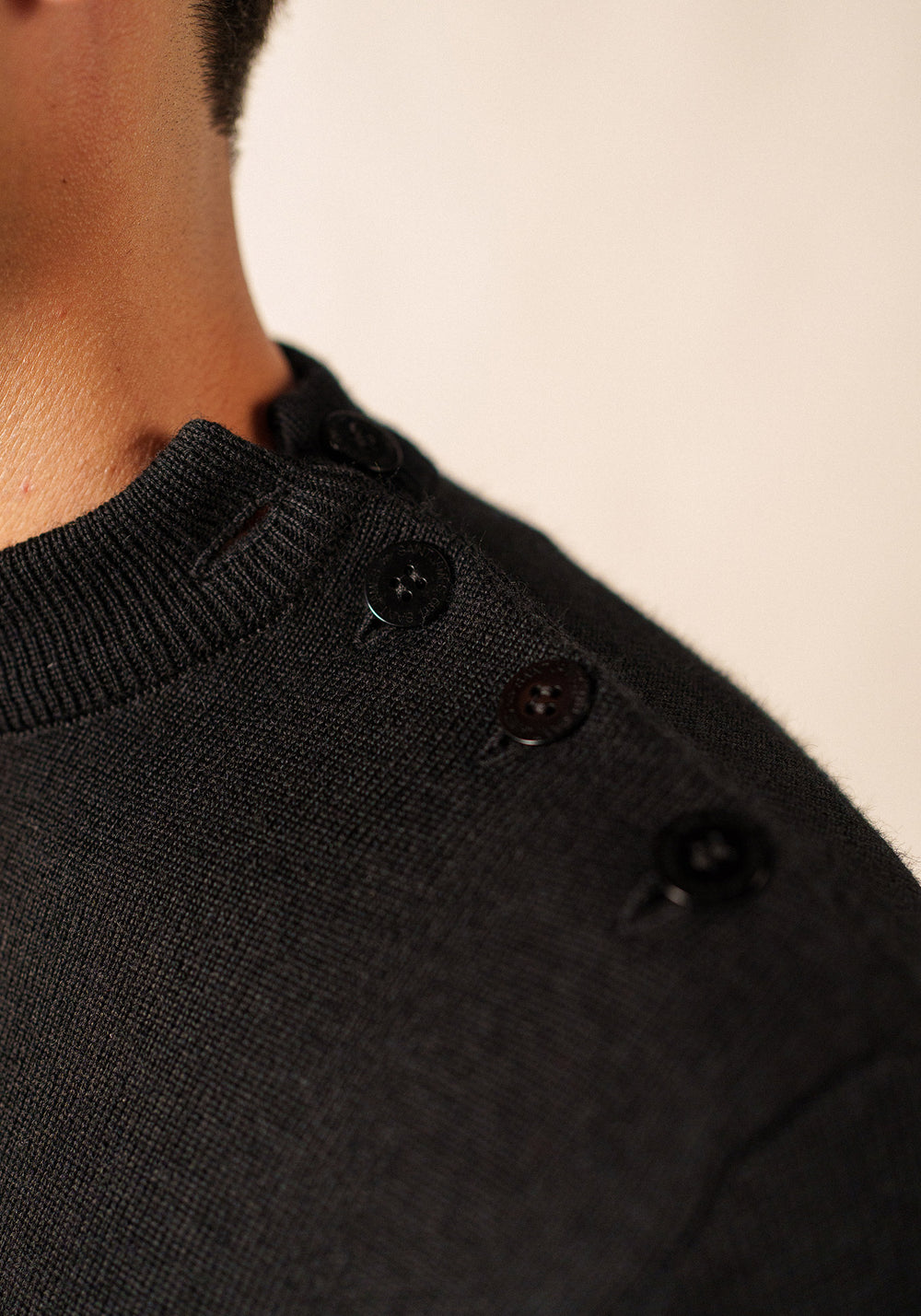
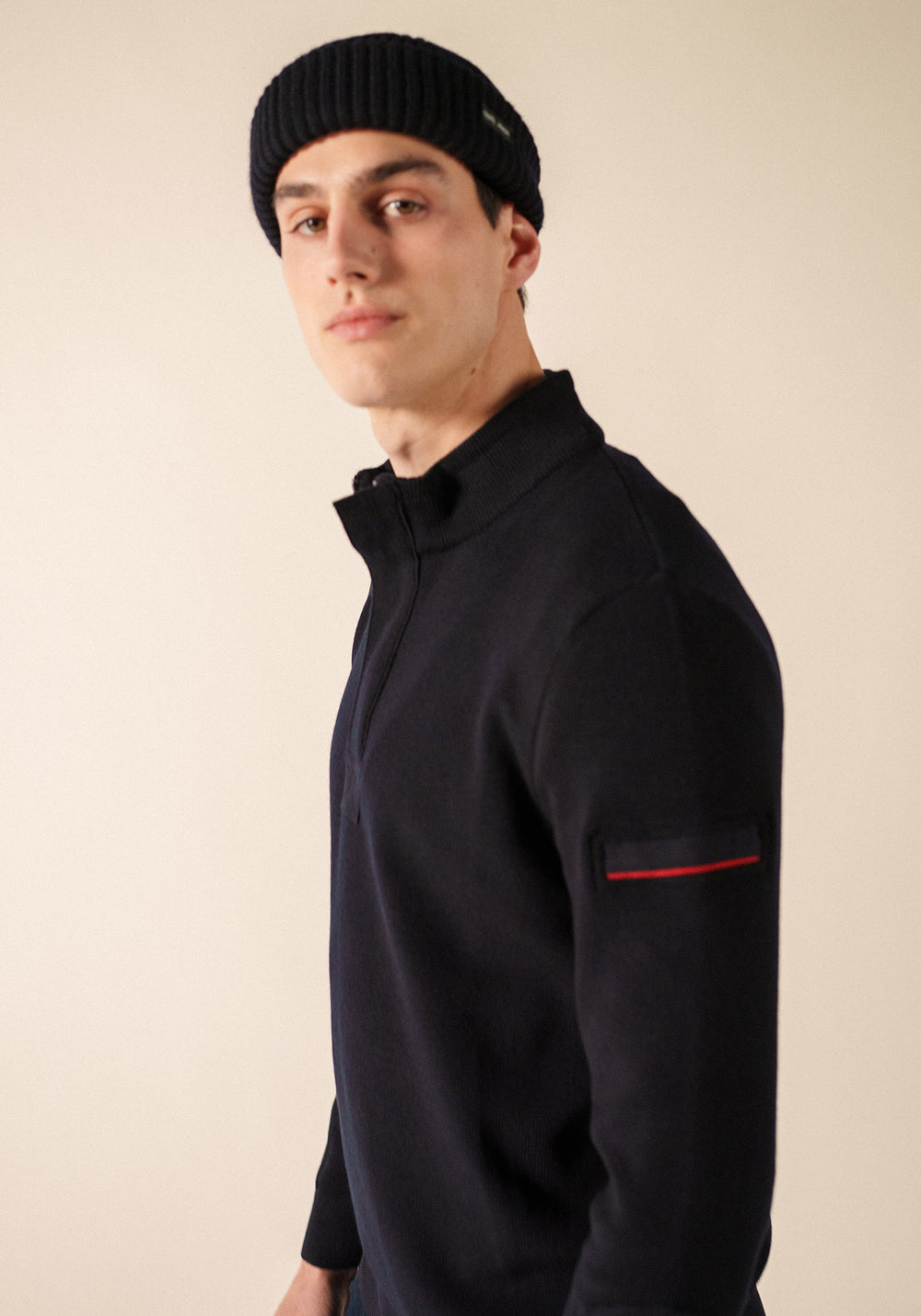
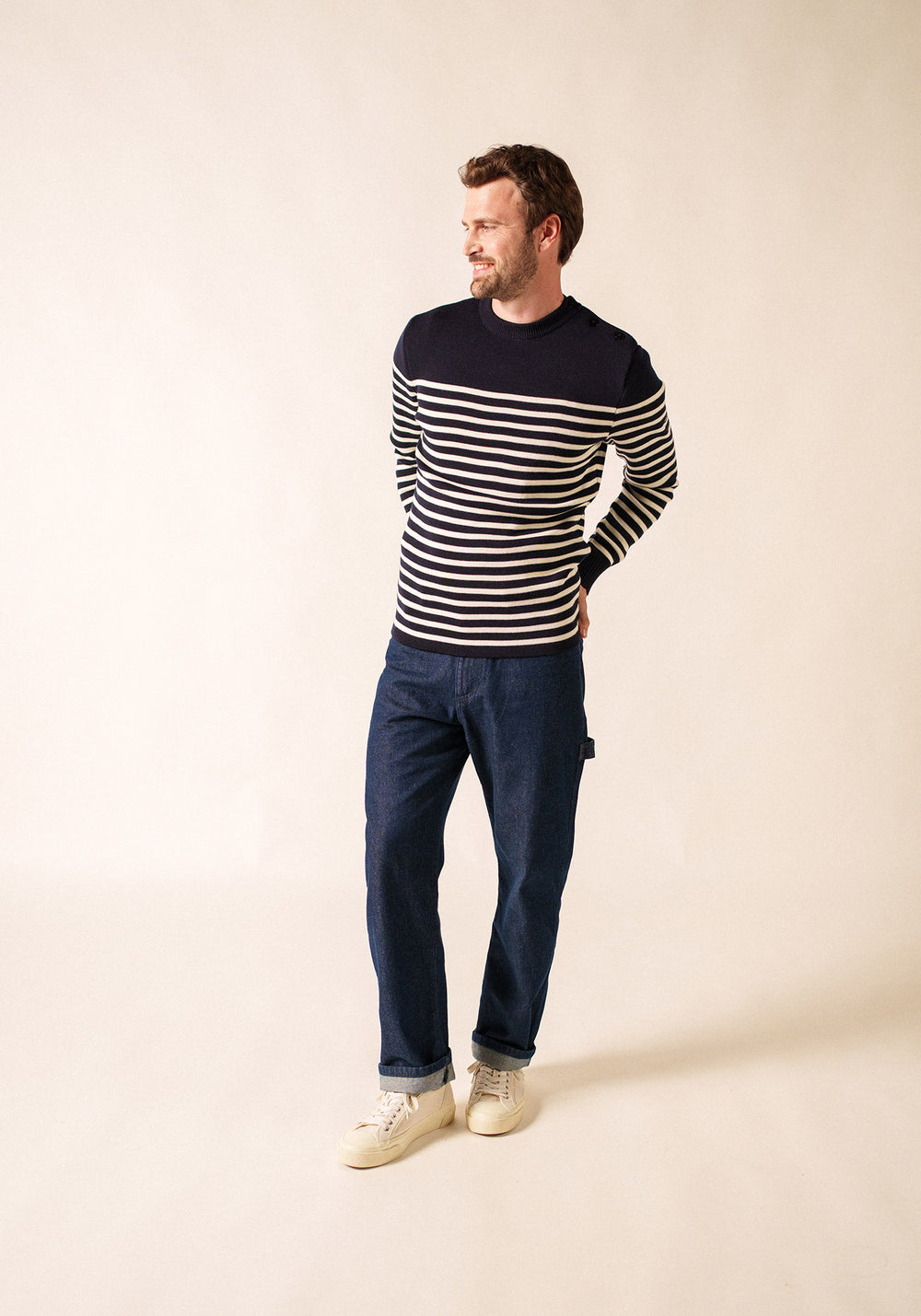
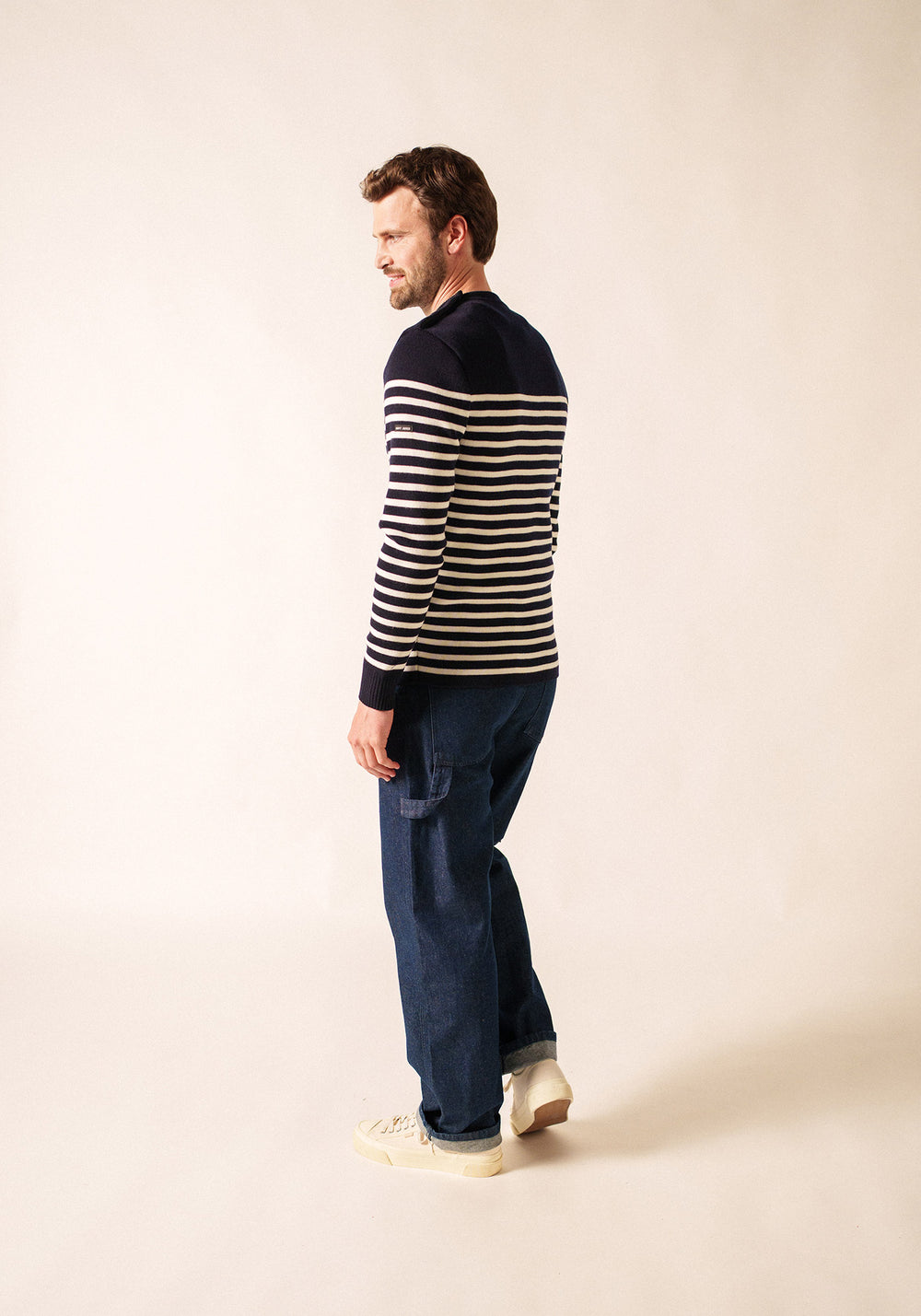
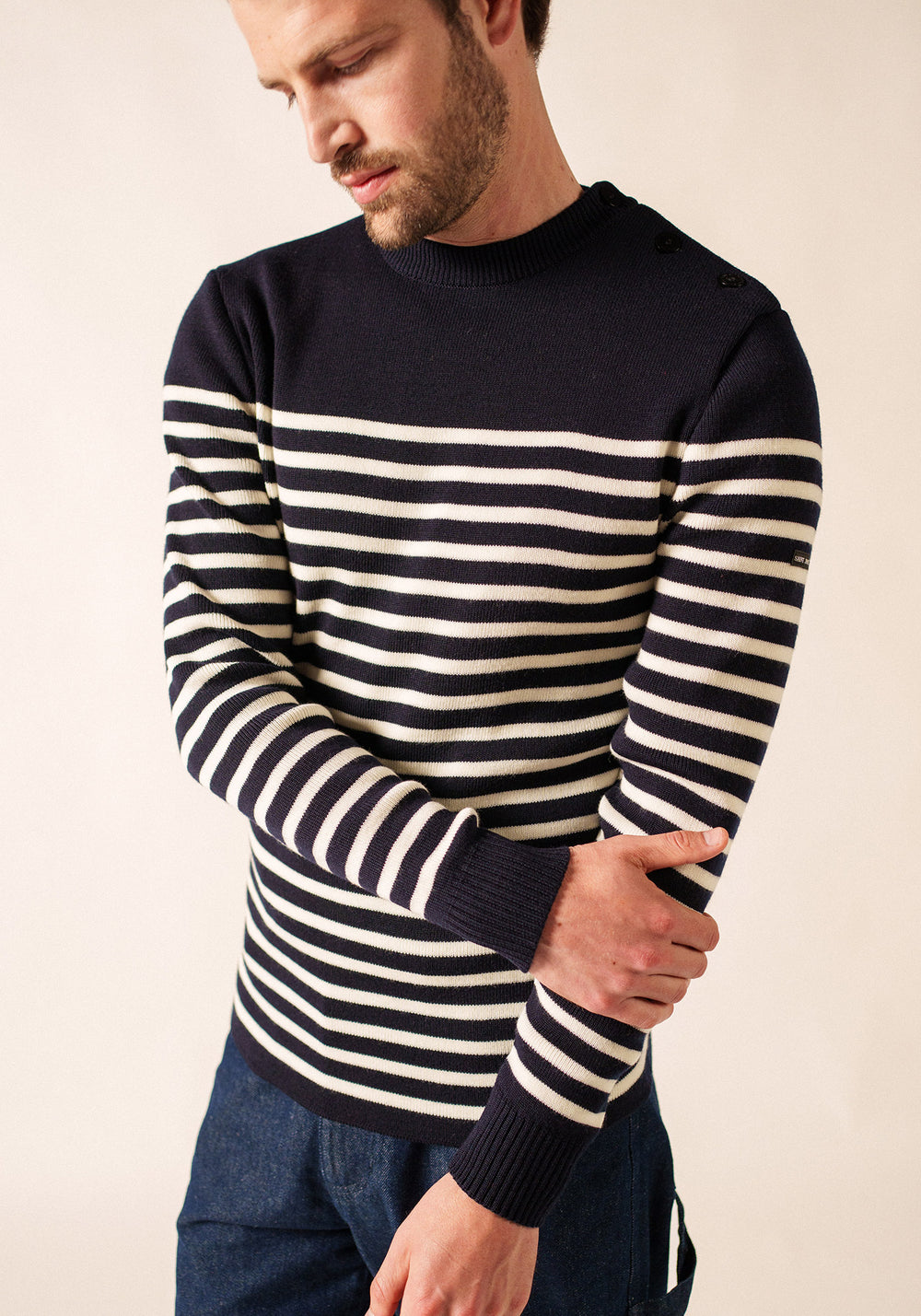
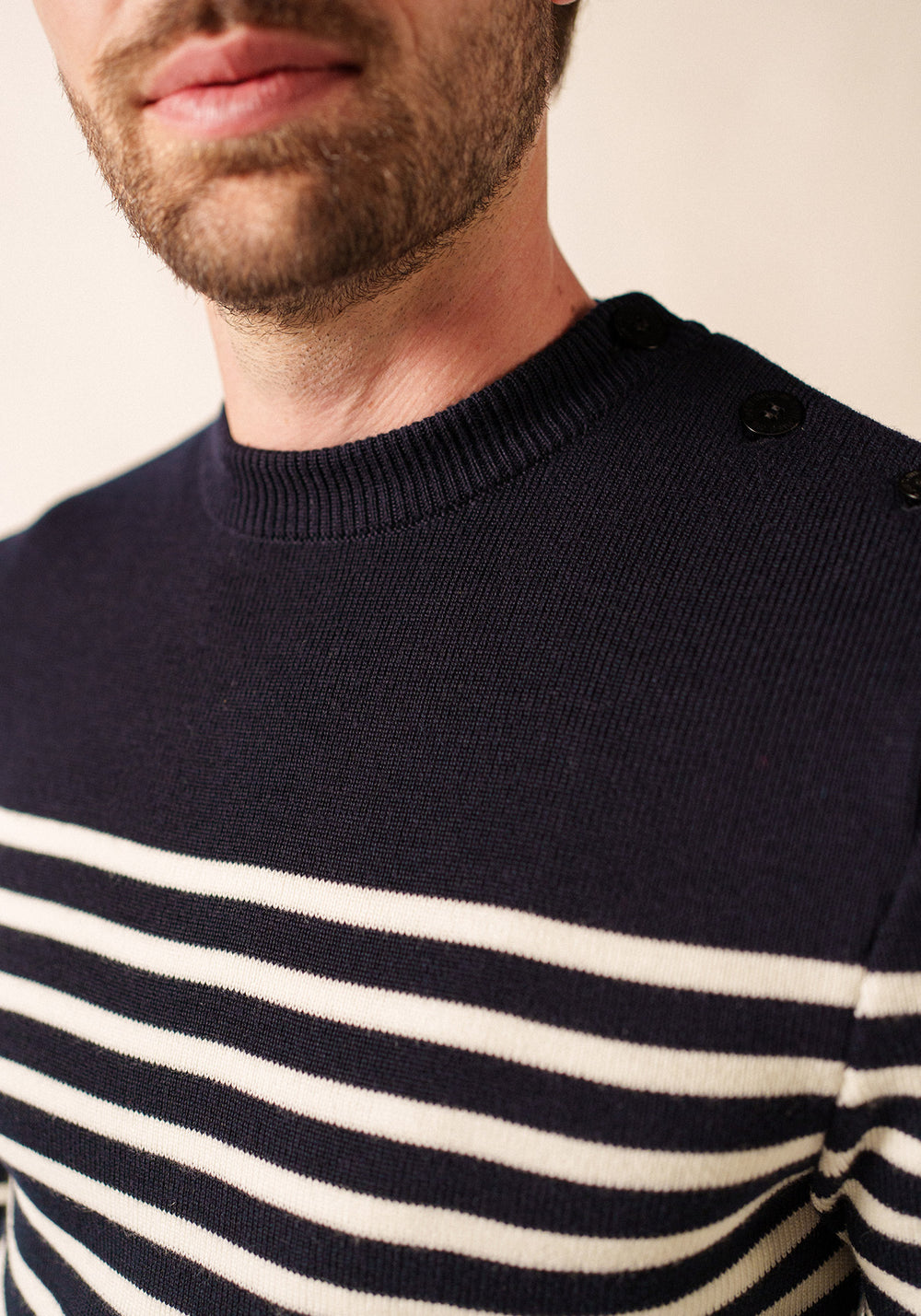
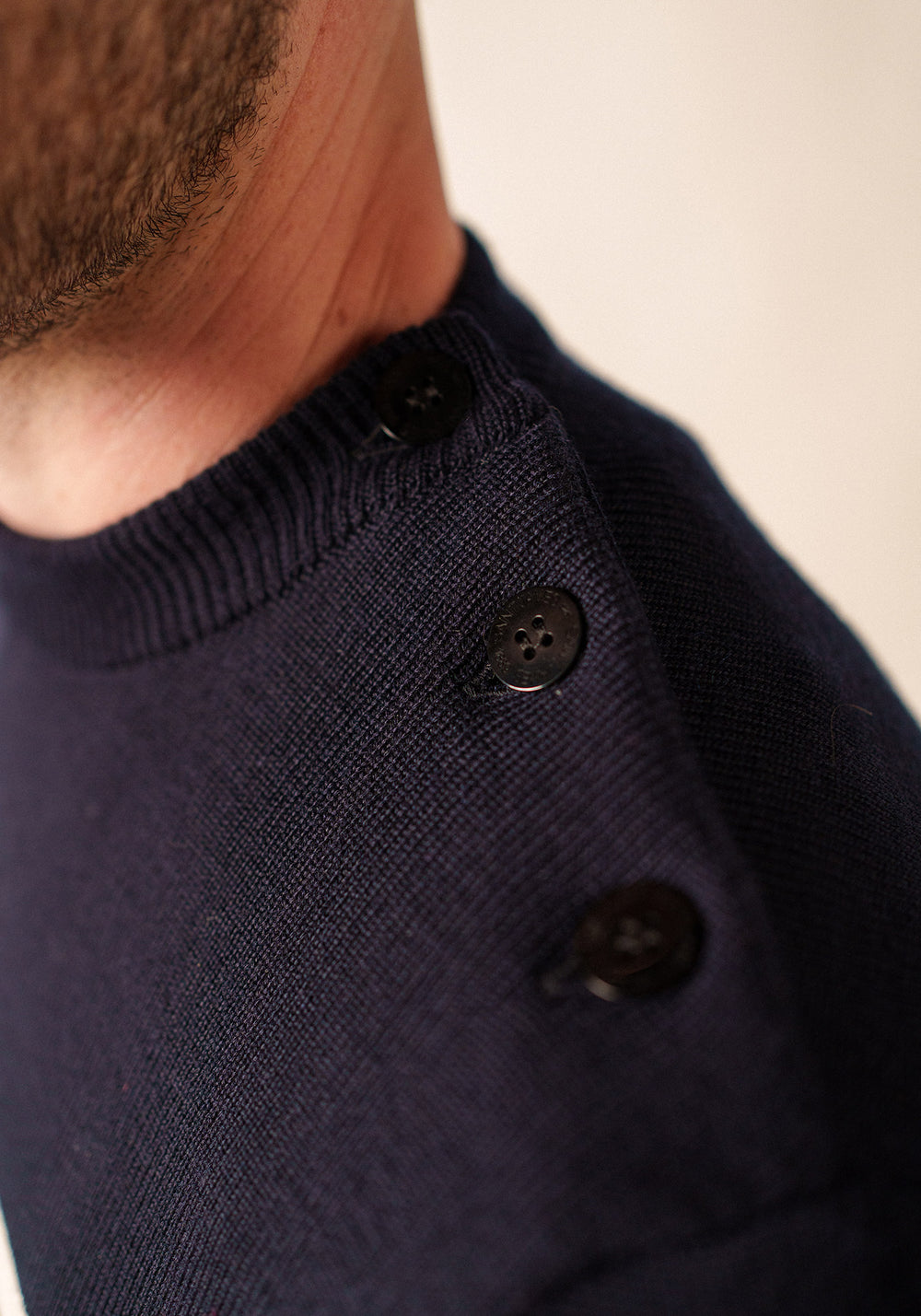
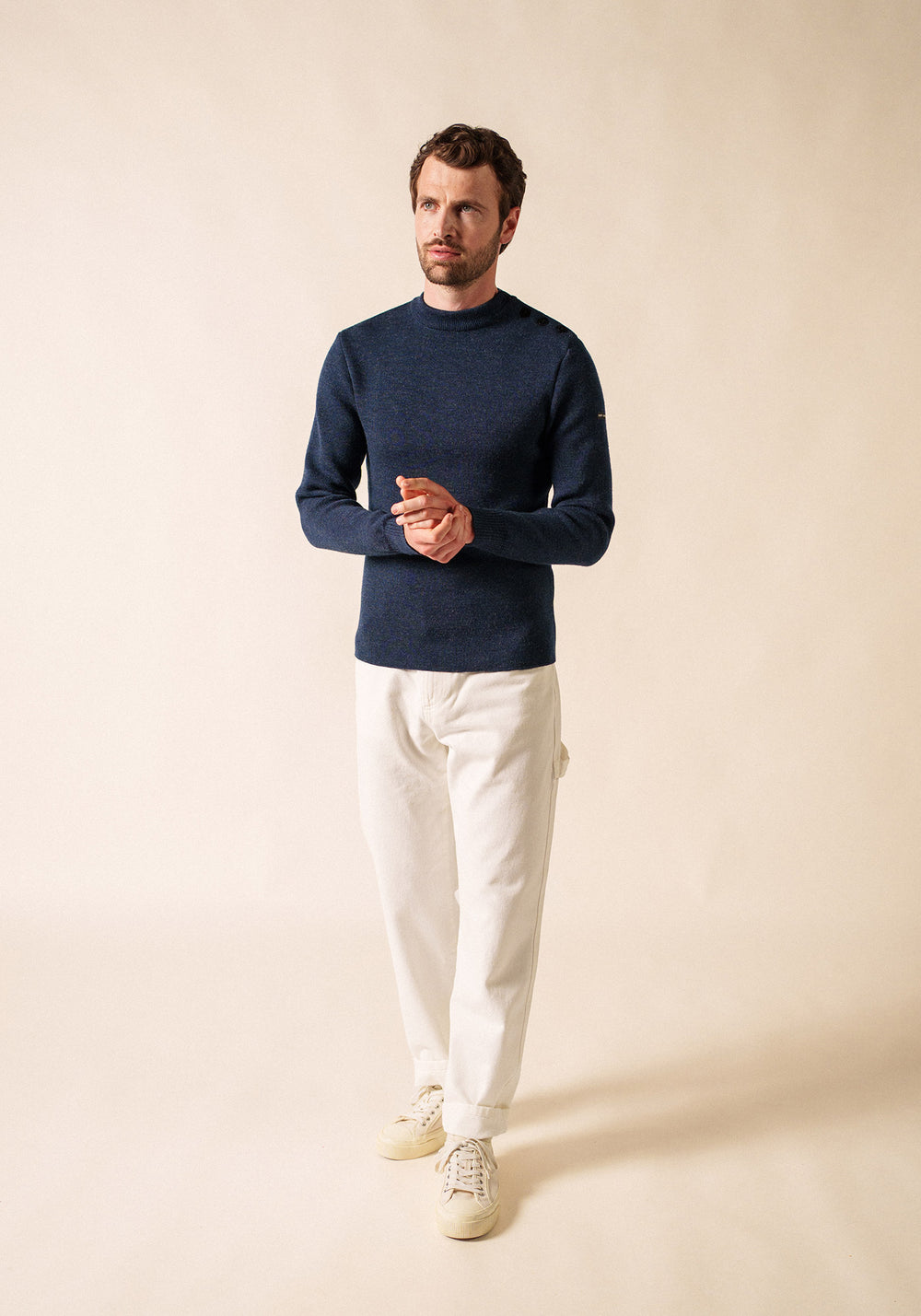
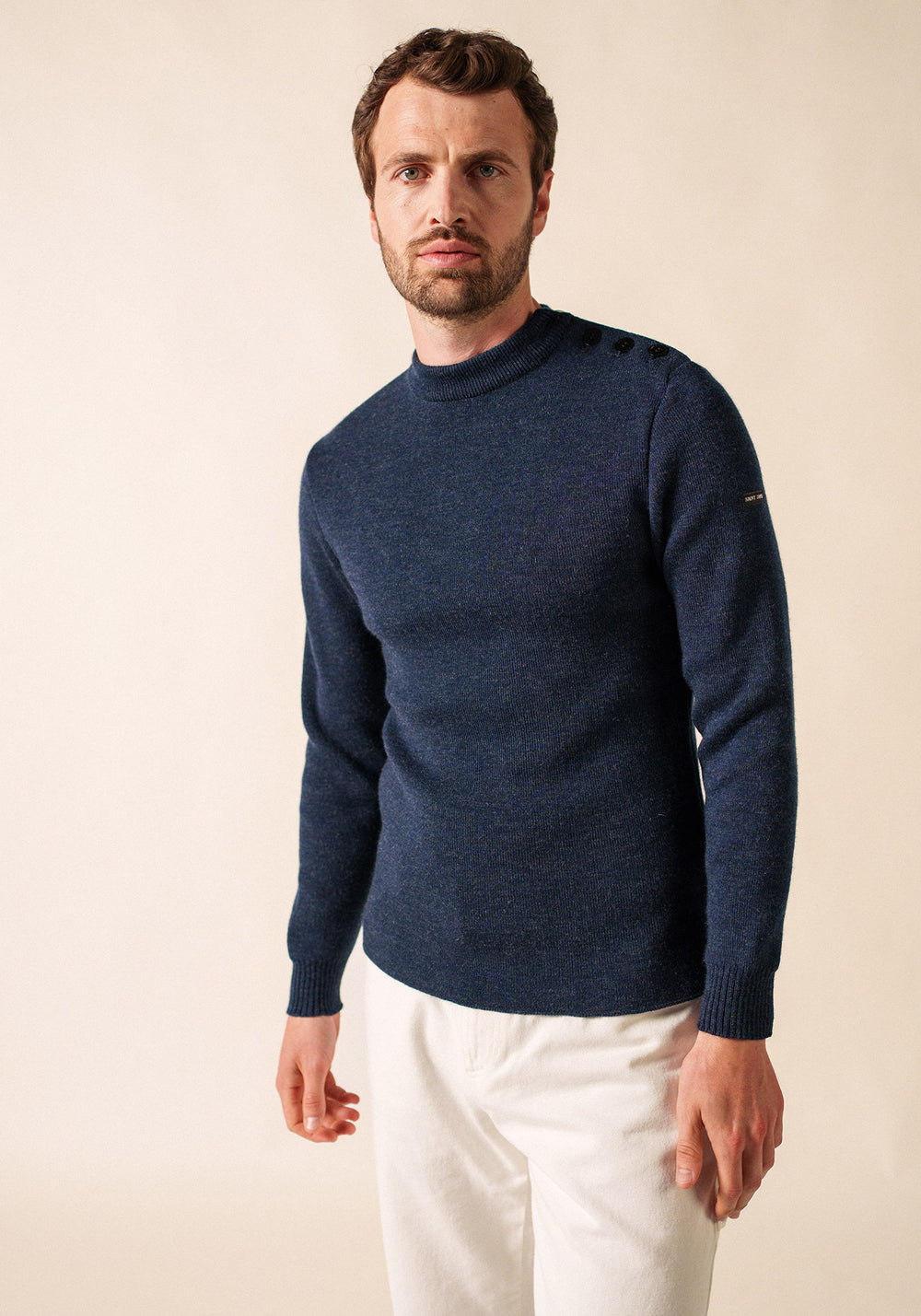
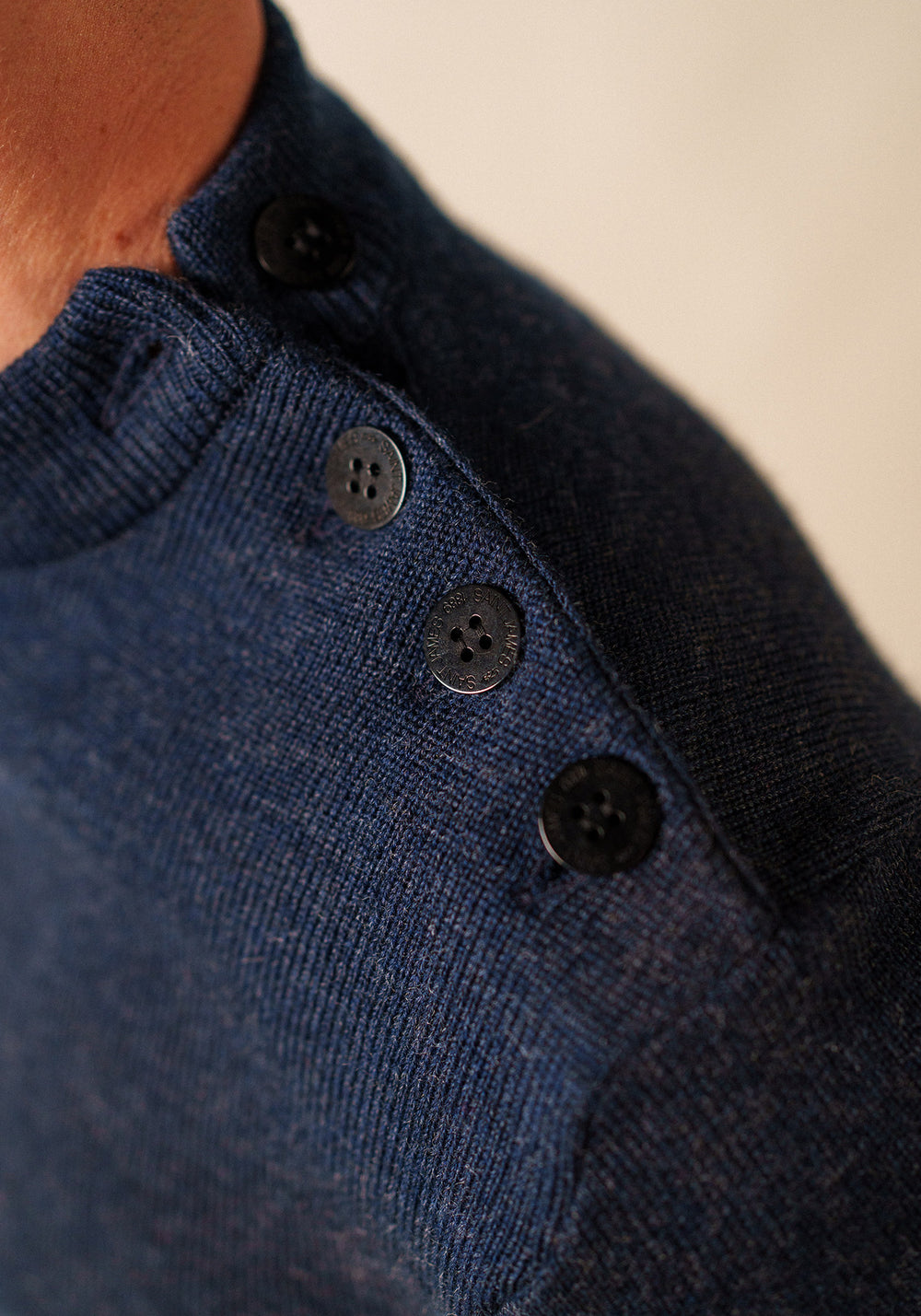
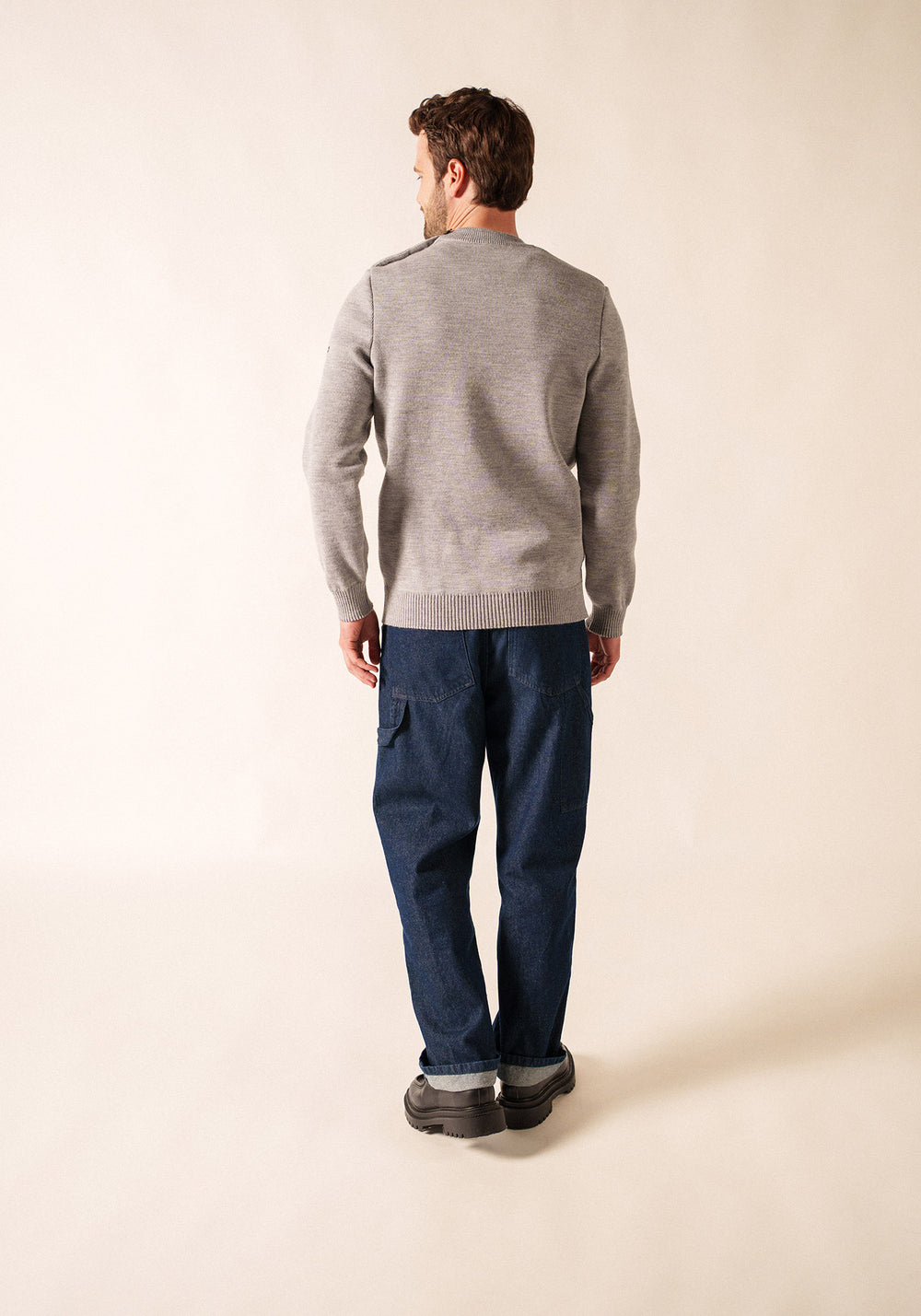
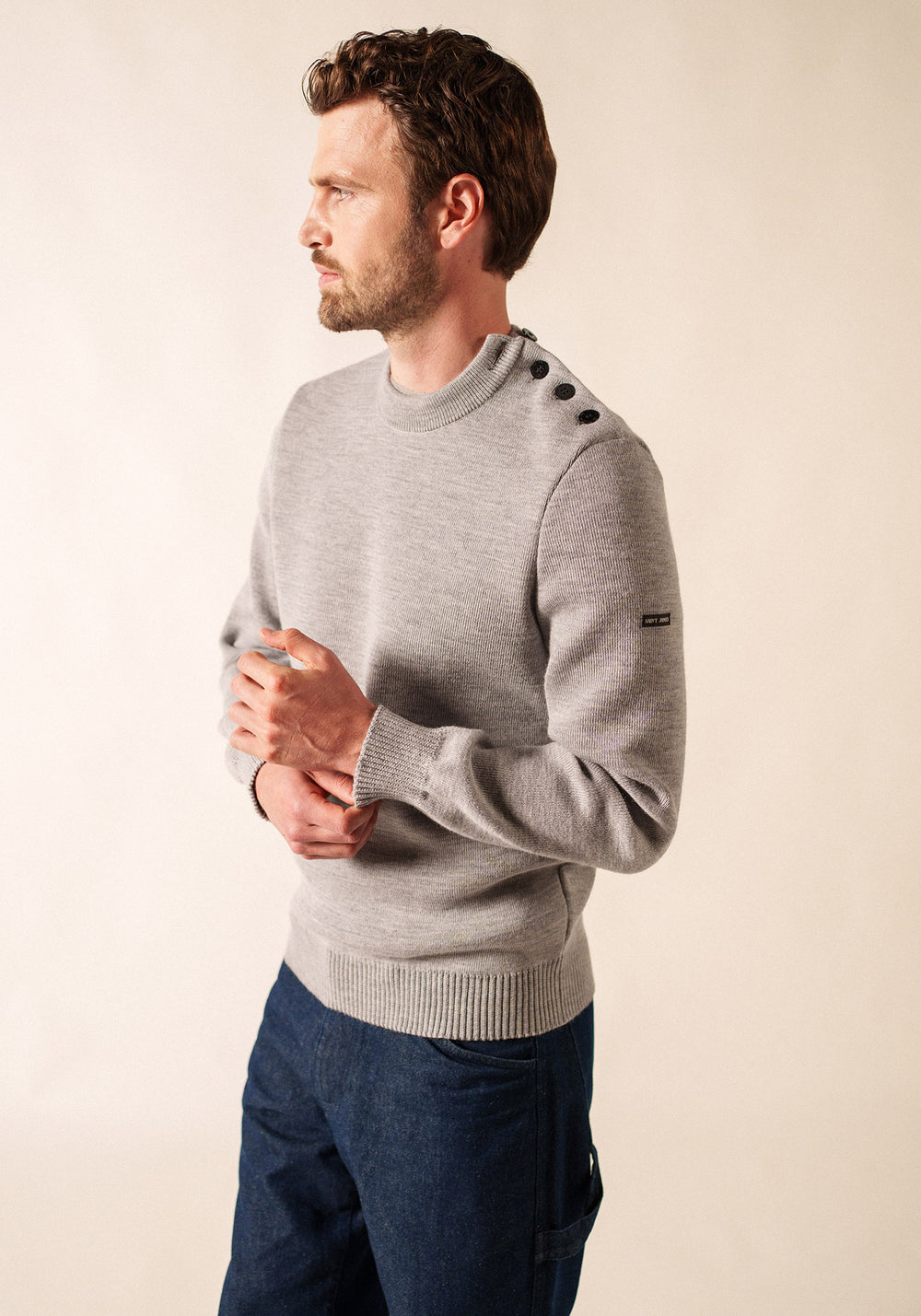
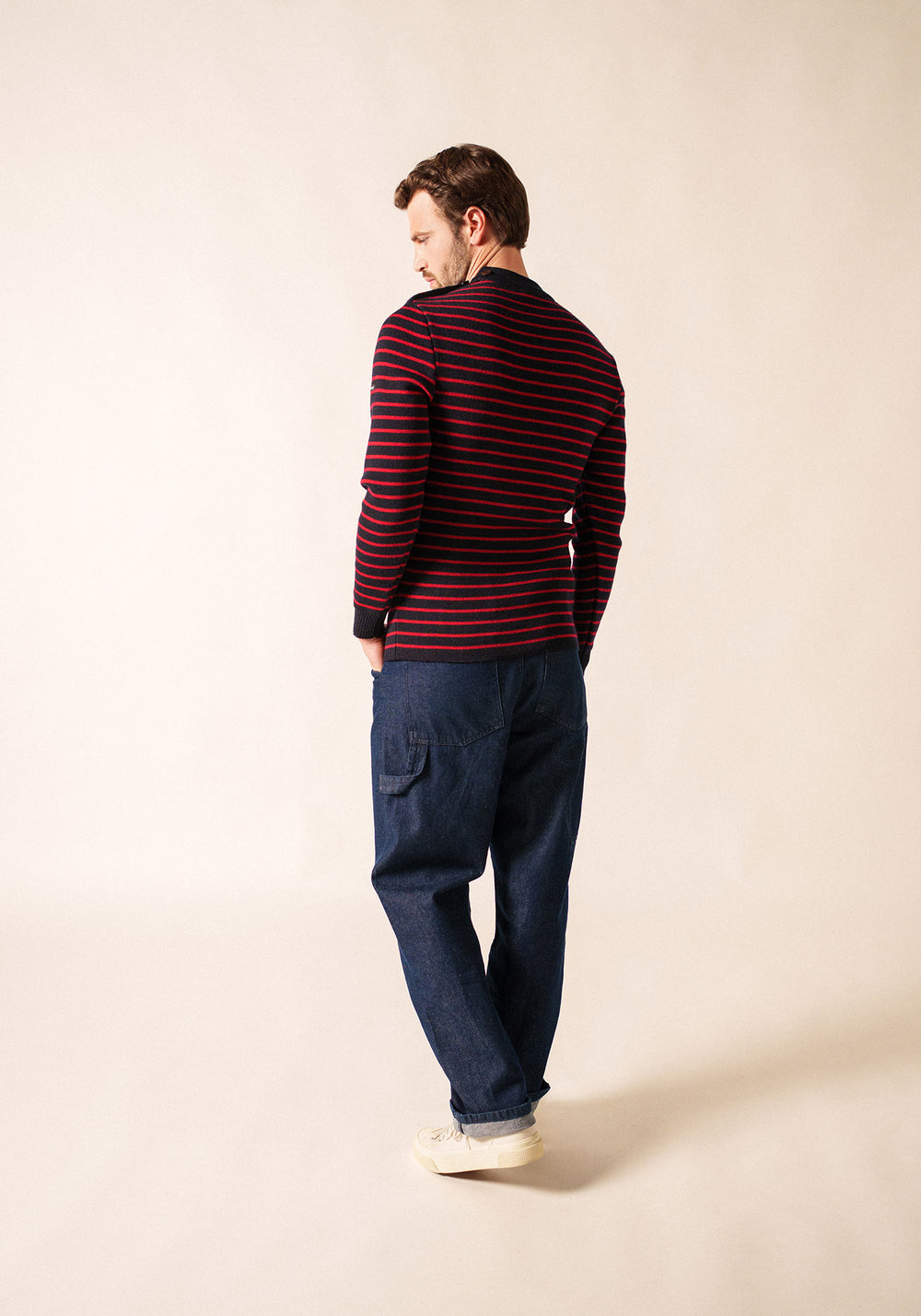
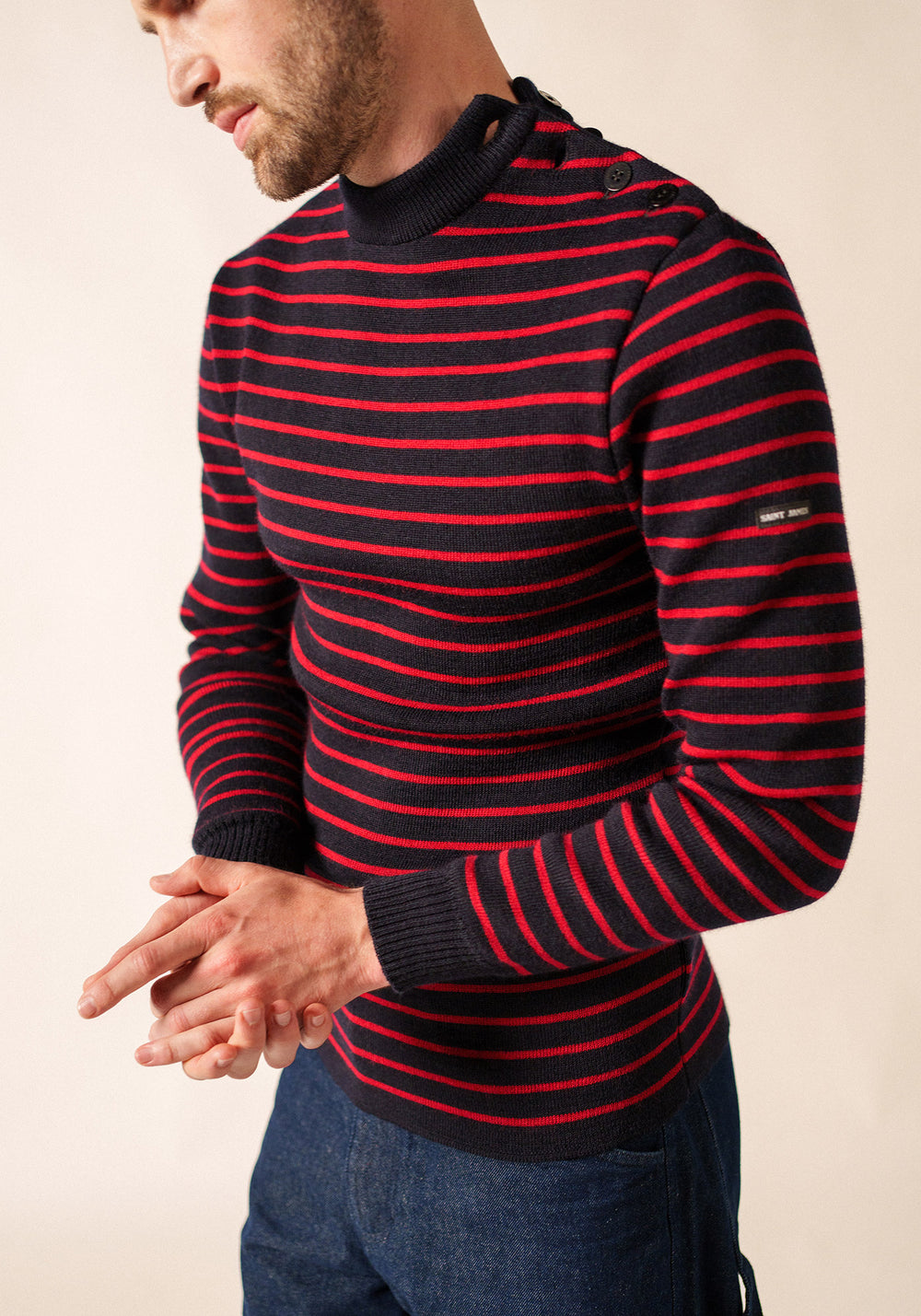
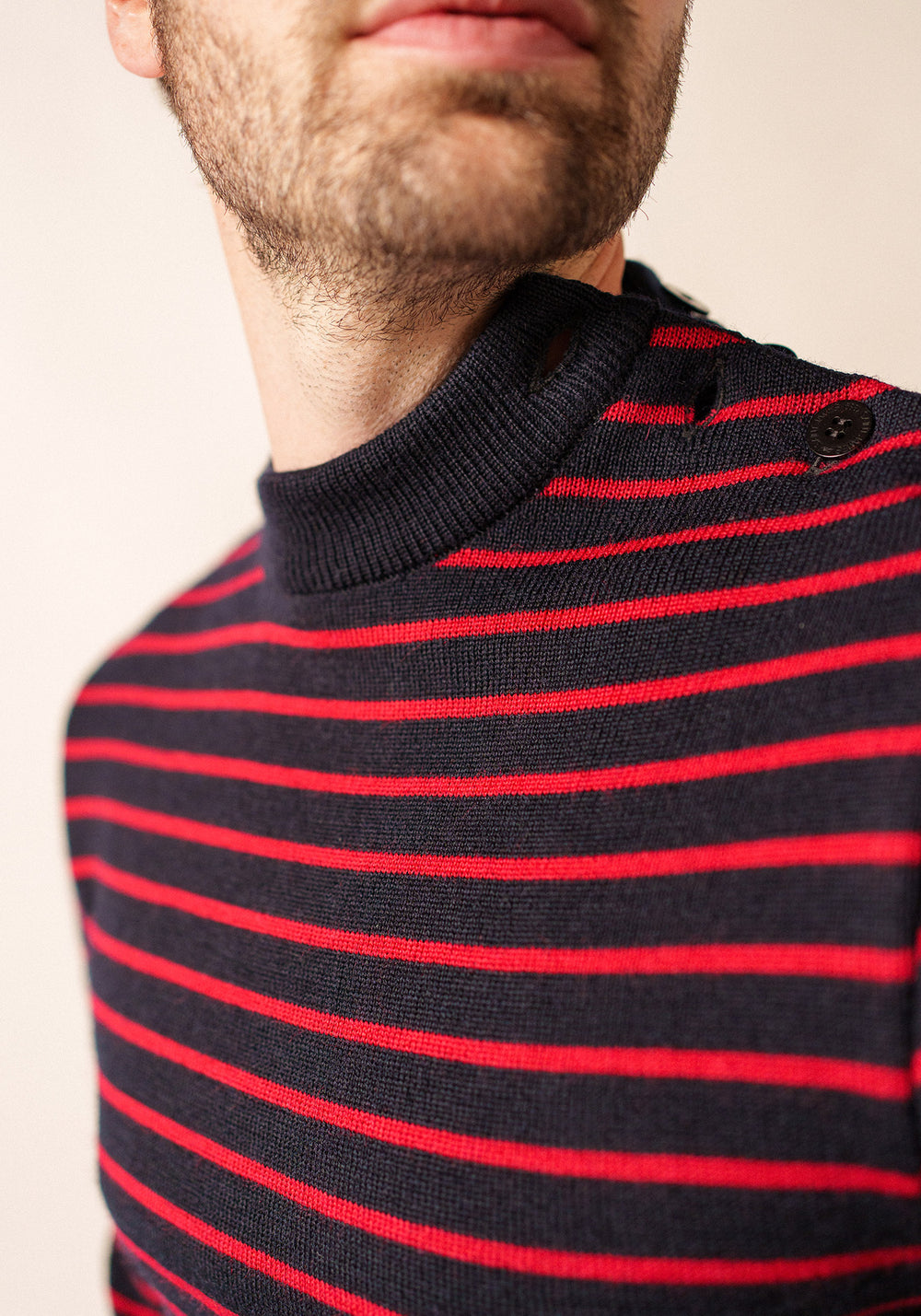
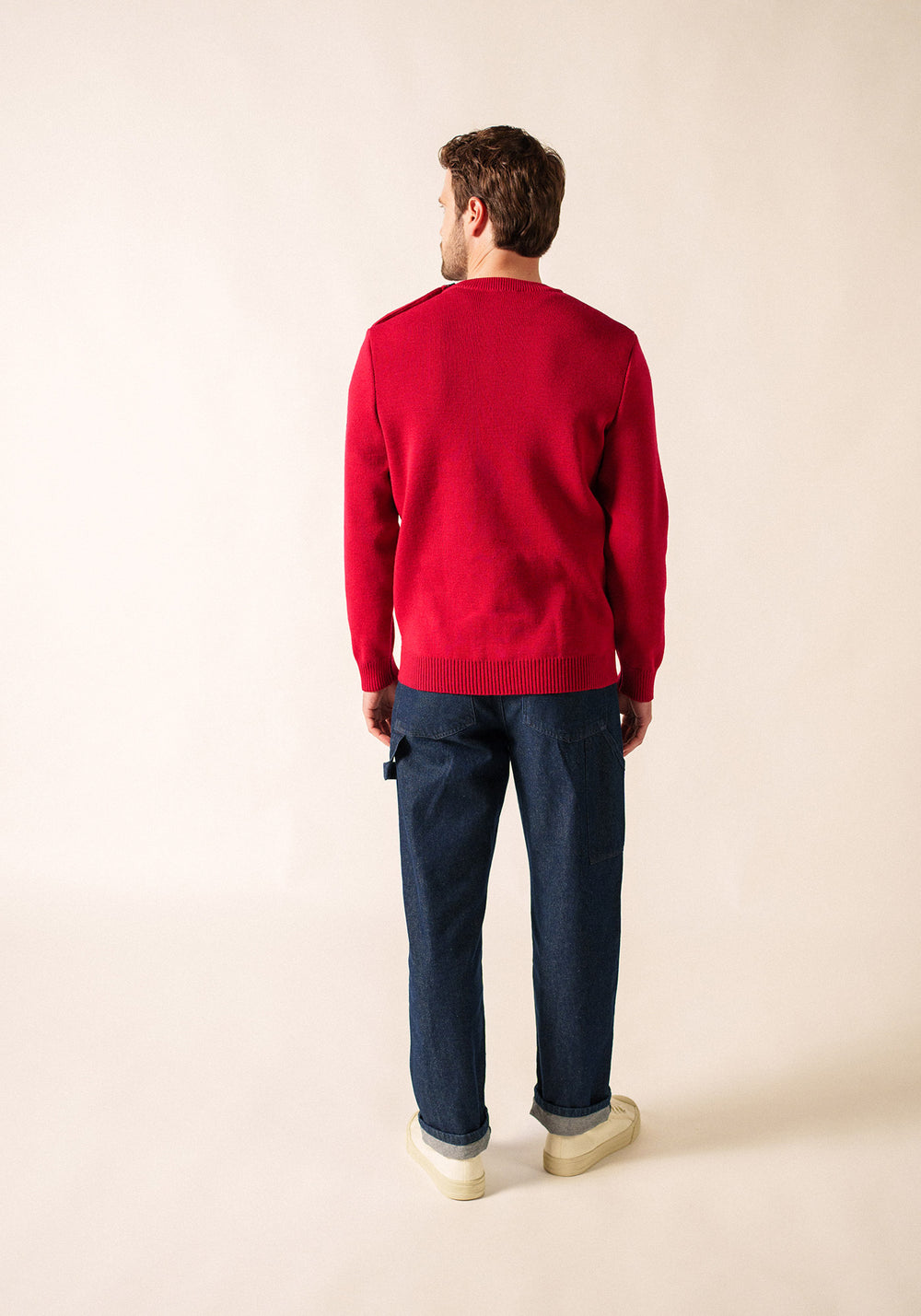
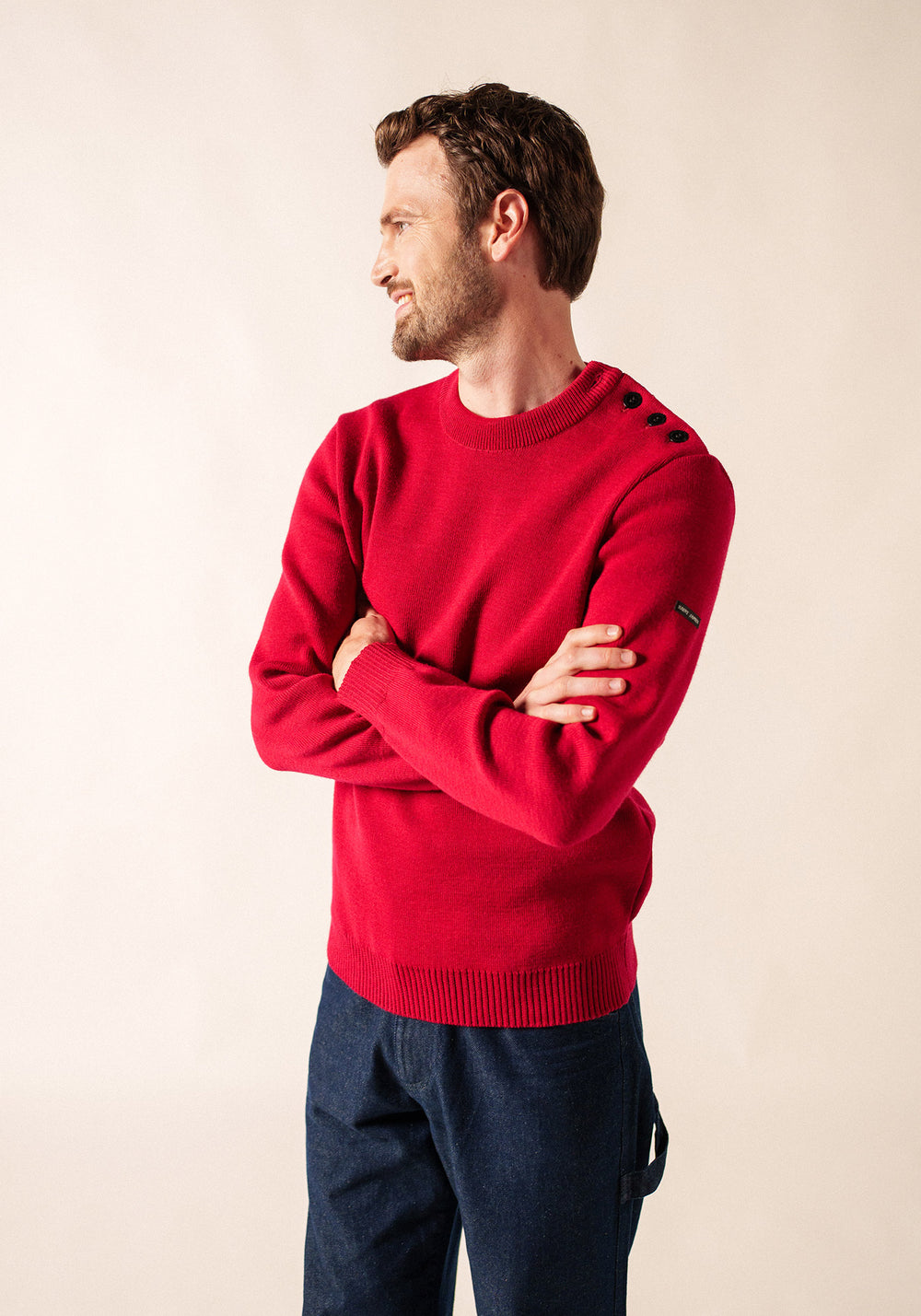
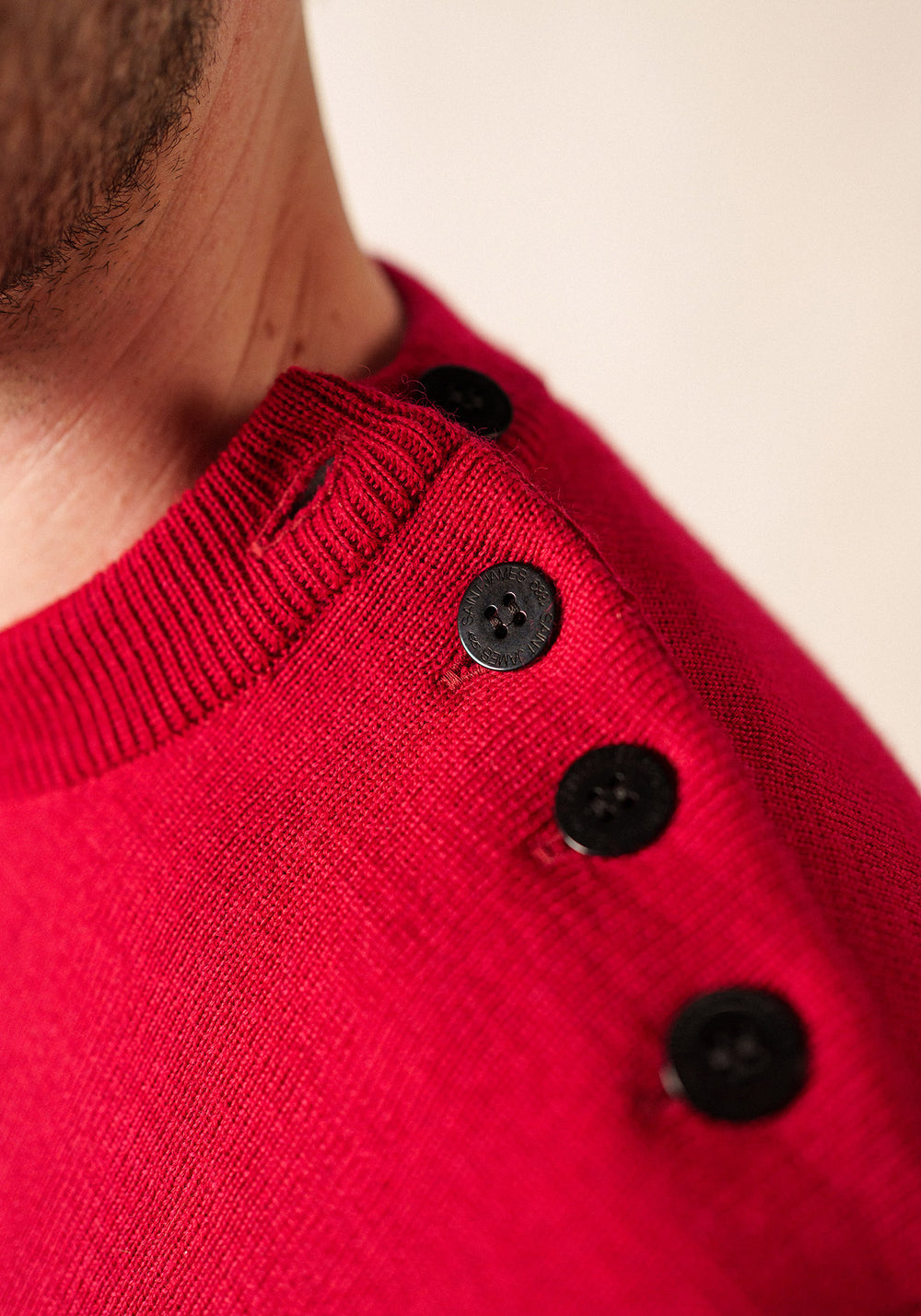
For Men: Finer wool jumpers are preferred for broader builds, while a thick roll-neck wool jumper will enhance a slender silhouette. Looking for an iconic men's jumper in the SAINT JAMES collection? The MATELOT and CANCALE models are 100% wool essentials, featuring a crew neck and shoulder buttoning.
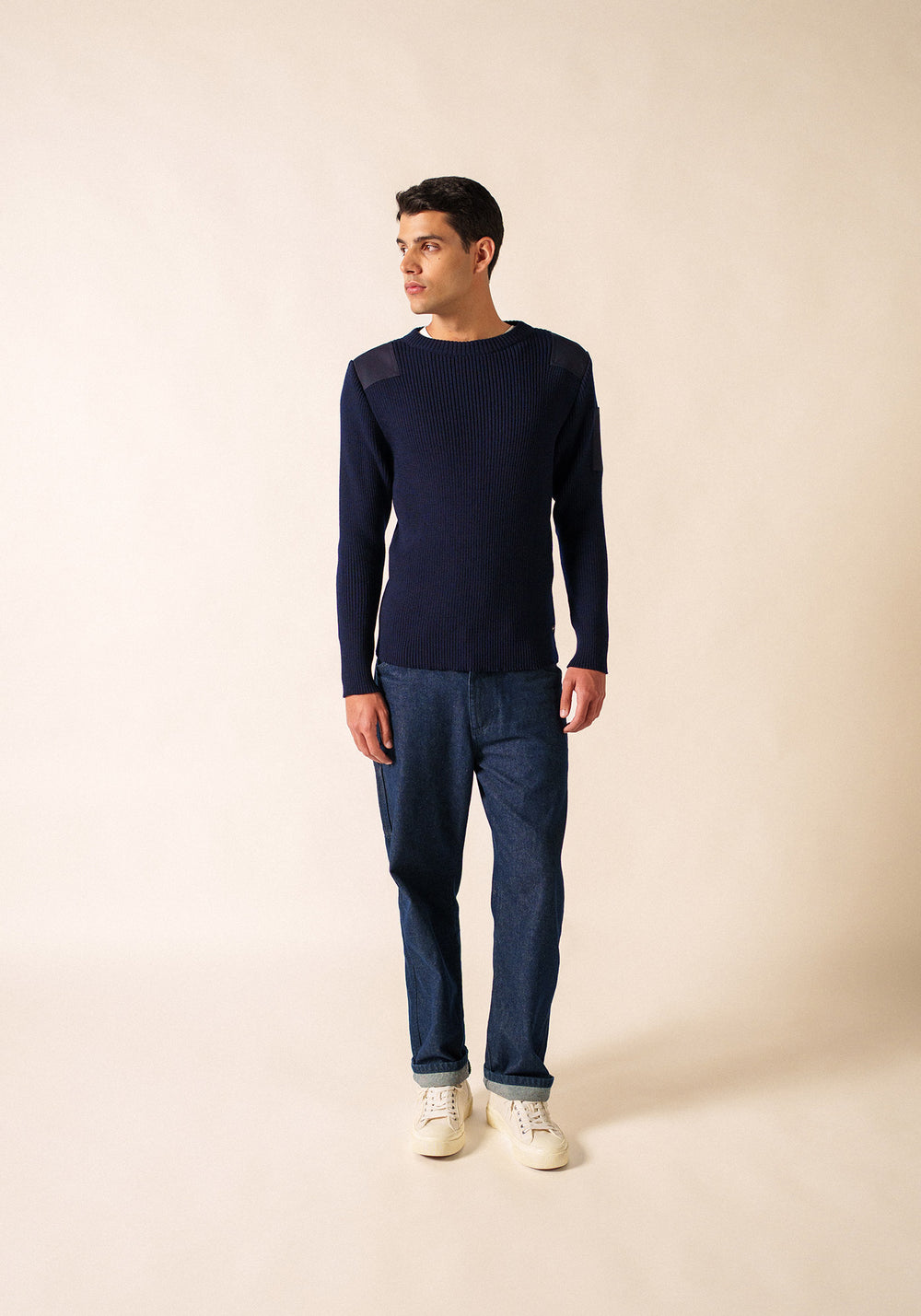
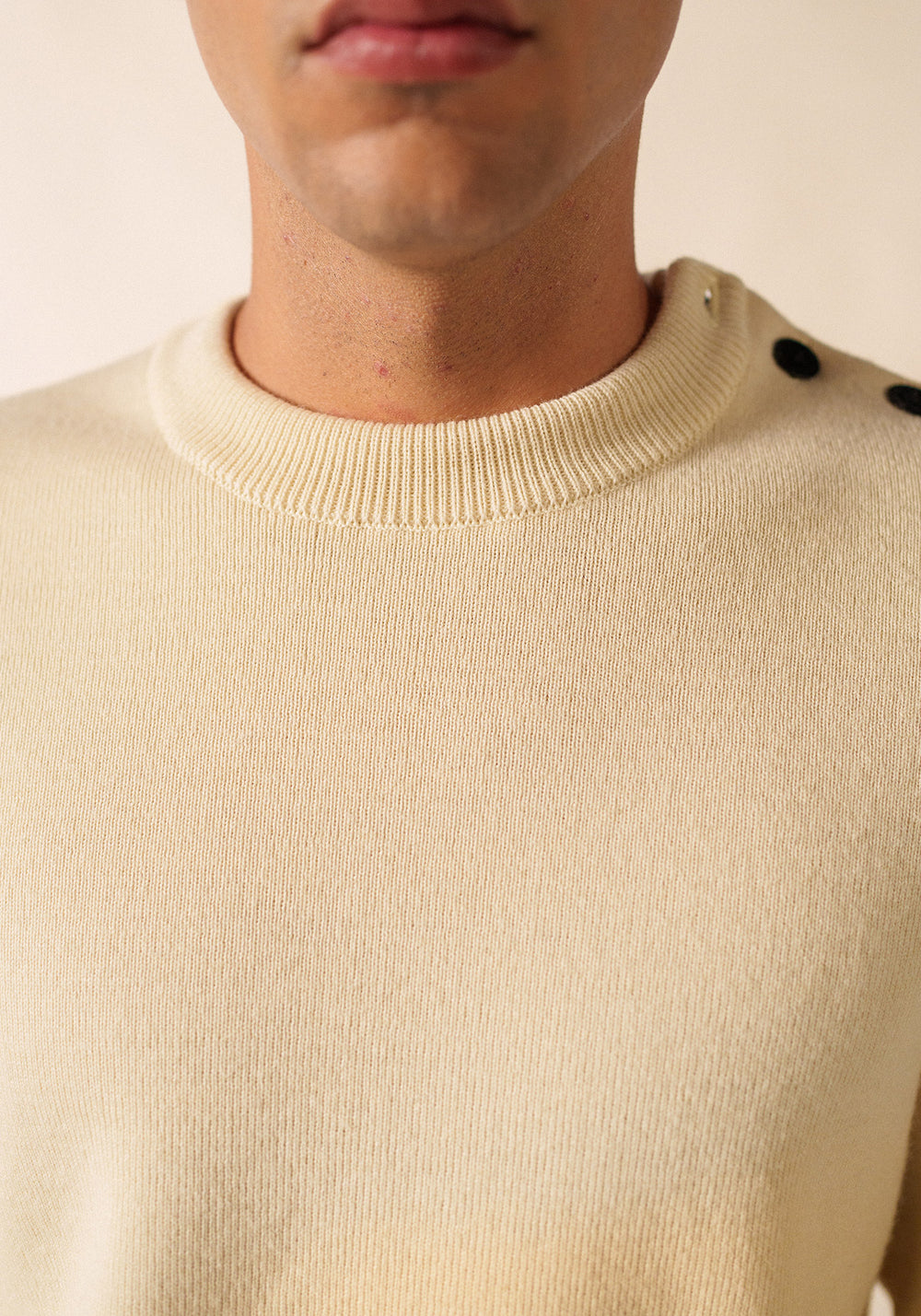
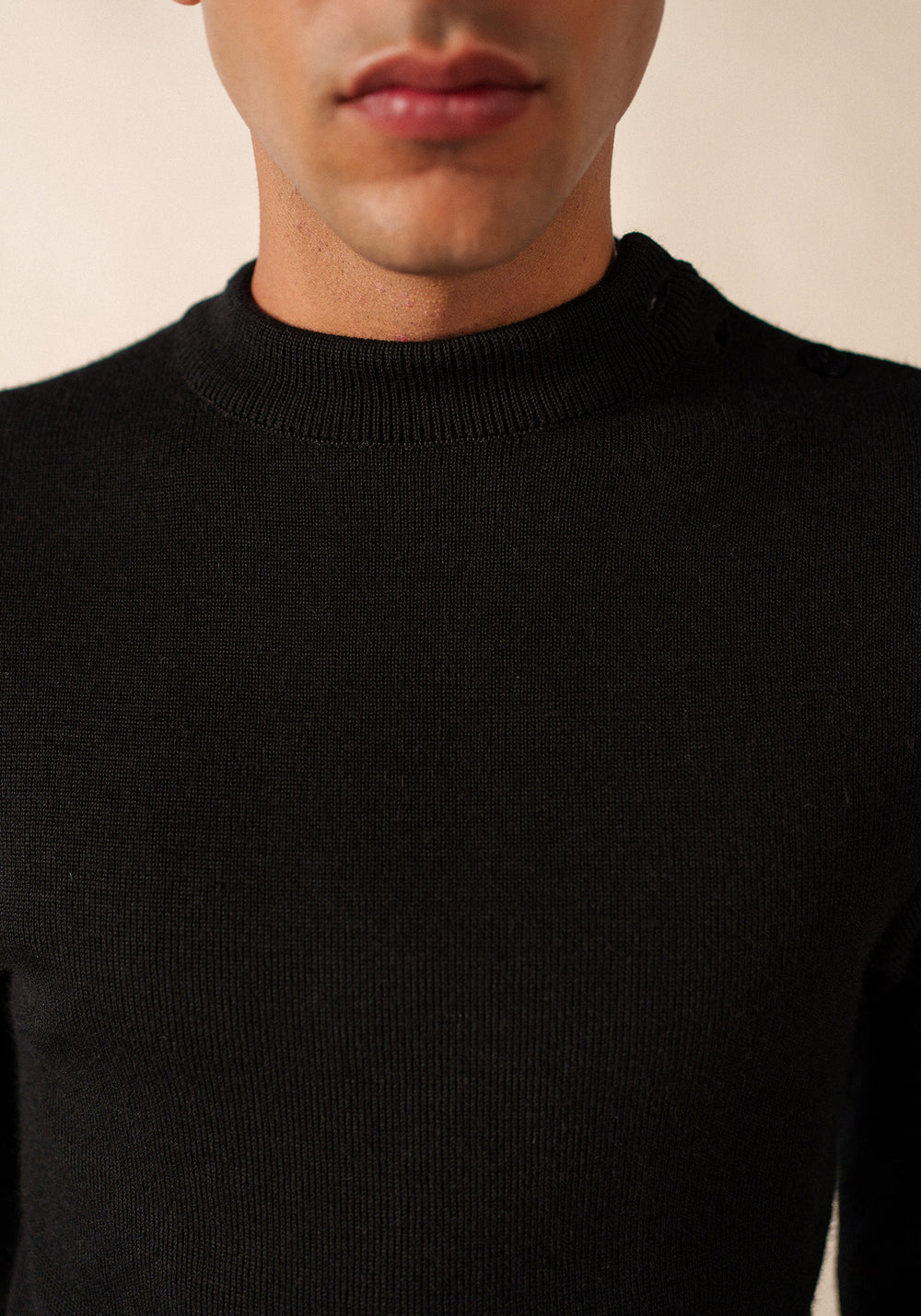
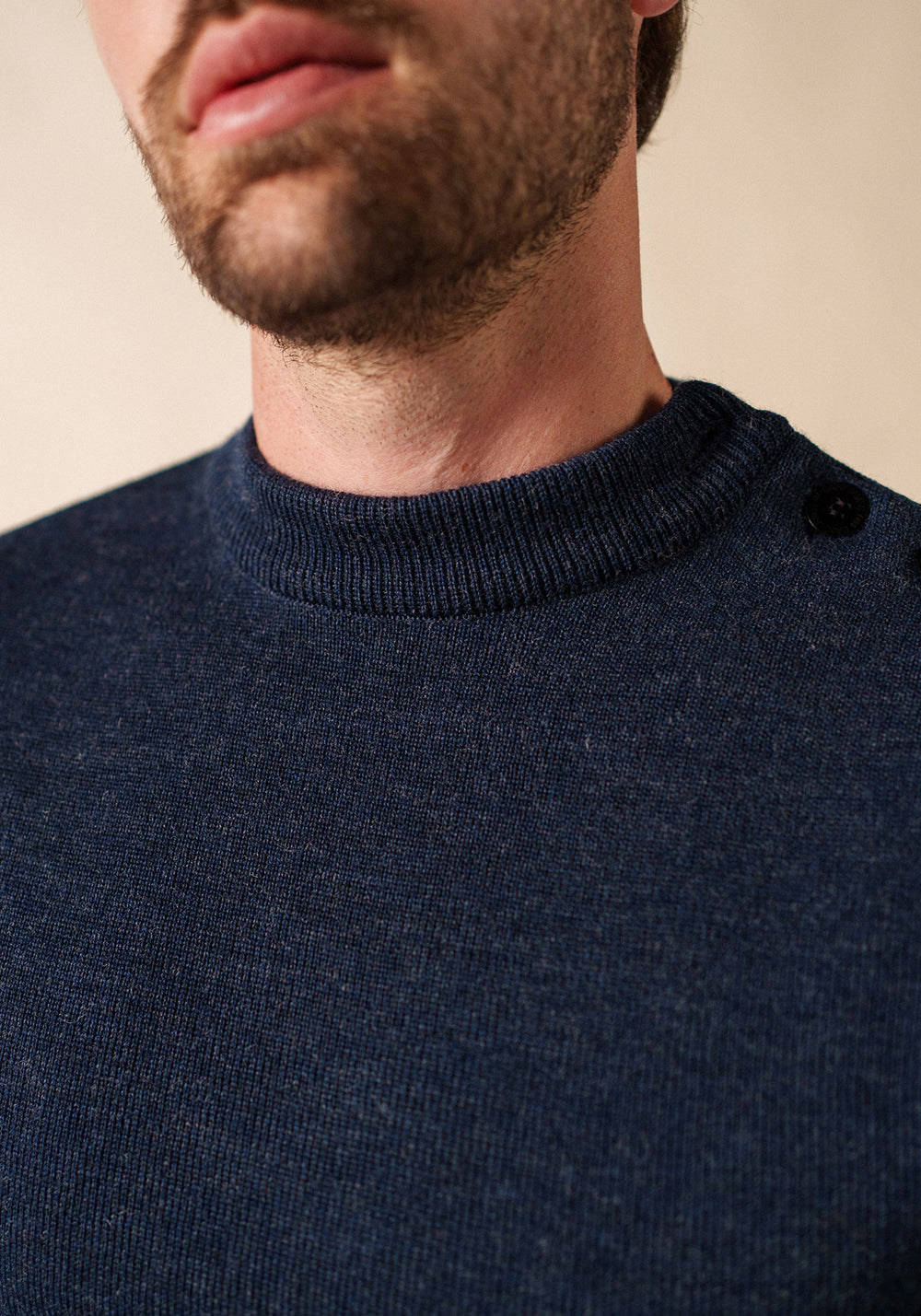
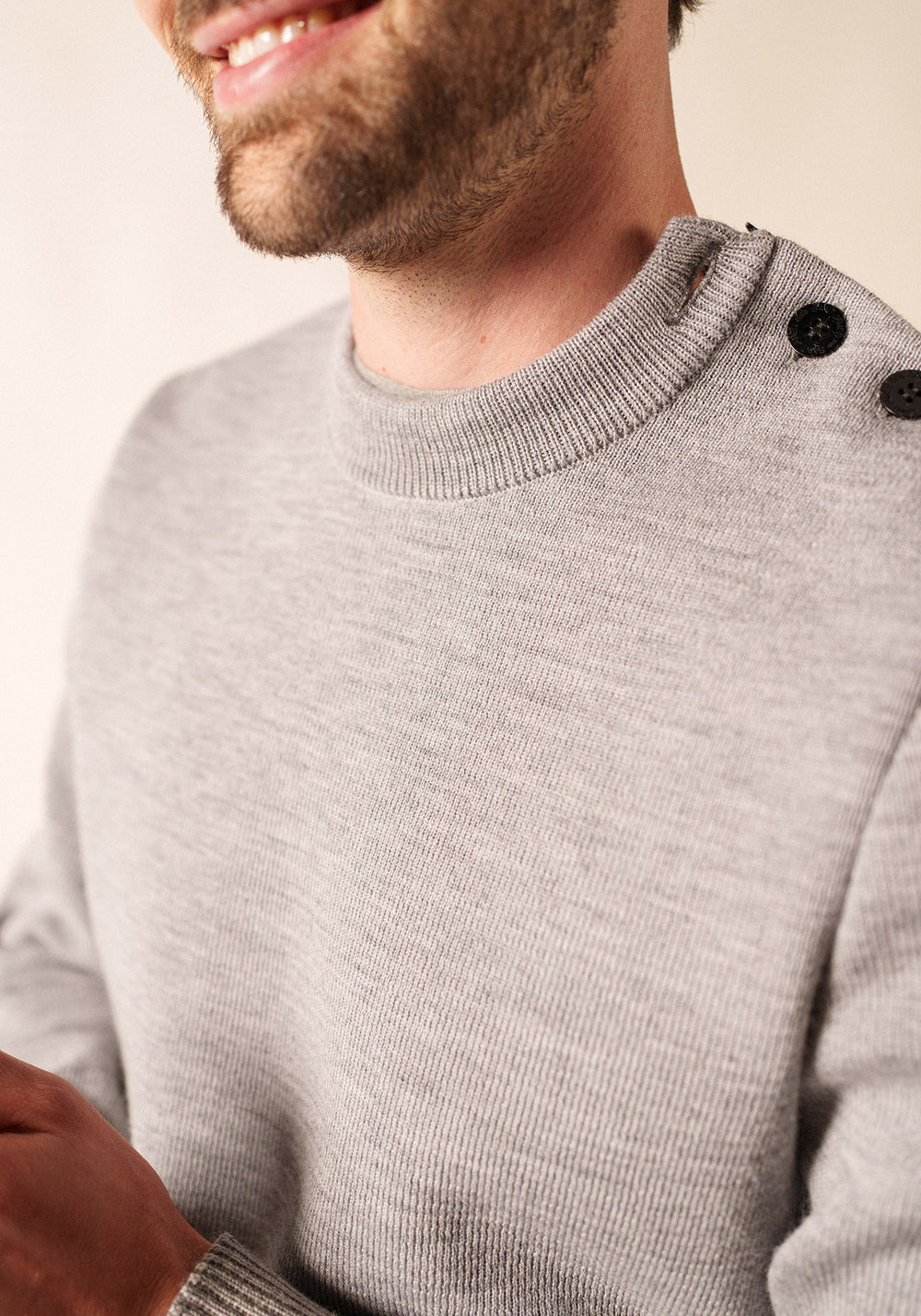
The choice of neckline depends partly on the desired style. For a more relaxed or casual outfit, crew neck wool jumpers are ideal. They should generally not be worn over a shirt to avoid a "stuffed" or bulky look; instead, opt for men’s T-shirts under your crew necks.
If you are looking for a smarter look, the V-neck wool jumper is perfect. It can be worn over a men’s shirt or polo shirt and pairs as well with a suit as it does with slim jeans, a long or short skirt, or denim shorts.
The length of a wool jumper varies less for men than for women, who can choose from cropped cuts to jumper dresses. To balance the silhouette, it is recommended to opt for shorter jumpers if you are petite and longer jumpers if you are tall.
The Colour
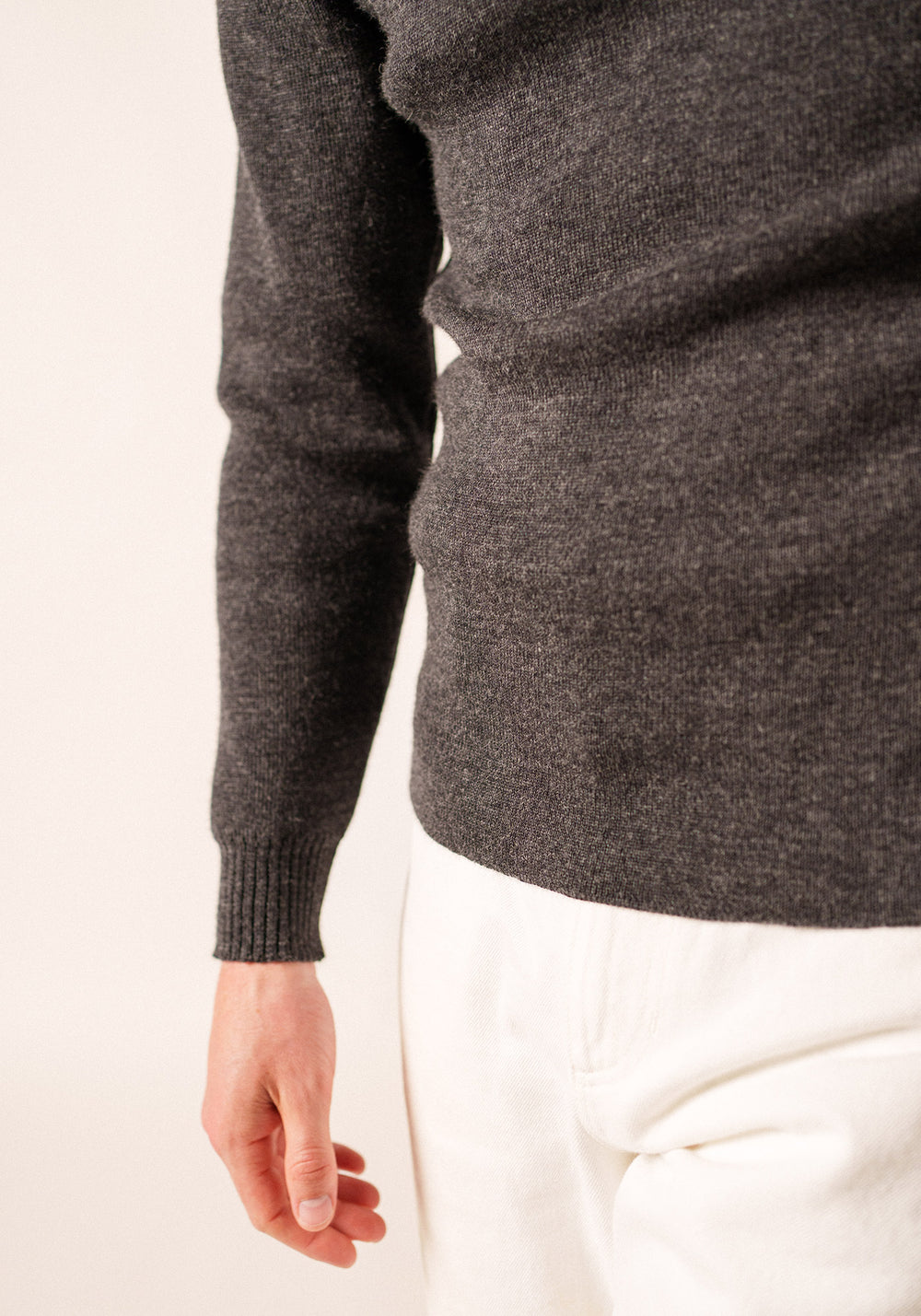
When choosing the colour of your wool jumper, consider the different colours of clothing you already own. You can opt for "safe bets" like navy blue, green, grey, and various shades of brown, which pair very well with brighter colours.
Play with contrasts by pairing dark pieces with a yellow or pink wool jumper, or any other vibrant shade. Conversely, soothe a very colourful outfit with a charcoal or brown wool jumper.
You can also use colour theory to help choose your shade, identifying which palette best suits your skin tone, hair, and eye colour. For some, warm tones are more suitable, while others are better enhanced by cool tones. If, for example, you have dark skin, hair, and eyes, prefer cool colours for your wool jumpers and other clothing, such as fuchsia, navy blue, or forest green.