Our care instructions
How to care for your SAINT JAMES wool jumpers ?
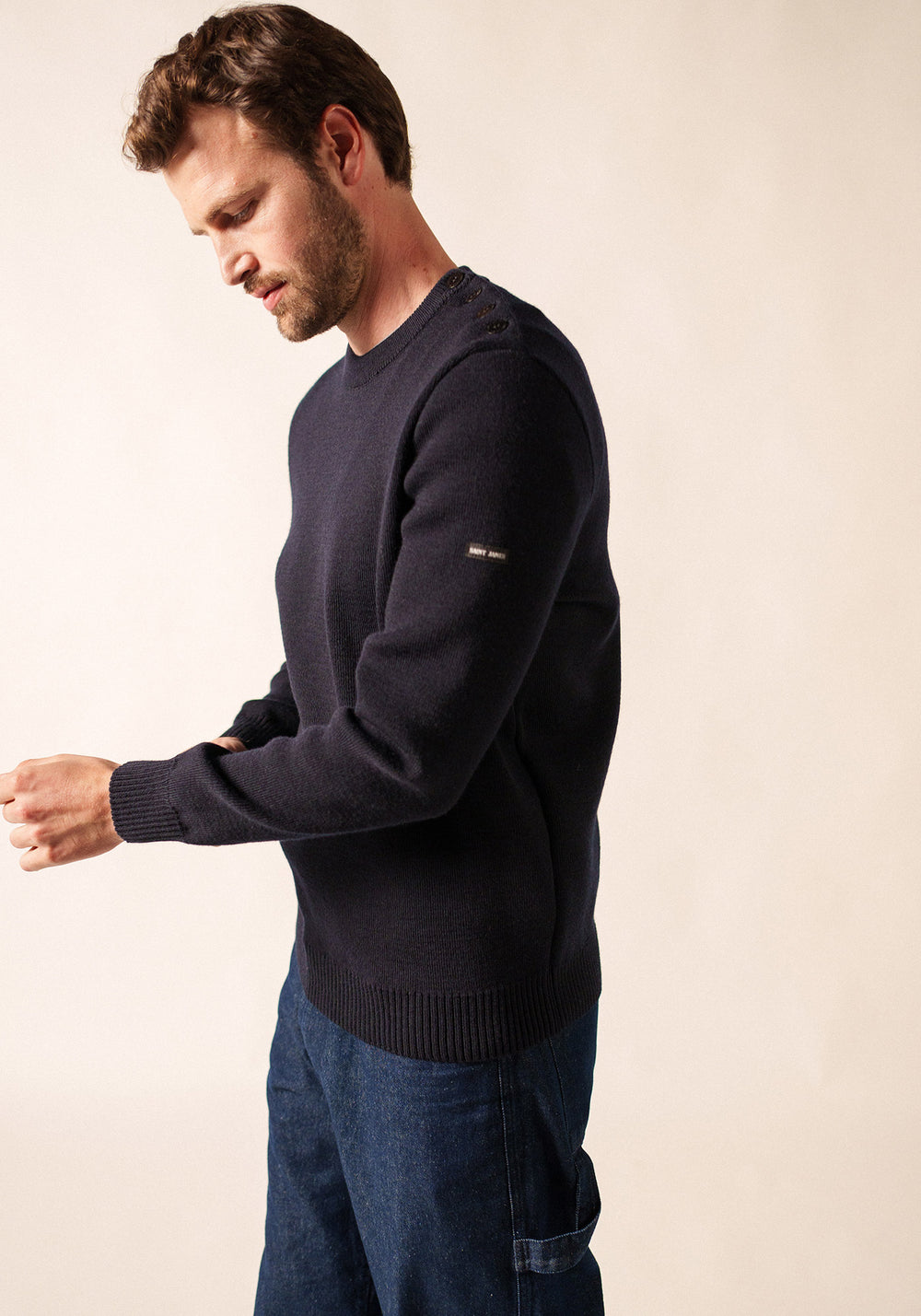
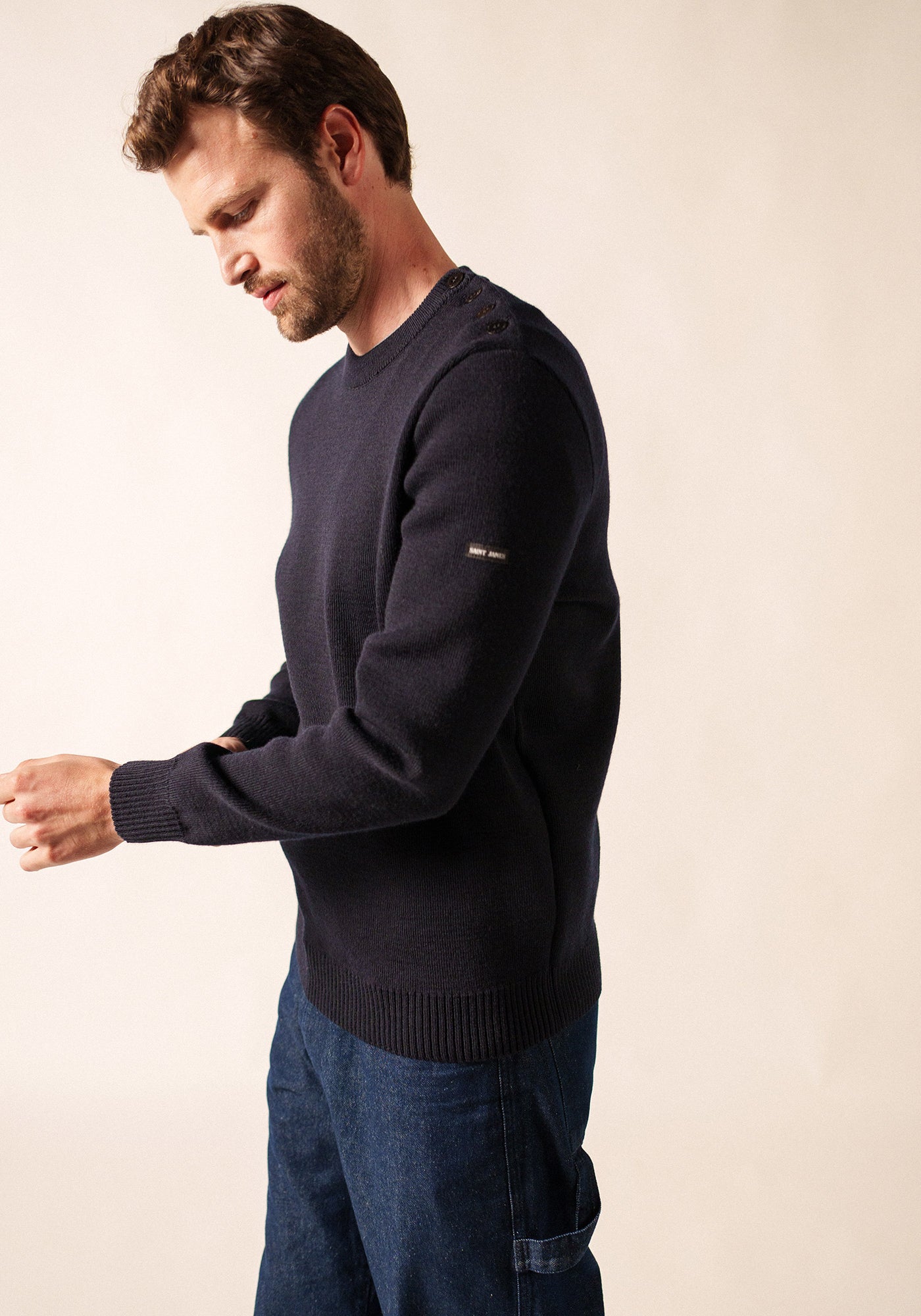
Wool is often thought to be difficult to care for. But with the right advice, your SAINT JAMES wool jumpers will stay perfectly maintained.
Wash your garments only when necessary. Wool is naturally self-cleaning — often, simply airing it out is enough. Over-washing can damage the fibres and lead to premature wear.

When washing your wool garment, make sure to:
- Use a gentle or wool-specific detergent
- Avoid fabric softener
- Set your machine to a maximum of 30°C (20°C ideally), but never cold — wet wool felts more easily
- Use a low spin cycle: 400–600 rpm
- Avoid tumble-drying
- Dry flat, in a temperate, well-ventilated area
- Never soak the garment
A simple steam refresh is often enough for wool. If you do choose to iron it, select the wool setting and use a damp pressing cloth between the iron and the garment.
What should I do if my wool jumper gets stained?
Don’t panic — a stained wool garment can often be saved with a few simple tips:
- As soon as you notice a stain, clean it immediately to prevent it from setting into the fibres, which would make it much harder to remove.
- Always place a clean, absorbent cloth underneath the stained area, and never pour hot water onto a stain, even a greasy one.
- Finally, if you are unsure, it is better to take the garment to a dry cleaner rather than risk causing damage that may not be reversible.
The right stain remover for every stain
Grease or sauce stains: scrape off the excess with a knife, then dab the stain with a cotton pad soaked in trichloroethylene. Wash the garment afterwards if possible.
Alcoholic drinks: blot up as much liquid as possible with an absorbent cloth, then apply a solution of water and surgical alcohol to the stain.
Mud: allow it to dry, then brush the area gently. Afterwards, rub with a solution made of one tablespoon of ammonia diluted in one litre of water.
Coffee or tea: mix alcohol and white vinegar, then dab the stain with the solution. Blot gently afterwards.
Shoe polish or lipstick: dab with a cloth soaked in turpentine.
Chewing gum: dissolve it using acetone or nail varnish remover, then remove it with a clean cloth.
Ink: dab the area with white spirit, followed by white vinegar or surgical alcohol.
Fruit, fruit juice or red wine: rub the stain with a mixture of three-quarters surgical alcohol and one-quarter water.
Grass: wash carefully with soap or dab with surgical alcohol using a clean cloth.
Rust: use a dedicated rust remover product.
Blood: blot the stain, then apply pure vinegar directly onto it. Rinse with cold water afterwards and wash the garment if possible.

How should you care for your SAINT JAMES cotton garments?
Cotton garments are known for being easy to care for. However, to help them last as long as possible, here are a few additional tips.
Wash your garments only when necessary. Over-washing can weaken fibres and cause premature wear.
- Wash at a maximum of 40°C
- If your cotton piece contains multiple colours, prefer washing at 30°C
- Use moderate spin: around 800 rpm
- Prefer air-drying over tumble-drying
- Use a gentle detergent
How should you care for other SAINT JAMES fabrics?
Wash your garments only when necessary. Over-washing can weaken fibres and cause premature wear.
For linen garments :
- Choose a gentle wash at 30°C with a moderate spin (max 800 rpm)
- Prefer air-drying over tumble-drying
- Avoid fabric softener — linen naturally softens with each wash
Ironing is optional; its natural creased look is part of its charm. A simple steam refresh usually suffices. If you wish to iron it, do so gently, on the reverse side, while the fabric is still slightly damp.
For synthetic fabrics :
- Wash at a maximum of 40°C
- Limit spin to 1000 rpm
- Prefer air-drying
For blended wool, cotton or linen fabrics :
We recommend following the same care instructions as for garments made from 100% natural fibres. This will help the fibres last longer over time and preserve their strength.