Our cotton
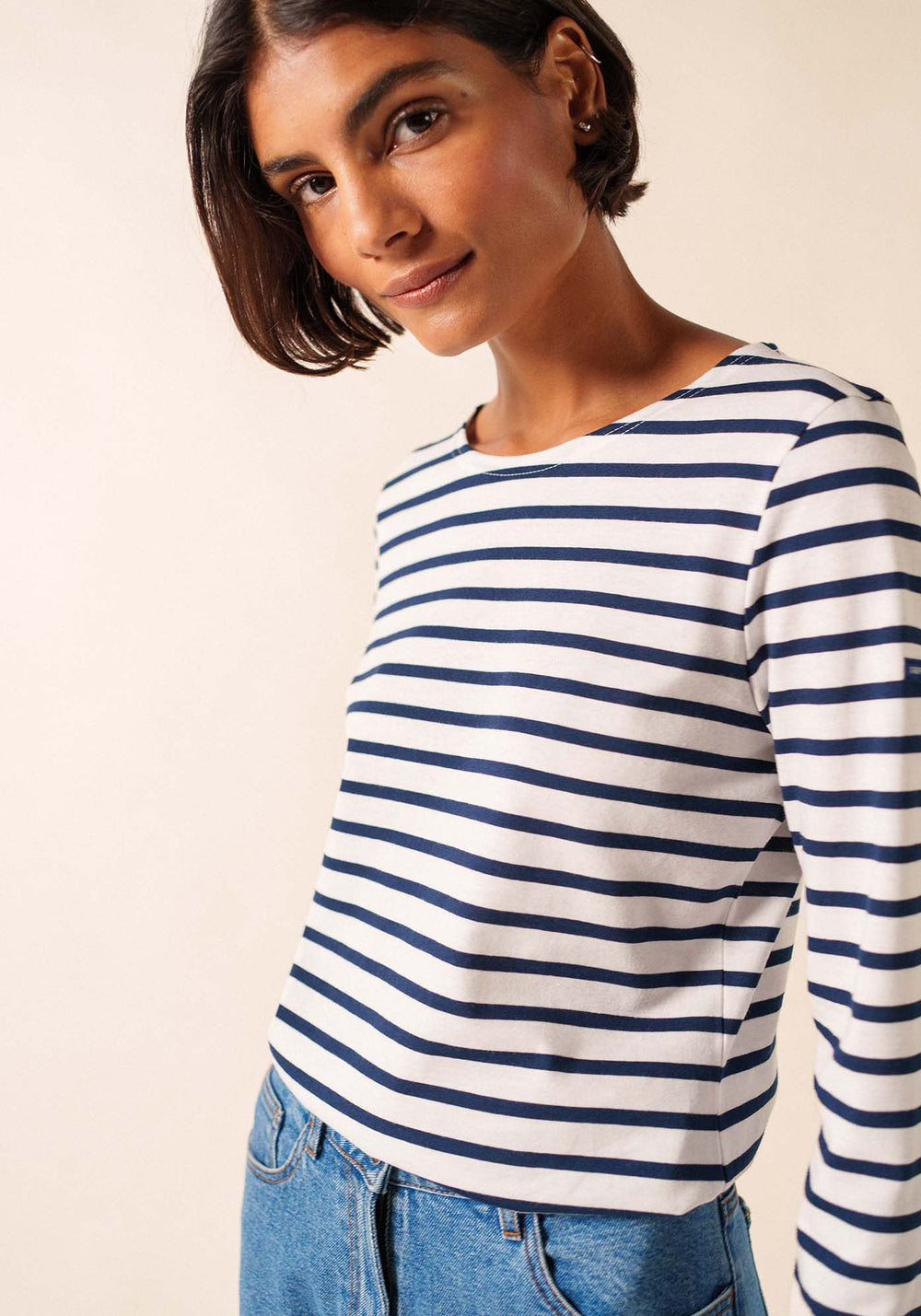
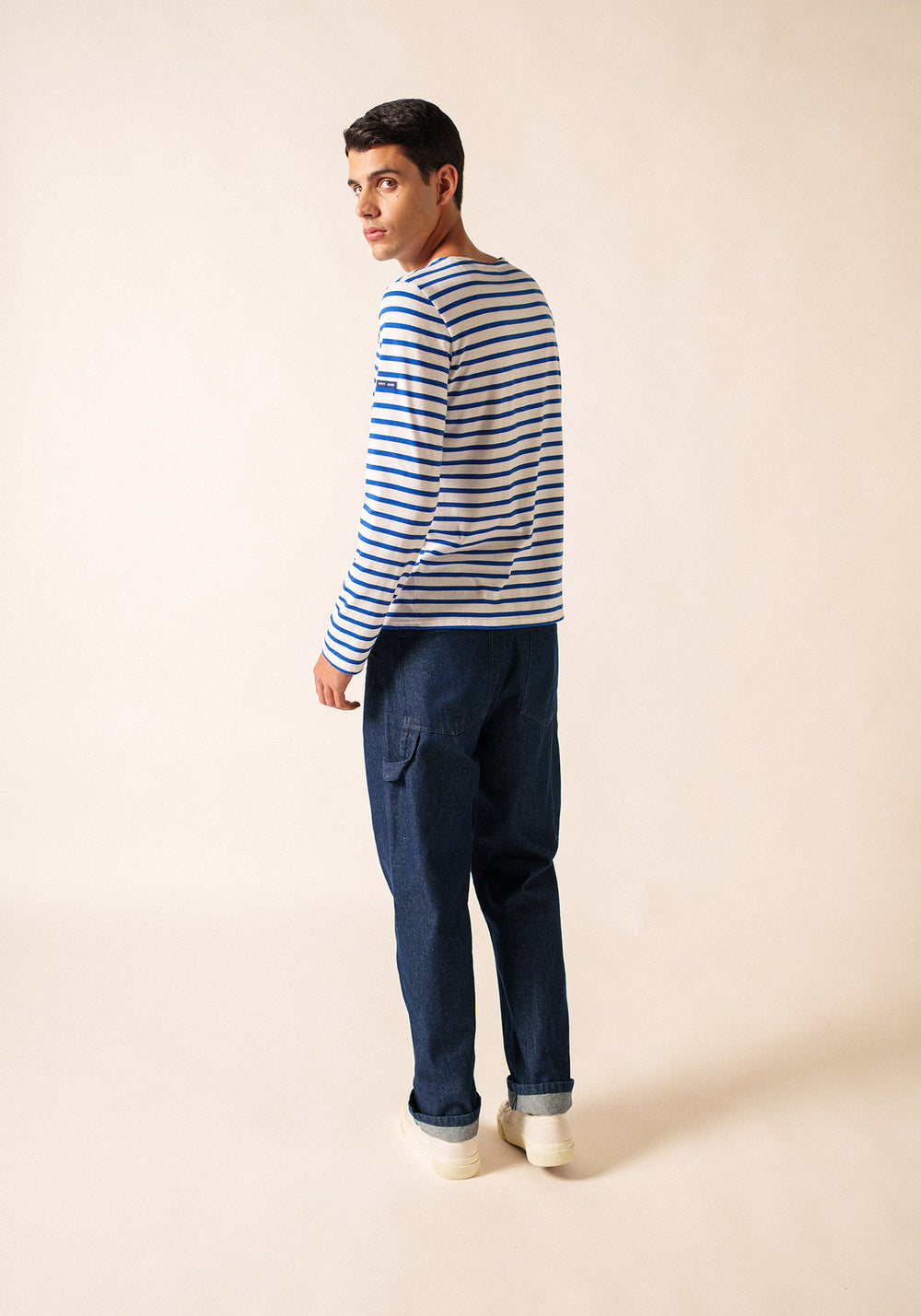
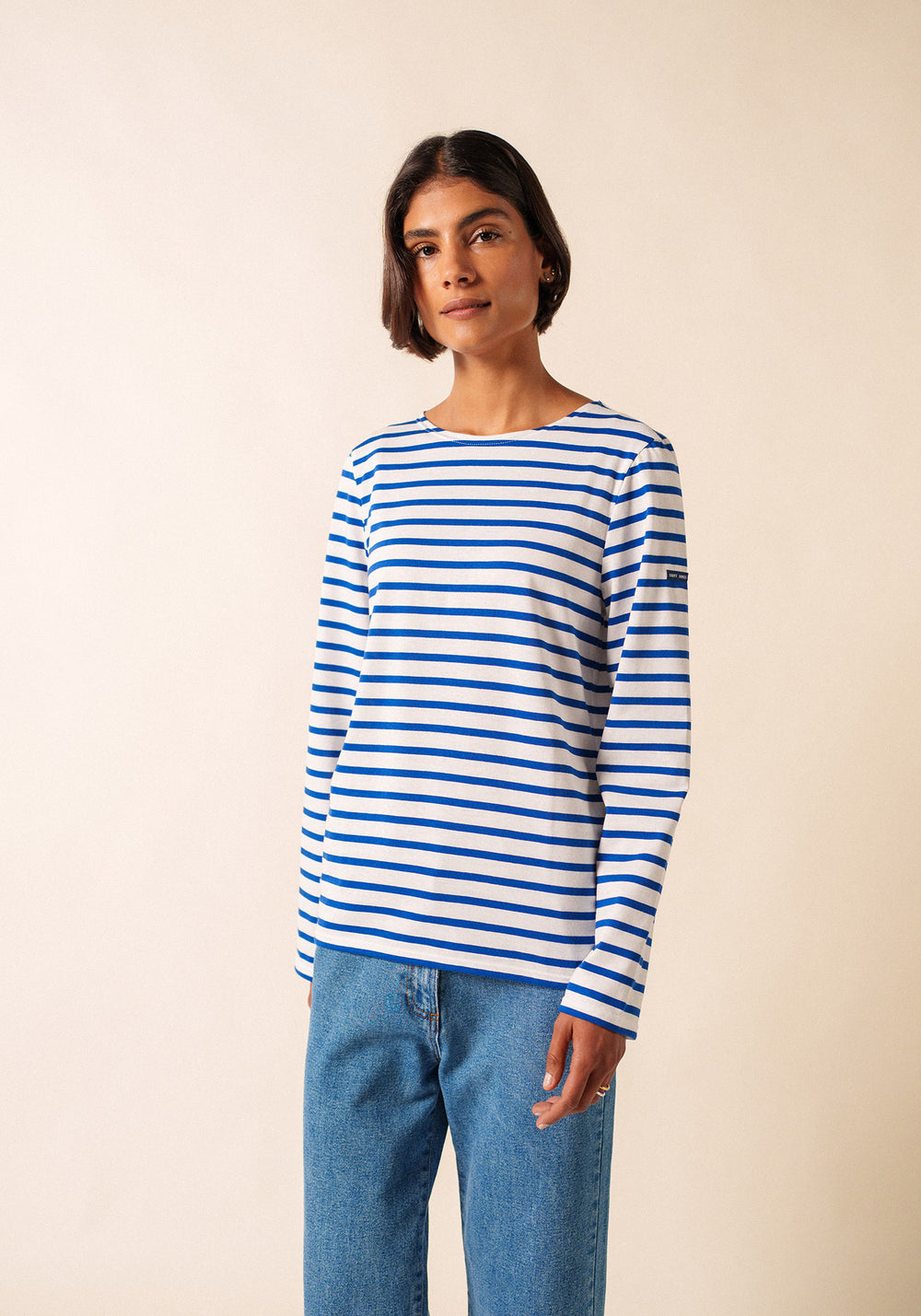
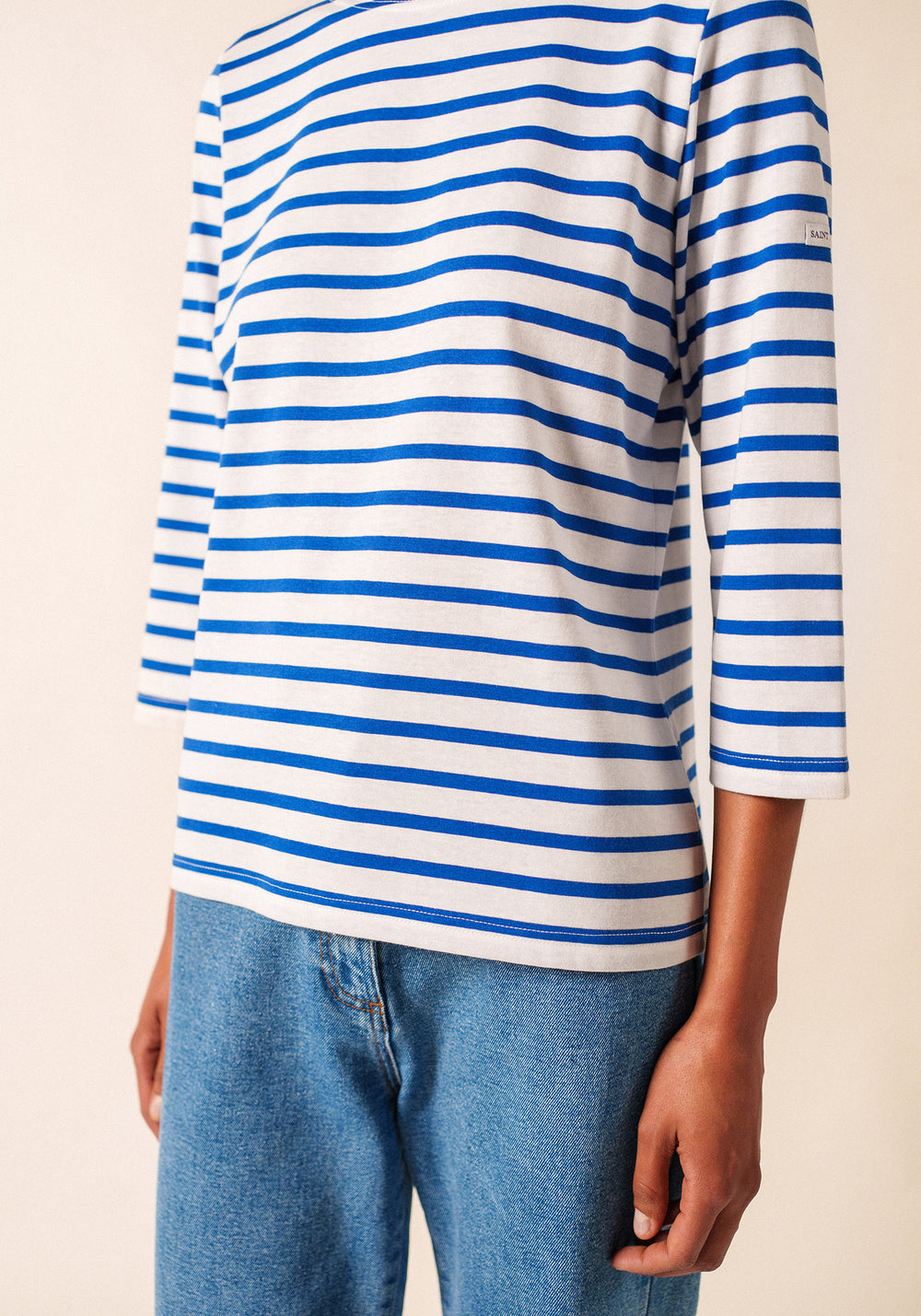
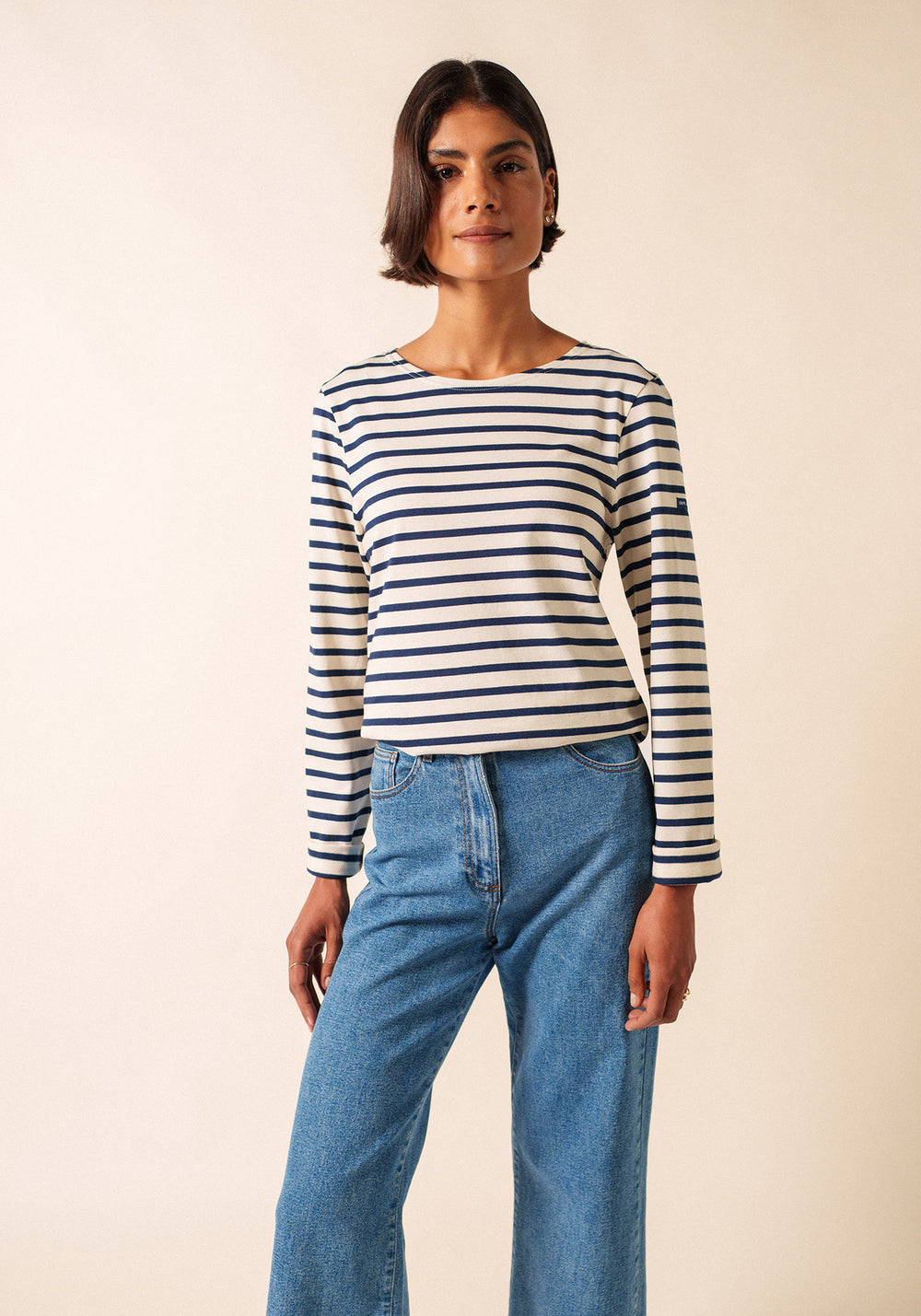
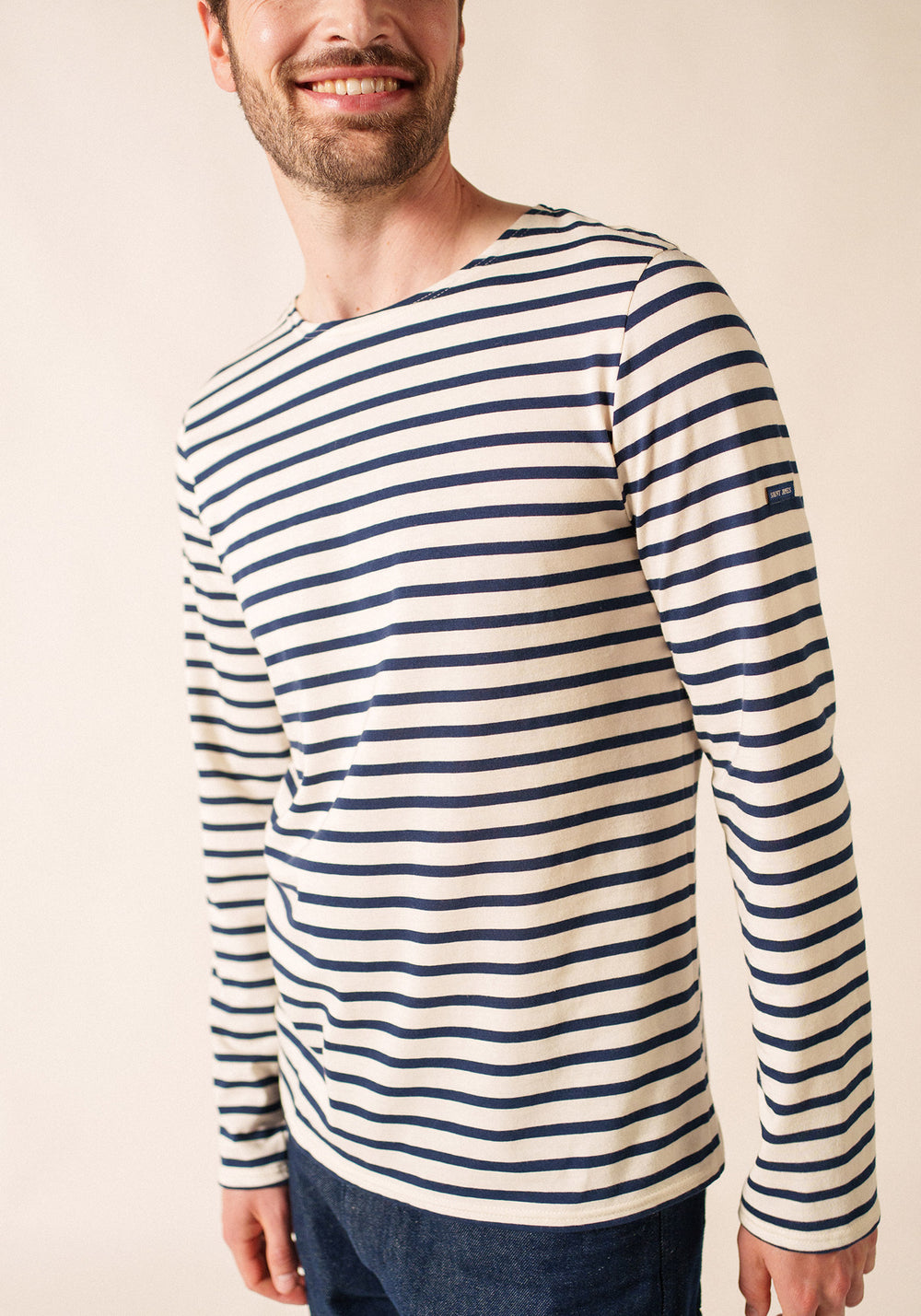
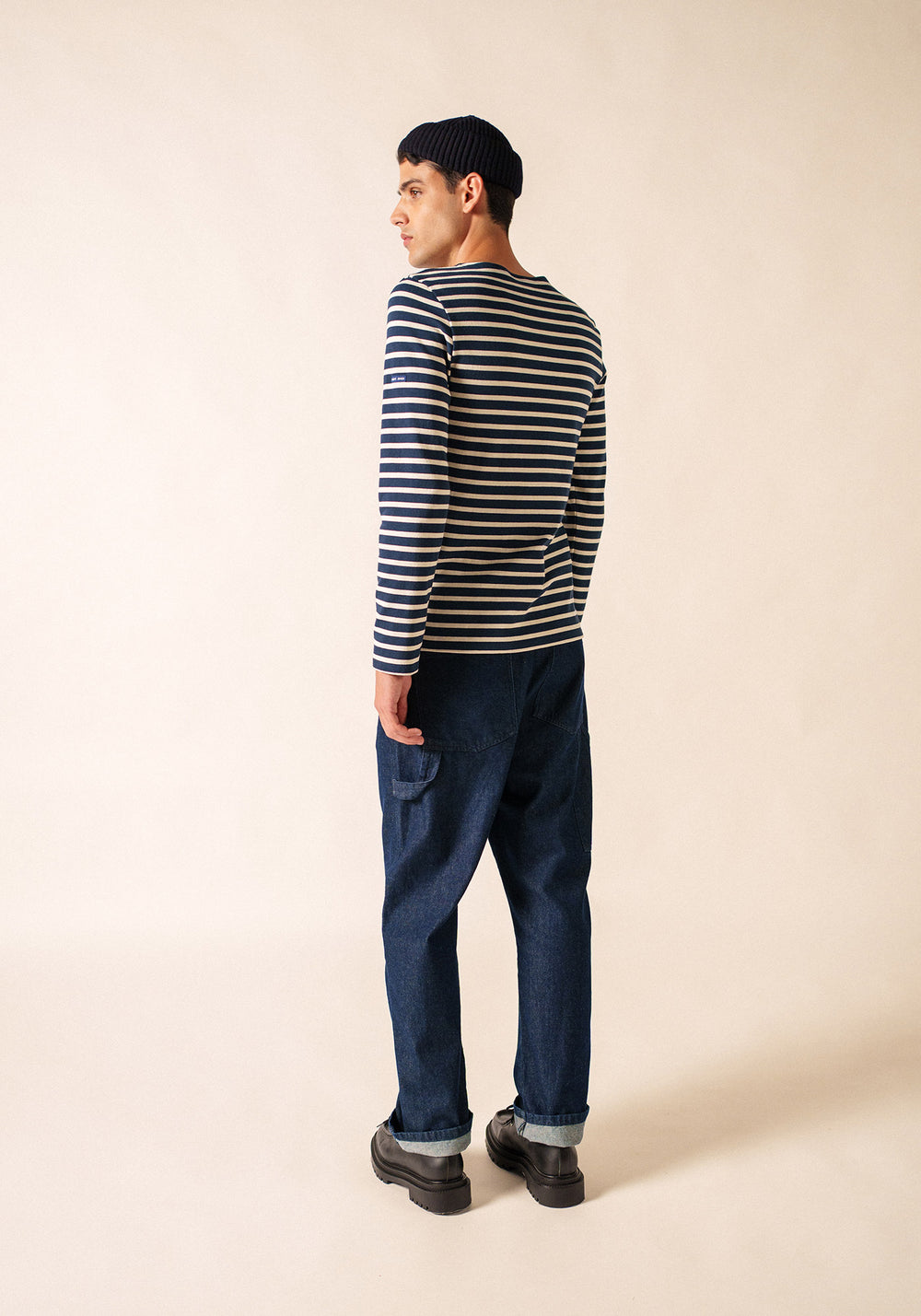
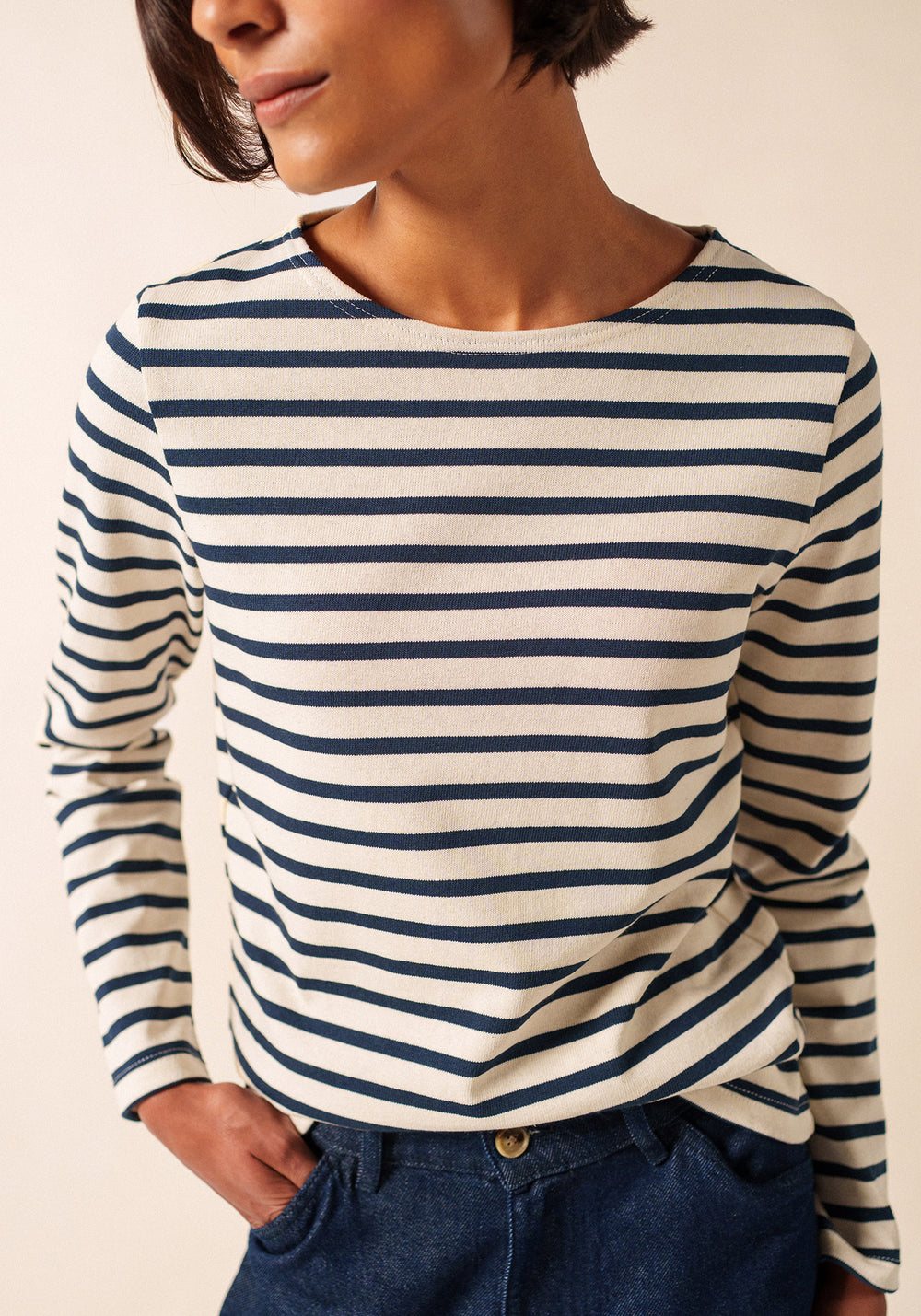
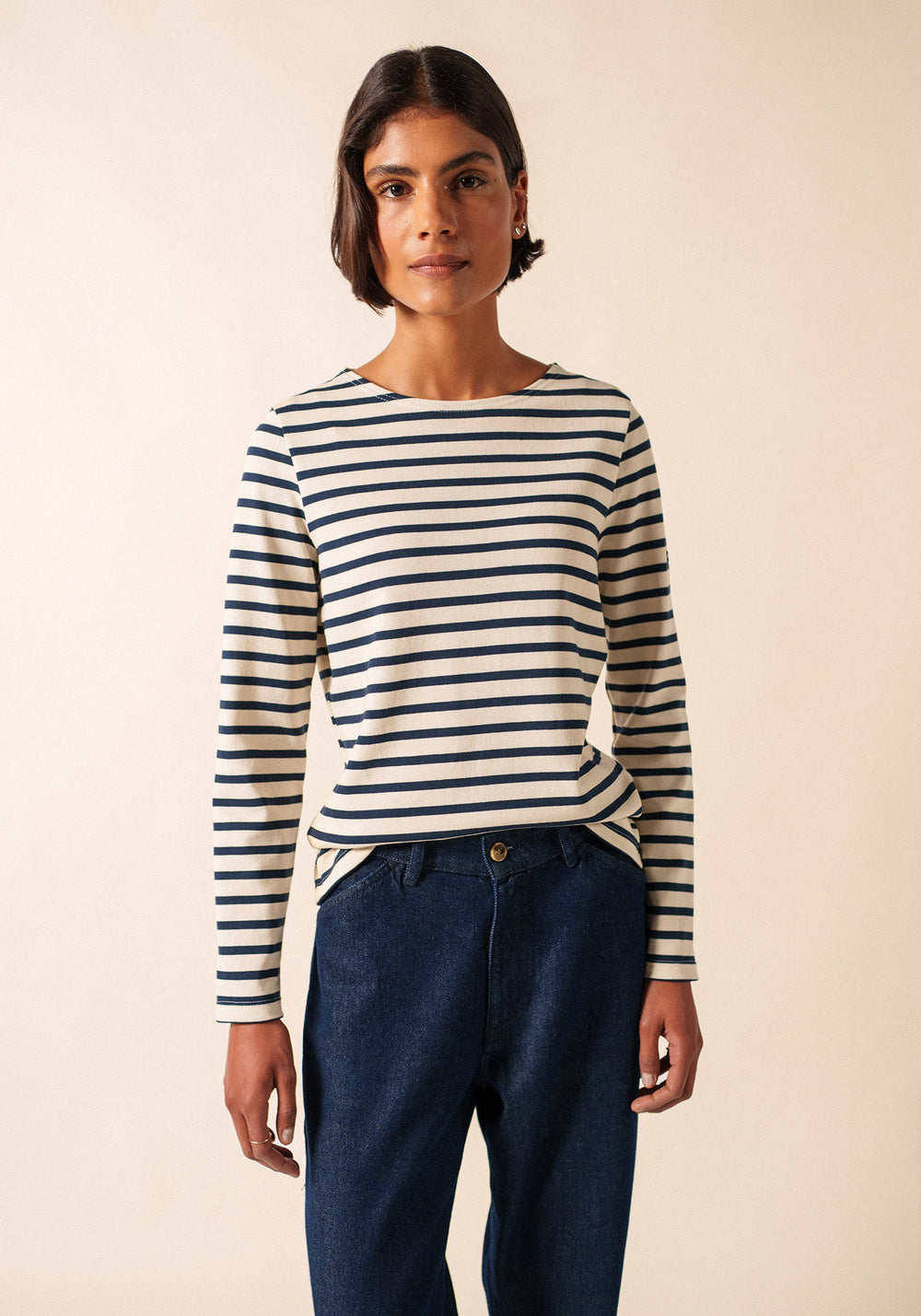
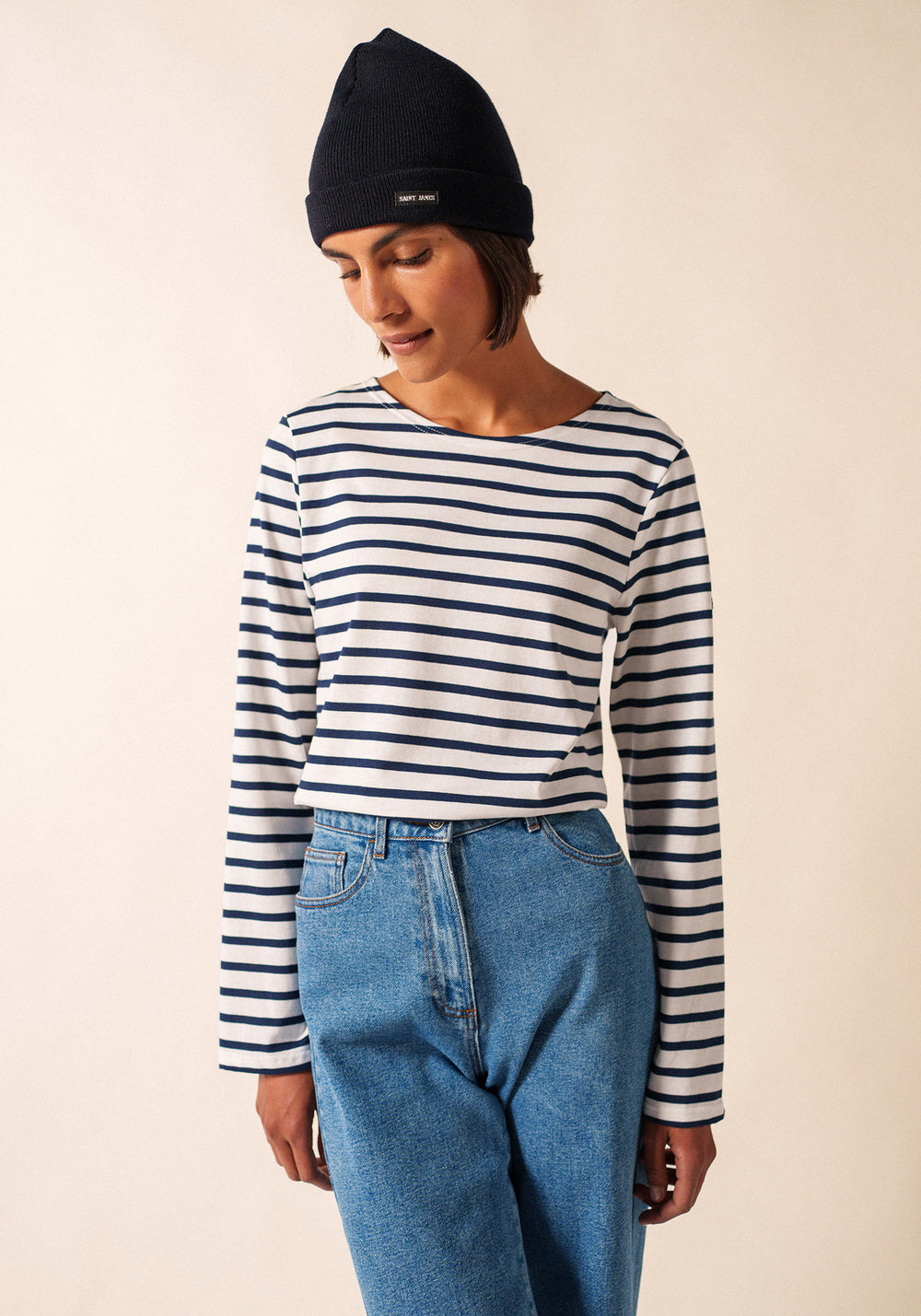
At SAINT JAMES, we craft our garments using natural, high-quality materials like wool and cotton. Cotton, a cornerstone of our Breton striped shirts, is also featured in sweaters, T-shirts, polos, shirts, trousers, dresses and more.
But what makes cotton so special? How is it harvested, processed, and transformed into the refined fabrics used in our workshops? Explore the journey of this natural, breathable fiber, from its cultivation to the creation of timeless SAINT JAMES pieces.
The Journey of Cotton: From Plant to Fiber
Cotton is woven into our daily lives from the earliest age, so much so that we often forget the plant behind this versatile fiber.
The cotton plant in bloom produces the soft white balls that symbolize purity and comfort. These fibers are the source of the threads used in our garments. While cotton plants can grow up to 30 feet in the wild, cultivated varieties are usually kept between 3 and 6 feet to facilitate harvesting.
Thriving in tropical climates, cotton requires ample sunlight, heat, and water for its seeds to mature. During the summer, its flowers bloom, gradually revealing green capsules that eventually open to expose the seeds surrounded by white cotton fibers, each measuring 1 to 2 inches. These fibers are then carefully collected and processed, ultimately becoming the high-quality cotton threads used in our premium SAINT JAMES textiles.

From Raw Cotton to Premium Yarn: Carded and Combed Fibers
Once harvested, cotton fibers undergo ginning, a process that separates the fibers from the seeds. The next step is sorting and cleaning, which removes larger impurities such as leaves, branches, and other plant residues.
Following this, the cotton is carded: the fibers are brushed and disentangled to align them in parallel. While all cotton undergoes carding, only the longest fibers go through combing. This process removes shorter threads—about 10 to 25% of the fibers—resulting in a smoother, softer yarn.
Carded cotton retains a more textured, authentic feel, giving fabrics a distinctive character. Combed cotton, on the other hand, produces refined, supple textiles with a polished touch. At SAINT JAMES, the choice of cotton depends on the garment: carded cotton is used for pieces like the Méridien or Méridame striped shirts, while combed cotton is reserved for smoother items like the Minquidame or Minquiers Breton shirts.
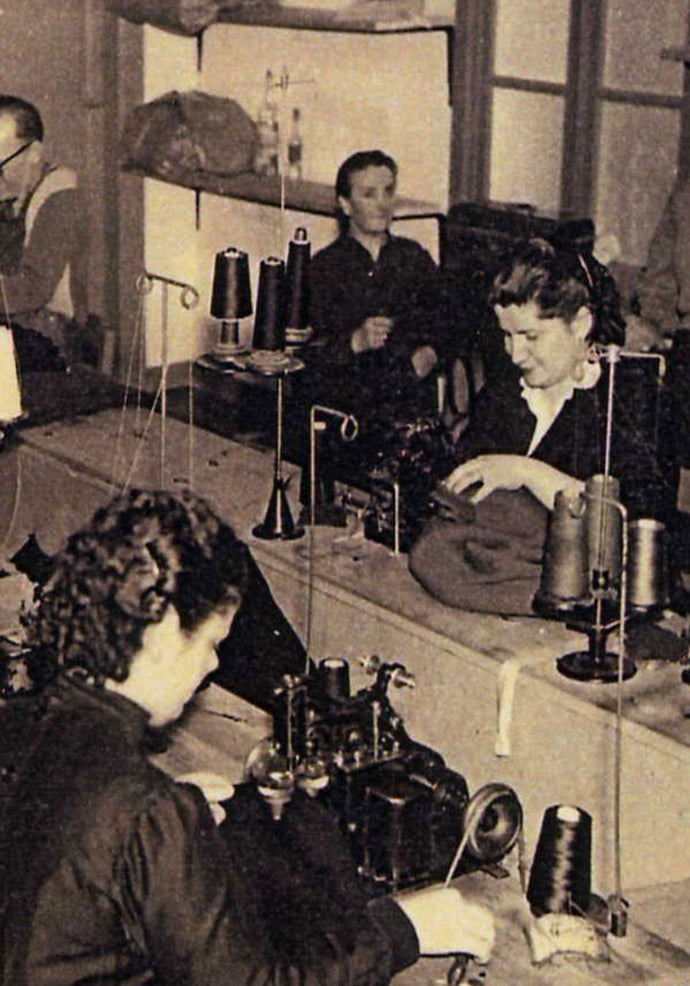
The transformation of cotton threads into fabric is handled with precision by French manufacturers: circular knitting produces the iconic marinières and Breton shirts, while our SAINT JAMES Ateliers handle rectilinear knitting for cotton sweaters, ensuring premium quality and authentic craftsmanship.
The Versatility of Cotton in SAINT JAMES Collections
Although cotton always comes from the same plant, it can be transformed in countless ways to create a diverse range of high-quality fabrics.
For instance, cotton voile is woven with widely spaced threads, producing a lightweight, transparent, and delicate fabric. Other treatments turn cotton into tulle or gauze, offering softness and breathability. For more structured textiles, percale delivers a smooth, crisp finish, while flannel provides warmth and comfort. Finally, cotton fleece, brushed on both sides, creates a soft, insulating fabric ideal for cozy sweaters and casual wear.
At SAINT JAMES, this versatility allows us to select the perfect cotton fabric for each garment, whether it’s a classic Breton shirt, a lightweight marinière, or a warm sweater, ensuring premium comfort, durability, and authenticity.

In the SAINT JAMES collections, several types of cotton fabrics are carefully selected to match the style, comfort, and durability required for each garment:
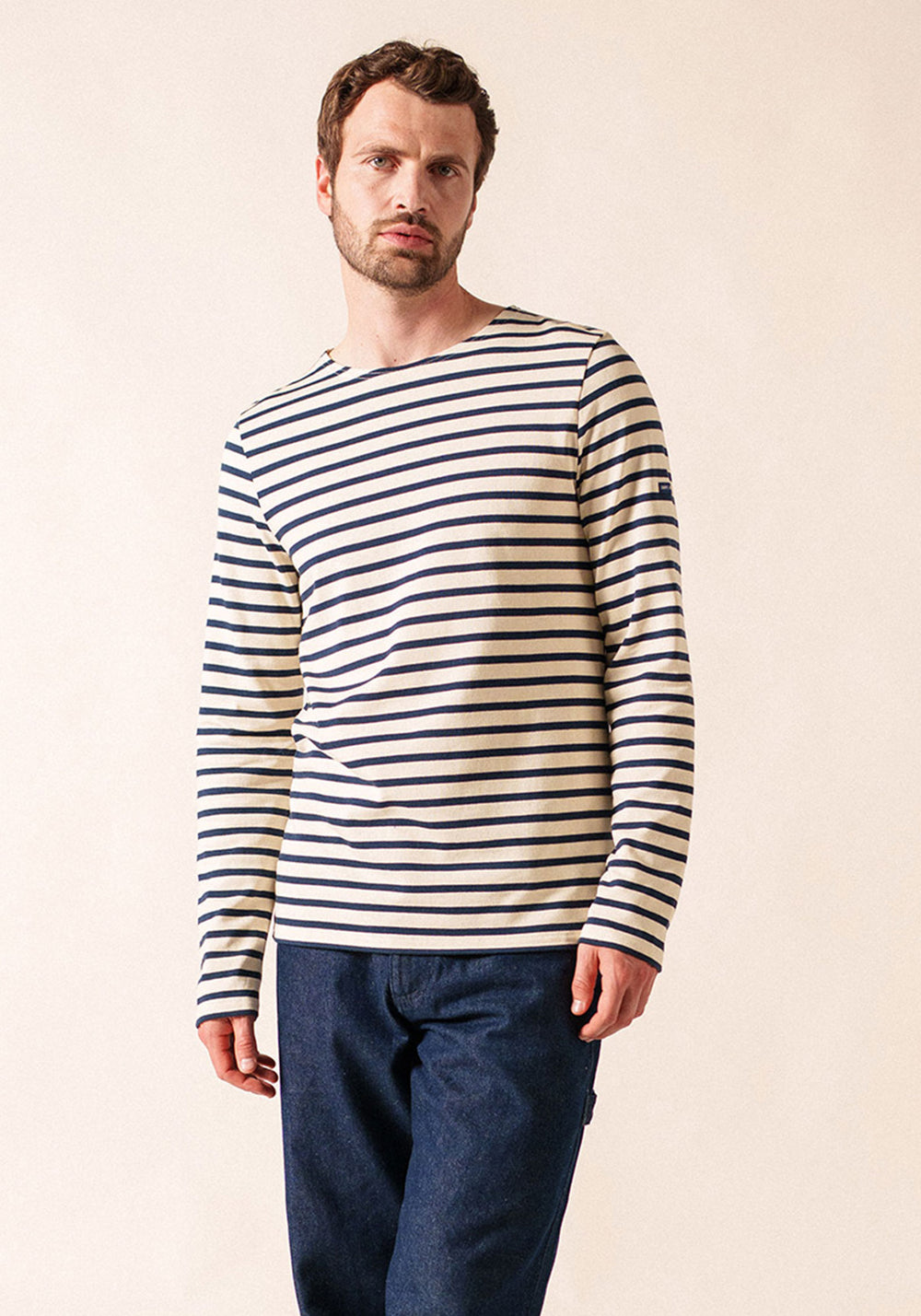
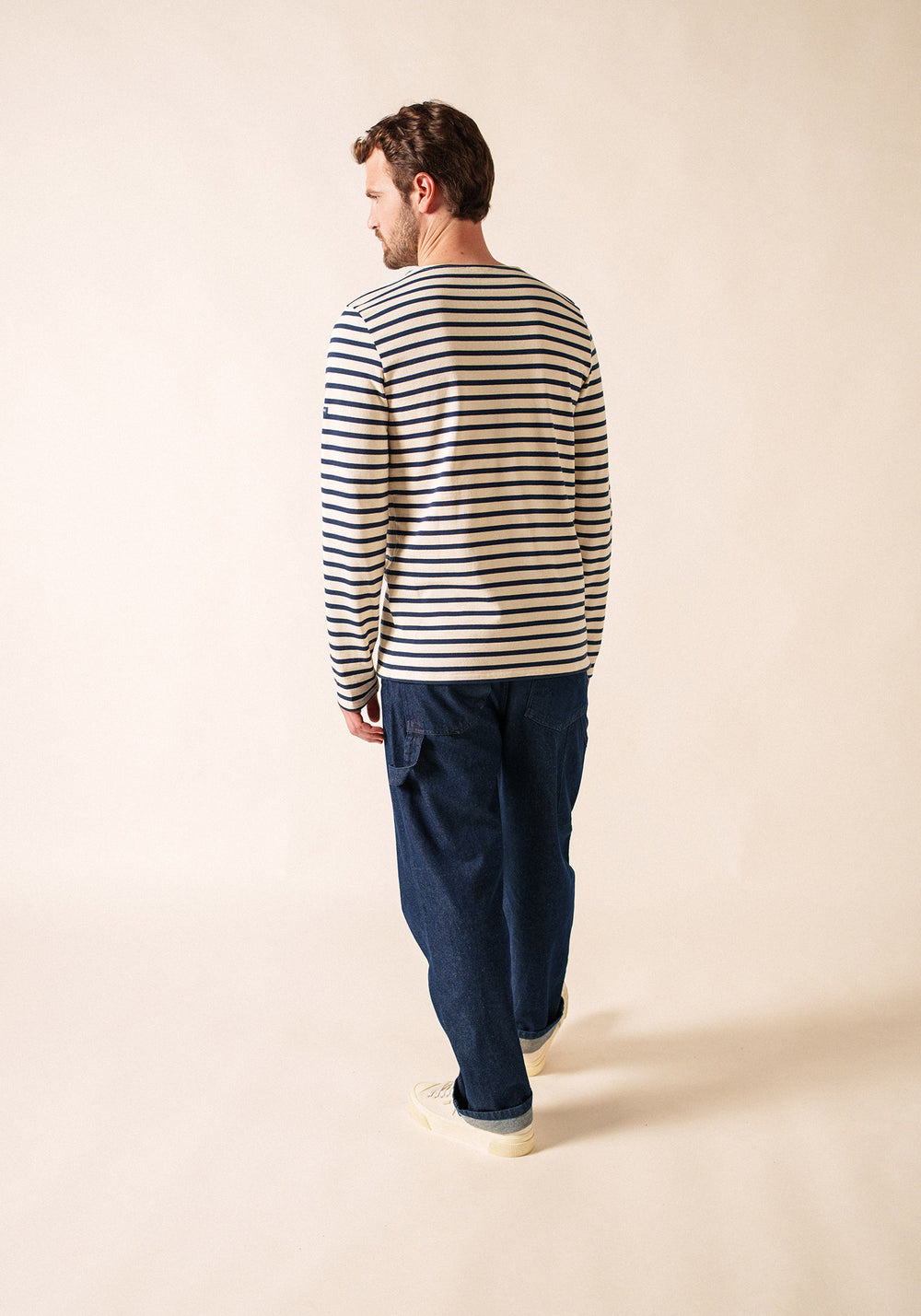
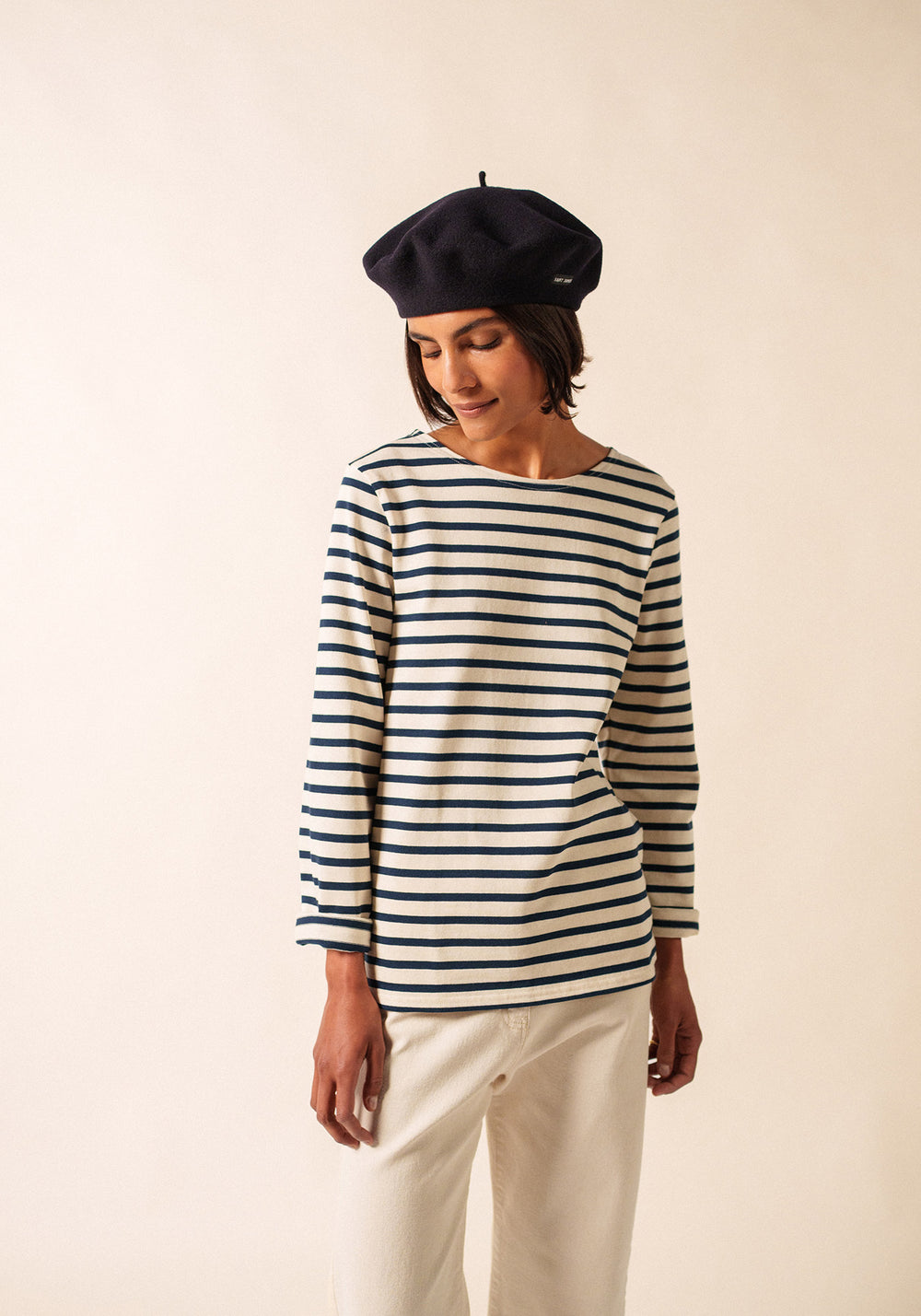
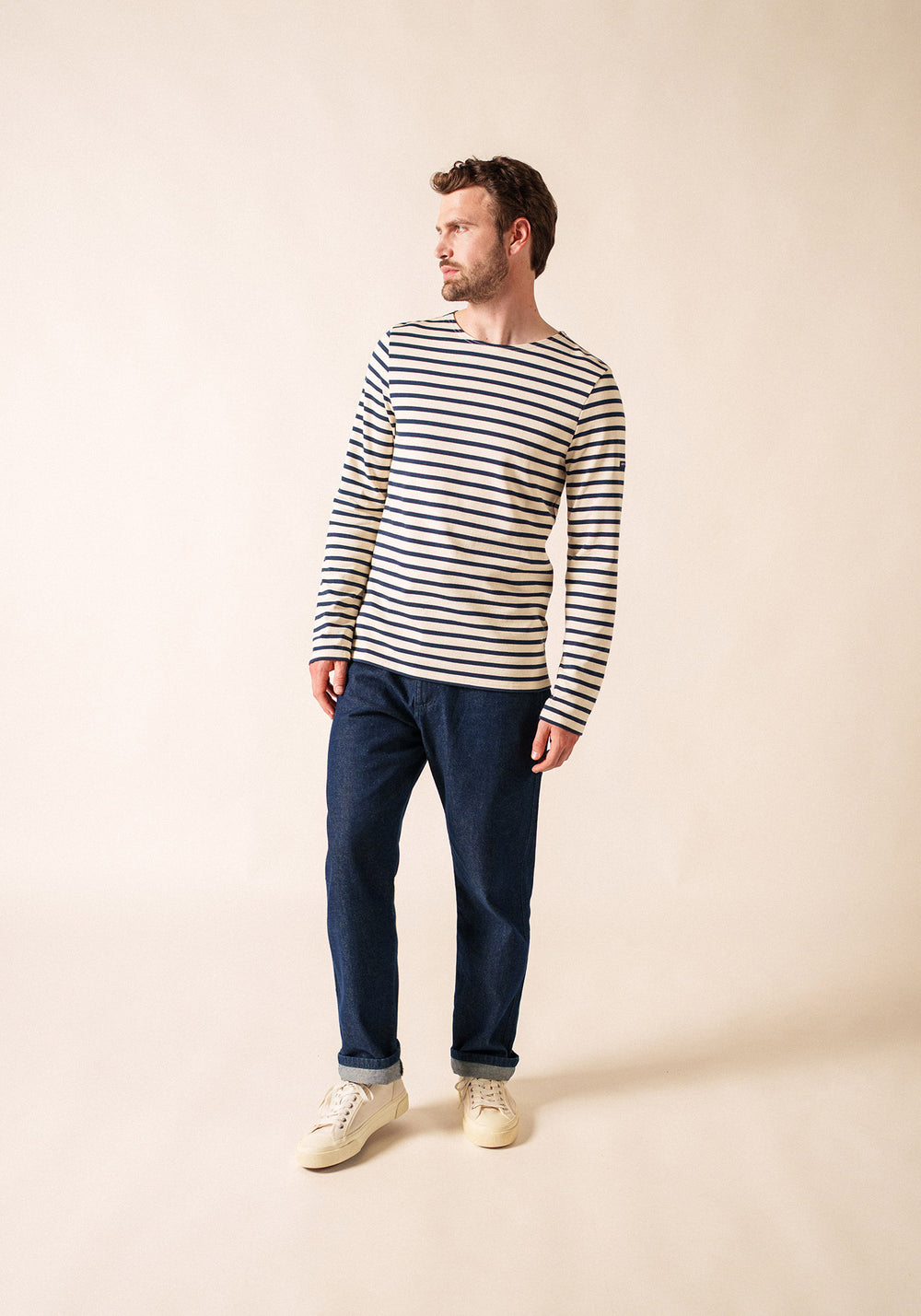
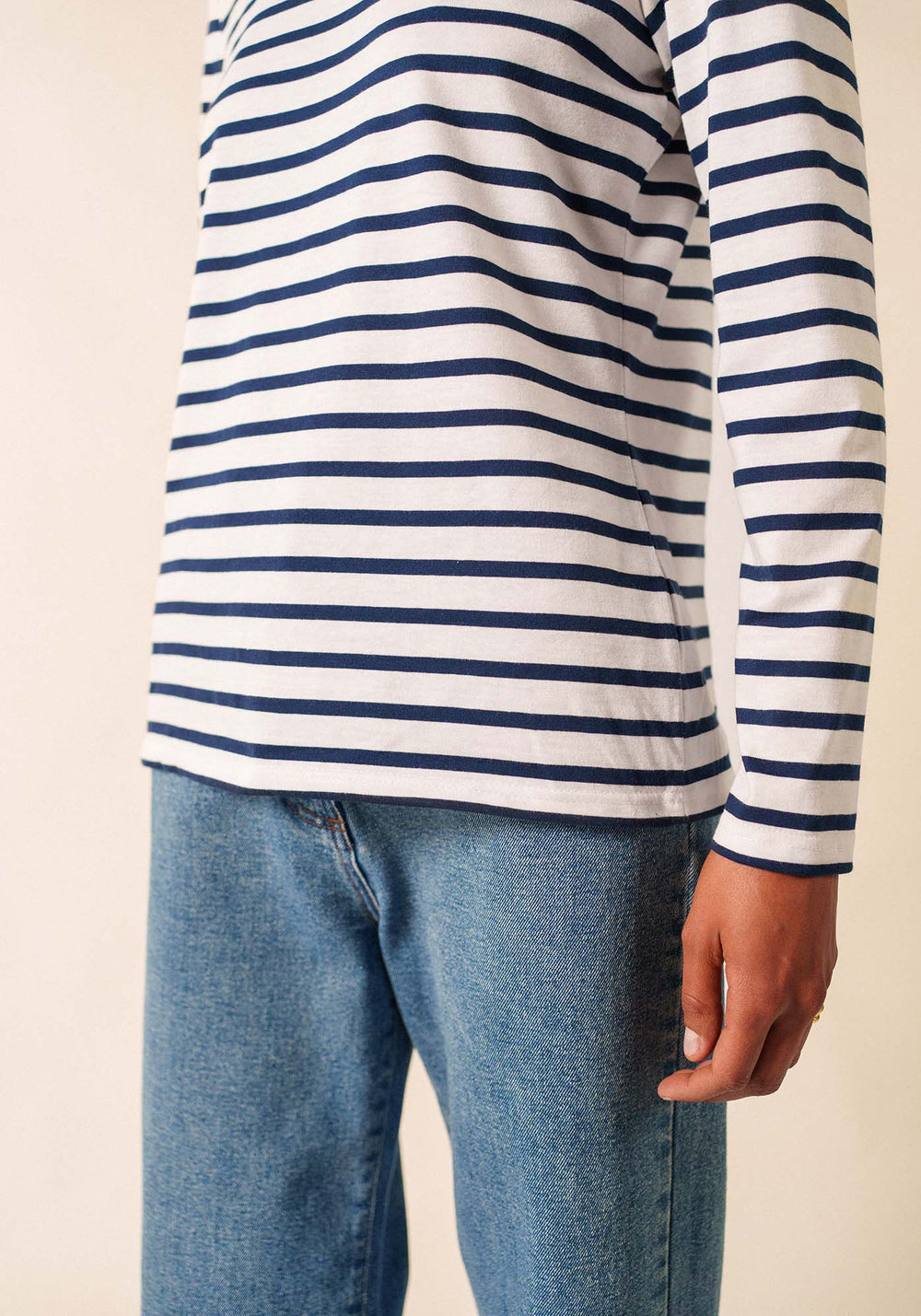
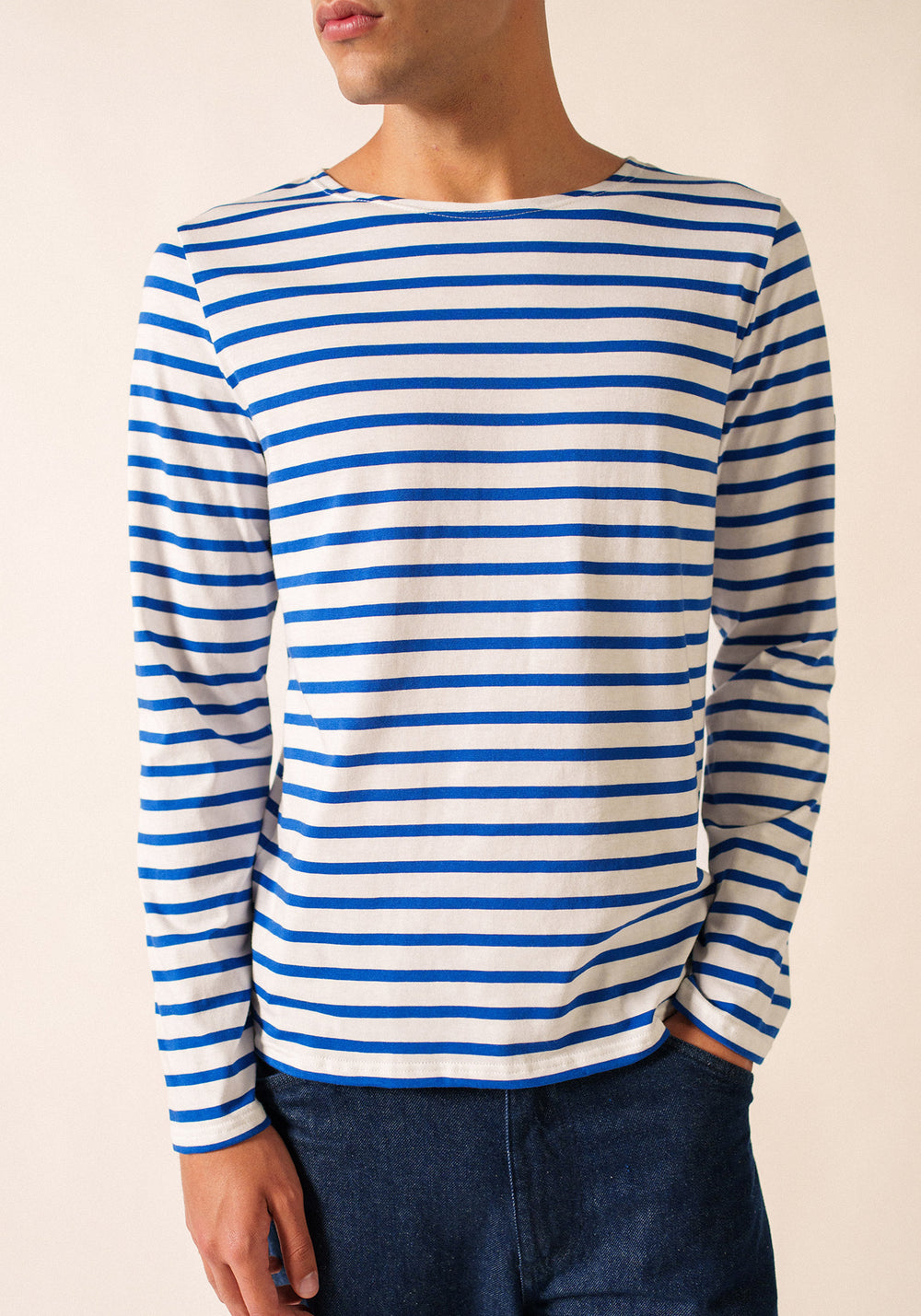
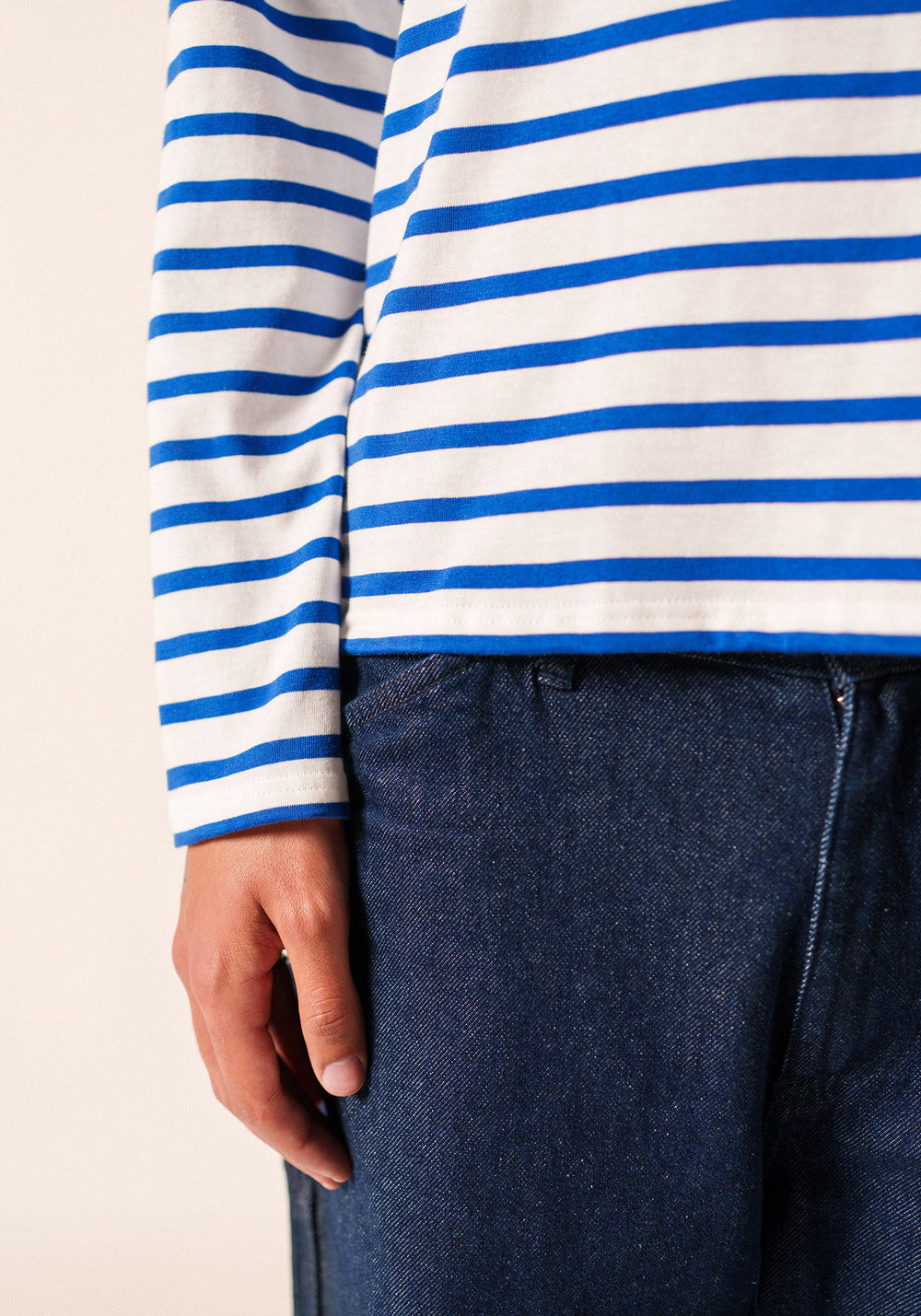
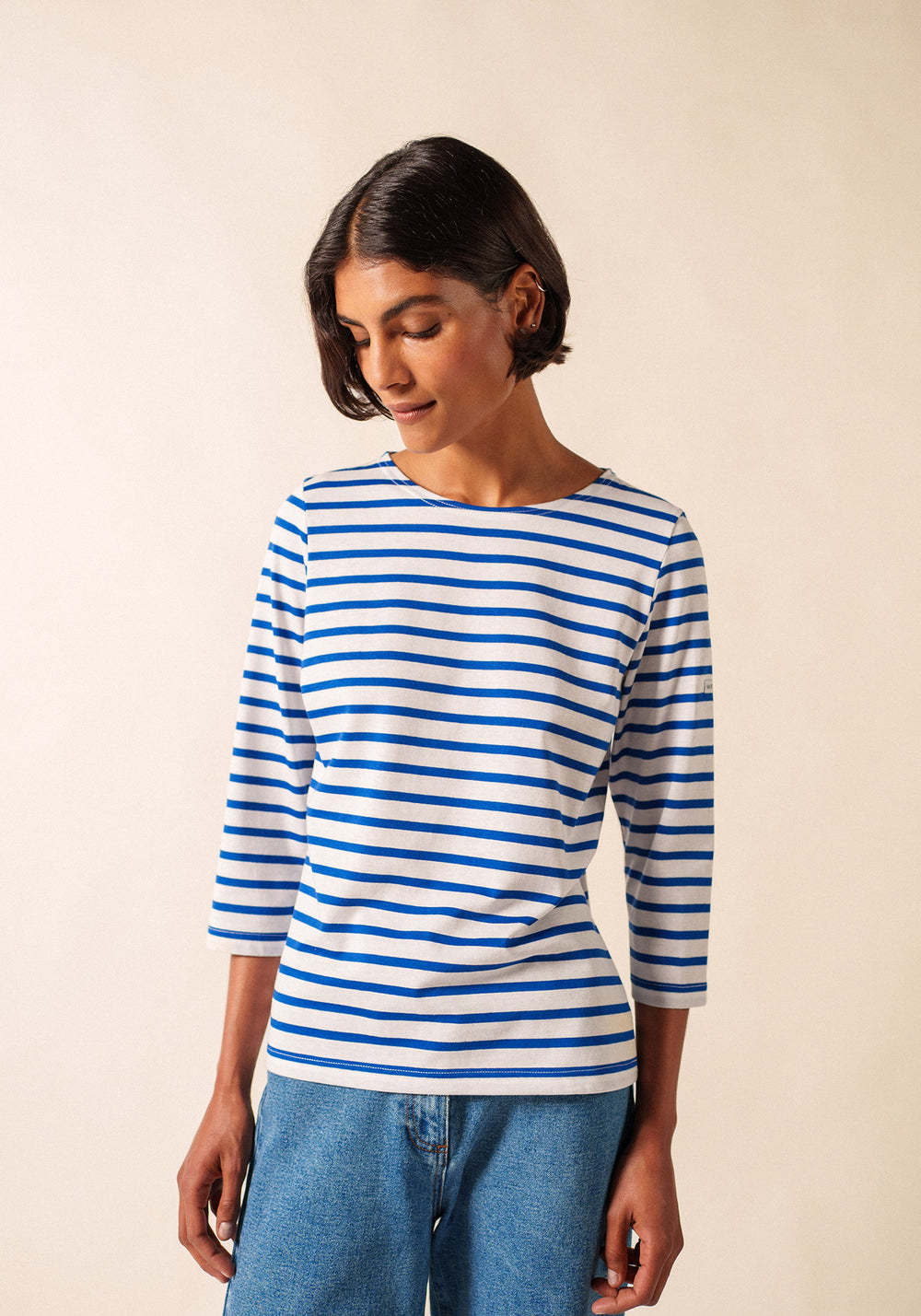
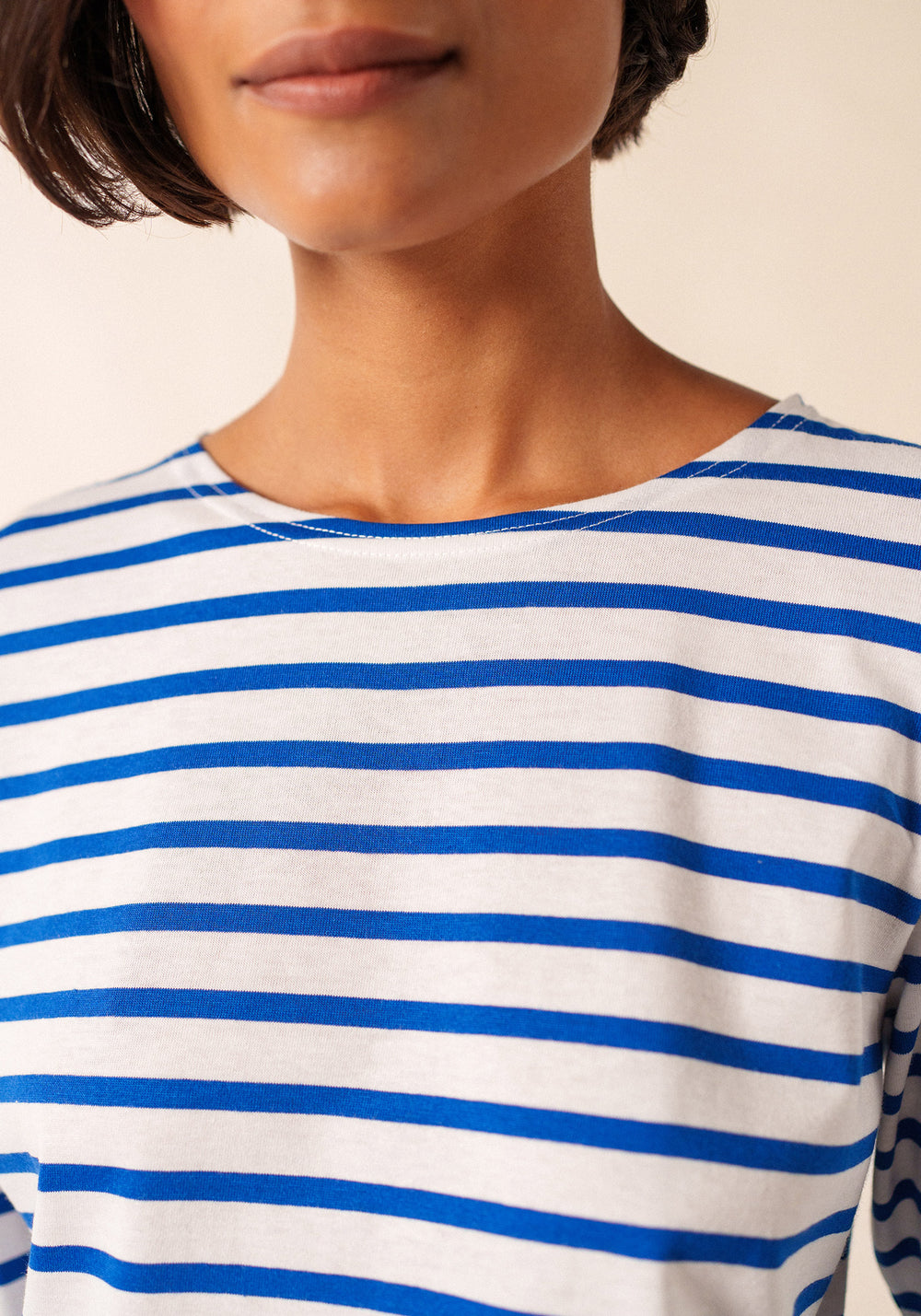
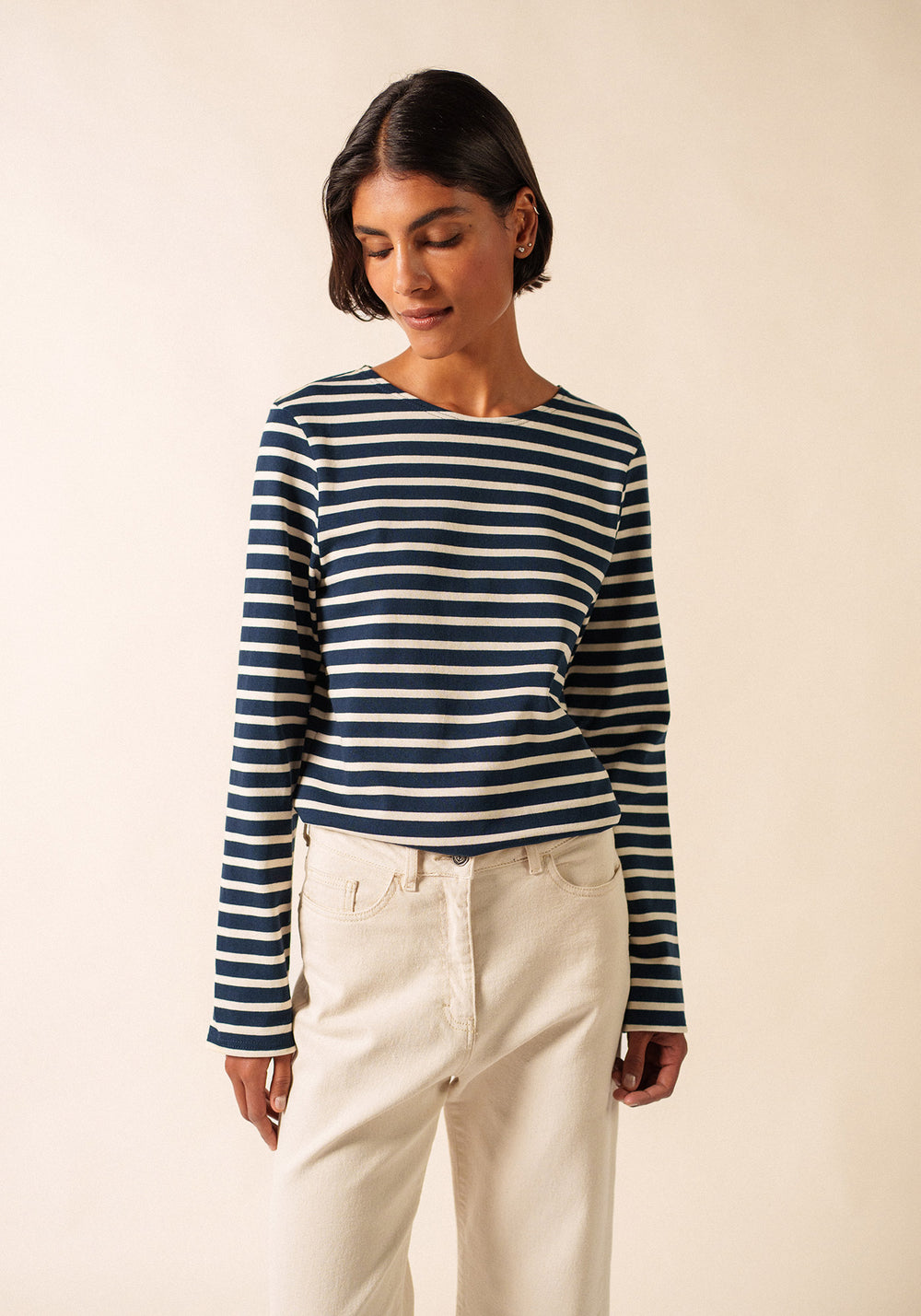
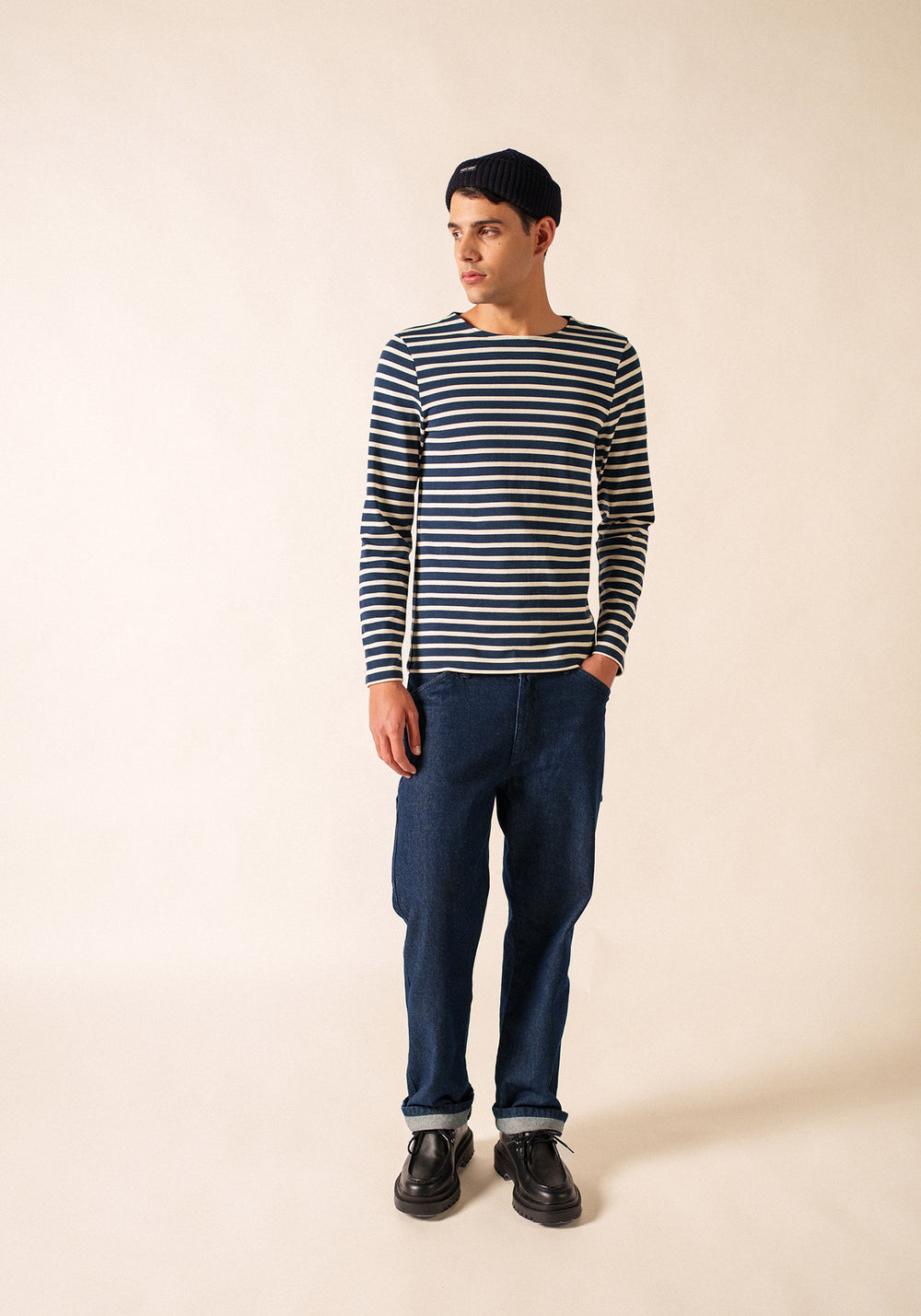
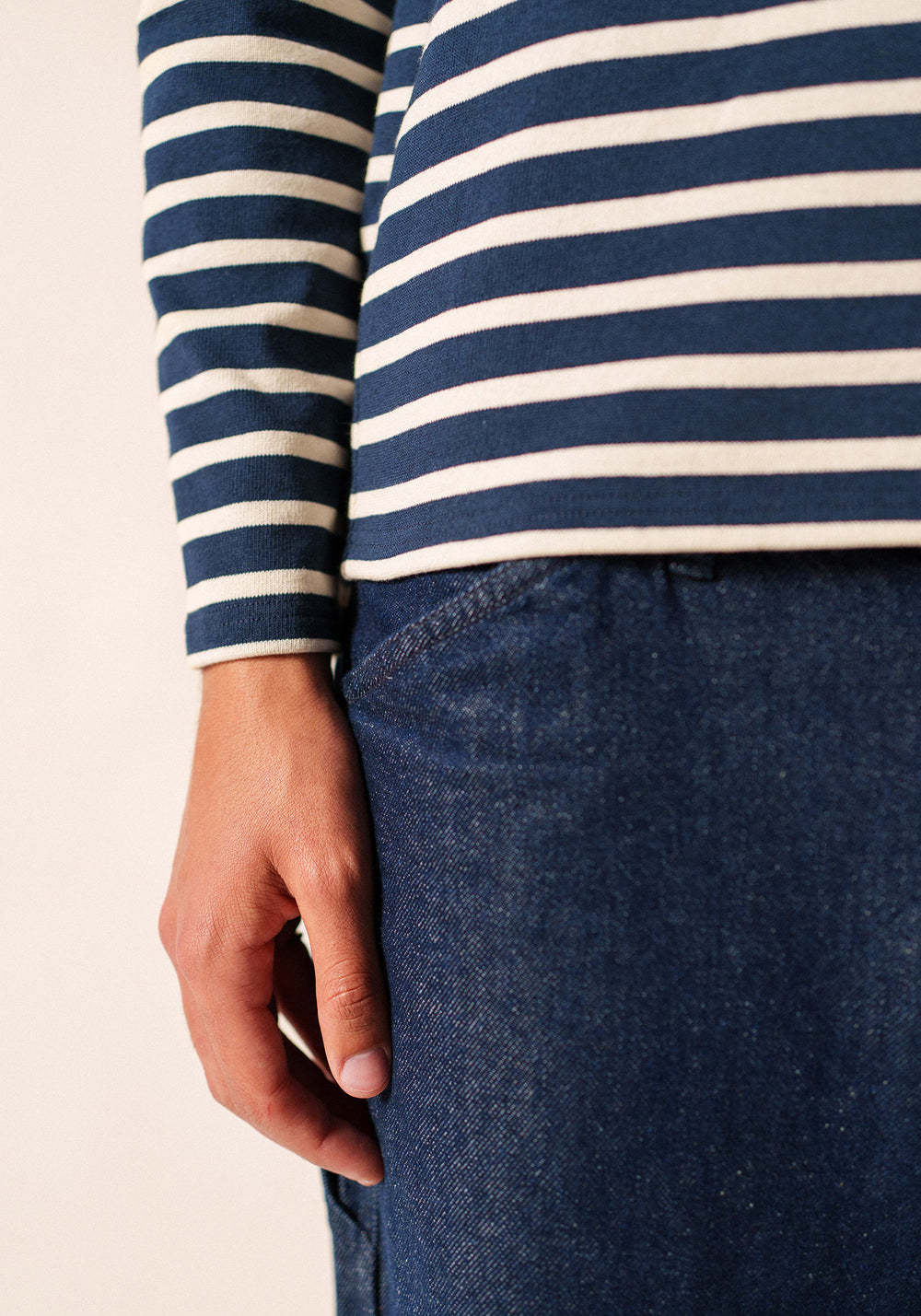
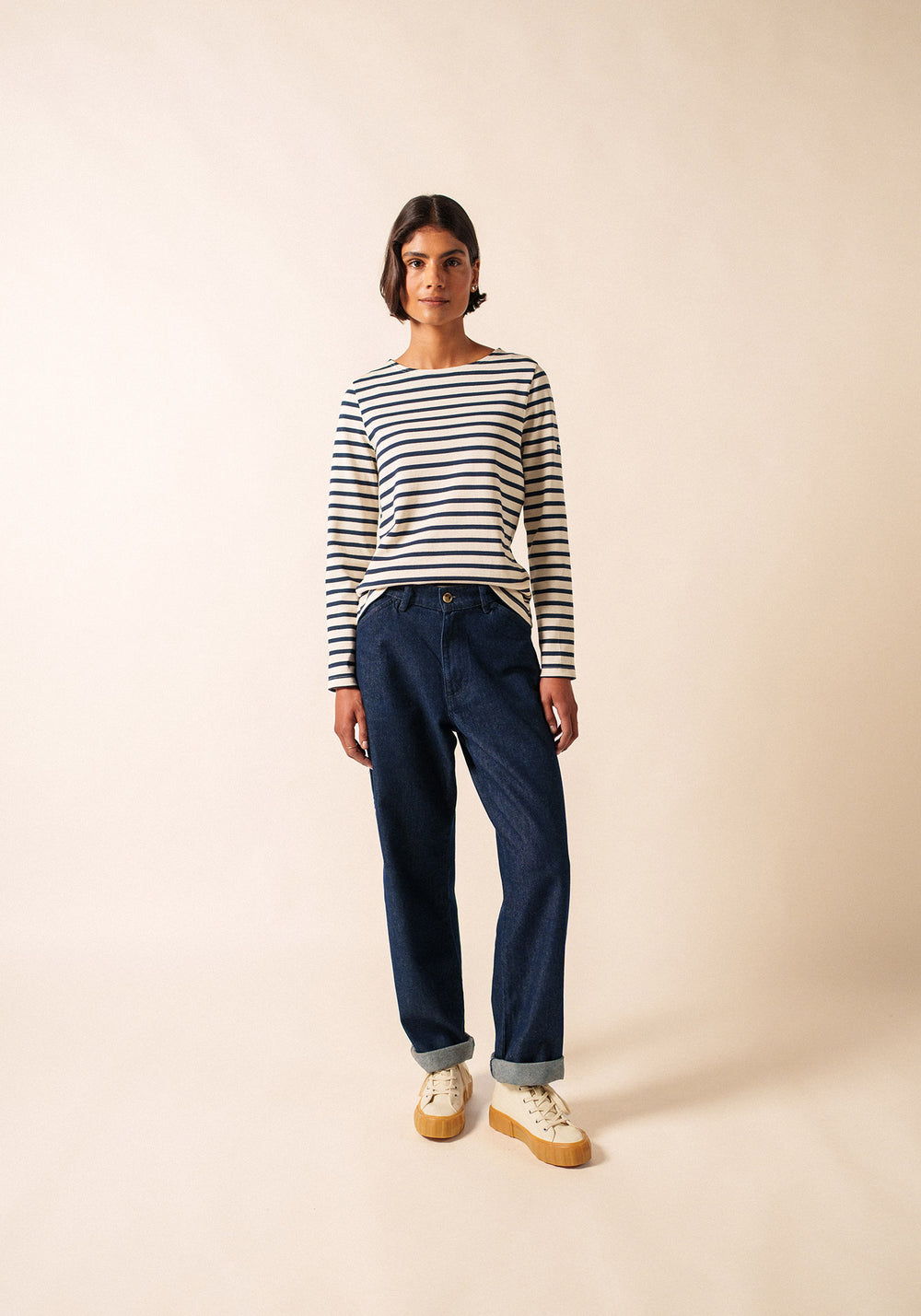
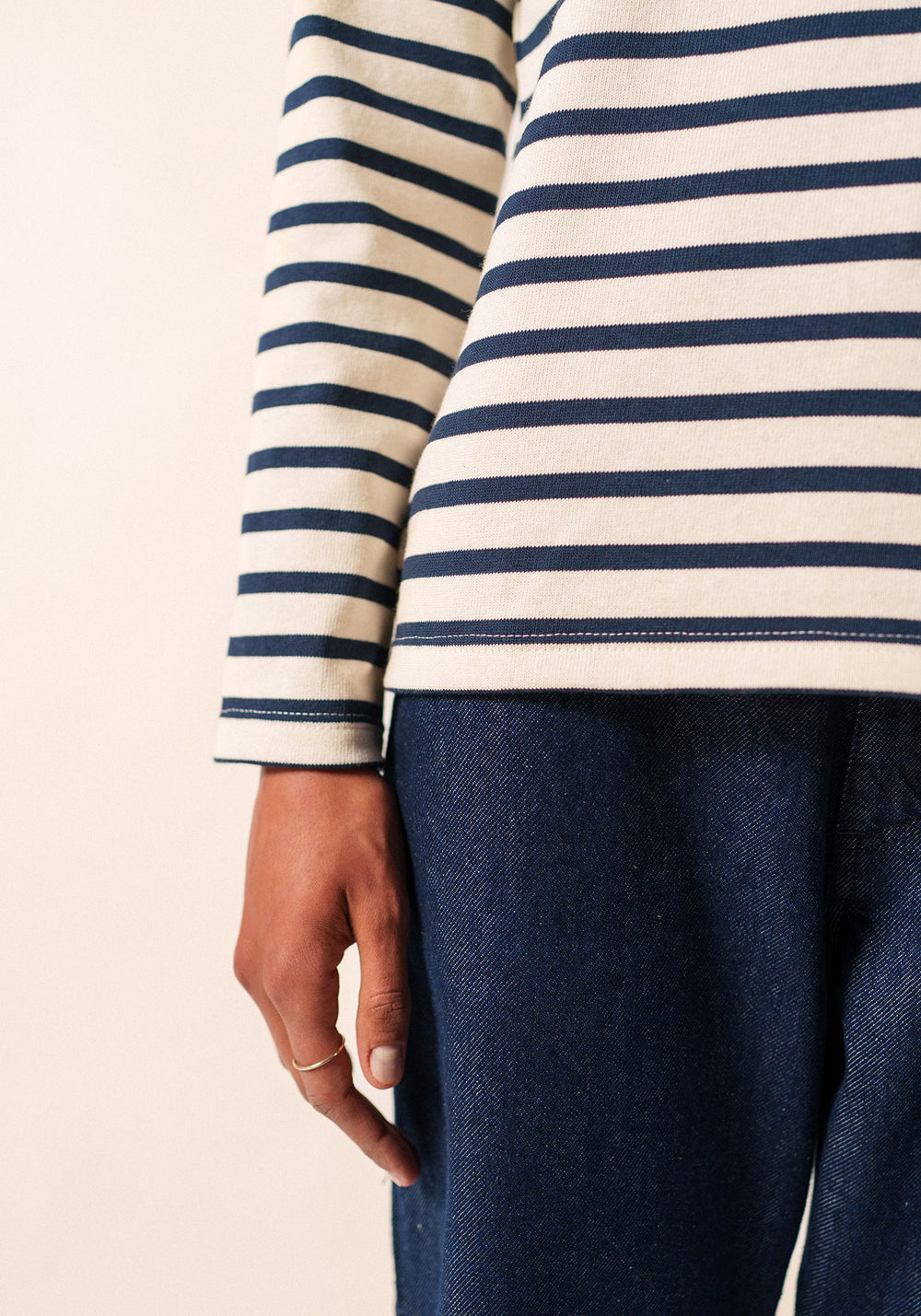
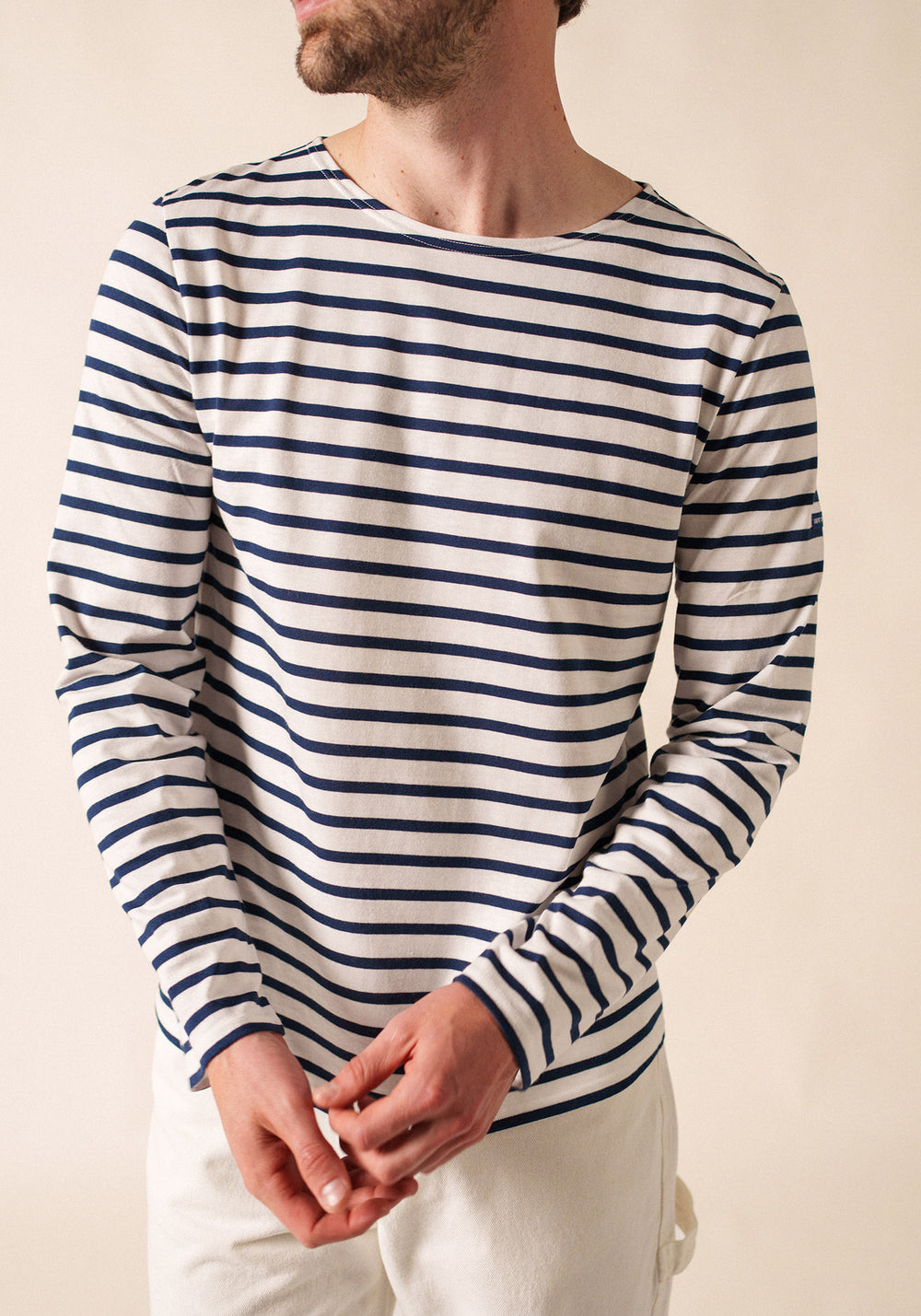
- Cotton Jersey: Unlike woven fabrics, cotton jersey is knitted, creating a fine, stretchy textile that is exceptionally comfortable and easy to wear, ideal for T-shirts and casual tops. It is the fabric used for our iconic Breton striped shirts
- Cotton Poplin: Woven using threads of varying thickness, this fabric is smooth, soft, and drapes beautifully, making it perfect for shirts and lightweight garments.
- Cotton Piqué: Recognized by its raised patterns, piqué knit is soft, supple, and slightly elastic, commonly used in SAINT JAMES polo shirts for a refined yet comfortable fit.
- Cotton Denim: A robust and durable fabric, cotton denim is employed for jeans and workwear-inspired pieces, combining strength with everyday wearability.
By carefully selecting the type of cotton for each garment, SAINT JAMES ensures premium quality, authentic comfort, and enduring style, true to our maritime heritage.

Must Have
SAINT JAMES Breton shirt
Iconic and timeless, SAINT JAMES Breton shirts are mostly made from cotton. If you’d like to learn more about the fabrics used in our marinières, follow the guide!
Caring for SAINT JAMES Cotton Garments
Cotton is a soft, flexible, and highly absorbent natural fiber that withstands high temperatures with ease. Compared to wool, it is low-maintenance and easier to care for, making it ideal for everyday wear.
To ensure your SAINT JAMES cotton garments remain in perfect condition, it is essential to follow the care label instructions for washing and ironing.
With proper care, SAINT JAMES cotton clothing will maintain their original shape, softness, and lightness for years, making them a durable and timeless investment in your wardrobe.